
How Are AI And Data Moulding The World Of Education?
AI And Data Moulding The World Of Education

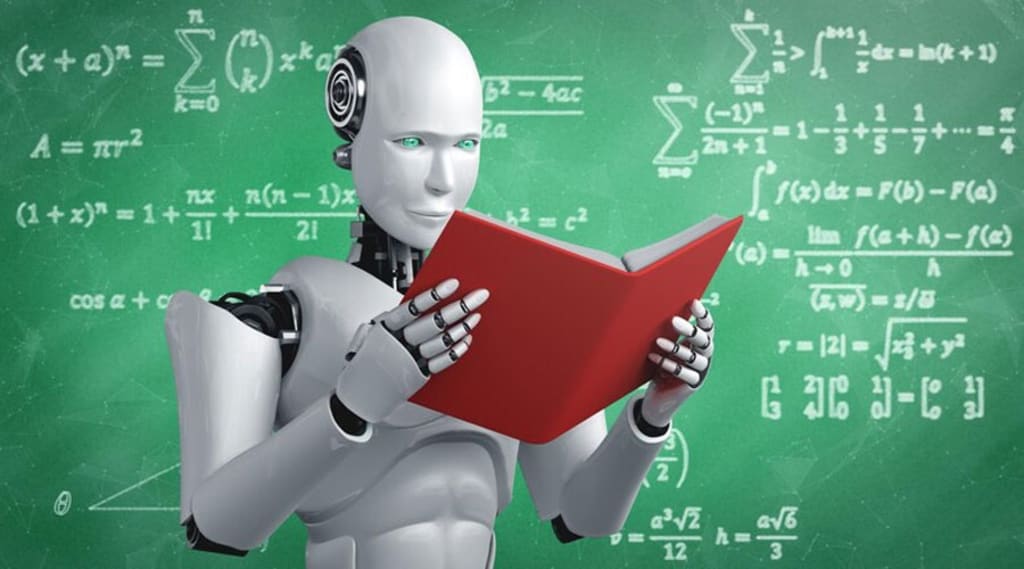
These days, it's impossible to go about your day without using some form of artificial intelligence. Our current generation of youth is the first to have the internet as their go-to for everything from learning to entertainment. The introduction of AI in education has not only impacted fields like healthcare, manufacturing, media, etc but also the field of education, which can be felt in the classroom due to its new-evolved teaching techniques and methodologies.
The idea that schools will continue to place a premium on memorizing information and using antiquated methods is, frankly, absurd in light of the rapid development of technology. Many young people's greatest aspiration is to receive an education that will open doors for them in life. Young people can easily prepare for the world of tomorrow by learning the fundamentals of hardware, software, and design.
AI And Data For Education
1. Smart AI content
Artificial intelligence (AI) and education work hand in hand, and the latest teaching methods may be all that's needed to help every student succeed. Today, smart content is a topic that cannot be ignored. Virtual content, such as video conferencing and video lectures, is also considered part of the smart content category. Obviously, this has an effect on textbooks, and they are evolving. Using standard curricula as a starting point, AI systems are now generating their own unique textbooks. This has led to the digitization of textbooks and the development of novel learning interfaces for students of various ages and academic levels.
2. Saving time on administrative duties
Using AI in education, schools and classrooms can save time and energy on administrative tasks. Exam and homework grading takes up a significant portion of a teacher's time, and teachers must take the time to carefully evaluate student work and respond thoughtfully. If numerous tests are involved, however, the grading process can be automated using AI technology. This would free up professors' time, allowing them to spend more time with their students and less time grading papers.
3. Customized learning
Here, teachers are not necessarily replaced by AI, but they can become much more effective in their work by providing students with individualized suggestions. The best potential support for students is provided through AI-tailored classroom assignments and final tests. One of the keys to effective tutoring is providing timely feedback. Apps with AI allow educators to provide individualized feedback to their students. Learning materials, such as flashcards and study guides, can be condensed by teachers. Depending on the difficulties the students are having with the course content, they can also provide instruction. There is now a greater window of opportunity for students to communicate with their teachers than existed in the past.
4. Understandable learning material
Data science in schools aims to equip teachers with the tools they need to visualize data, reduce and describe it, and make predictions based on that data. Through the use of visuals, data can be made more understandable and useful to practitioners in a short amount of time. Educators would be prepared to analyze educational data to make sense of educational institutions, their problems, and prospective remedies, and to grow a more nuanced understanding of these issues and more empirically established forms of answers.
5. Proper planning
Modeling complex data with AI can help the operations team make evidence-based predictions. In turn, this facilitates future planning, such as the allocation of seats at school events or the placement of catering orders with nearby eateries. AI in schools can help save money by reducing the number of excess supplies ordered. New efficiencies made possible by AI in the classroom will eventually allow it to pay for itself.
6. Education across the globe
No one can have too much education, and AI will help tear down the walls that hold it back. Technology ushers in revolutionary shifts by making it possible to study any subject at any time, from any location in the world. AI in schools may teach students essential computer knowledge. More innovations mean more online courses, and with the help of AI, students may study from anywhere.
To Conclude
A child's ability to concentrate, participate actively, and maintain interest and motivation in learning are all impacted by his or her mental health. When coupled with sentiment analysis tools, online classrooms can be equally as productive as traditional classrooms.
AI may allow for the customization of educational experiences to make them more entertaining. In addition, it can identify problem areas and provide targeted support to assist students' succeed by pointing out where their lessons and resources are lacking and offering suggestions for improvement.
About the Creator
Pradip Mohapatra
Pradip Mohapatra is a professional writer, a blogger who writes for a variety of online publications. he is also an acclaimed blogger outreach expert and content marketer.
Keep reading
More stories from Pradip Mohapatra and writers in Education and other communities.
Building a Solid Talent management strategy for a strong ROI
The most valuable resource in attaining organizational goals is people. Thus, it's essential that they are highly engaged and continuously give their best effort. However, this requires strategy. Employers must be proactive in meeting with their workforce intermediate. They must provide them with the tools they need to succeed, and all employees must be willing to use them to their full potential.
By Pradip Mohapatra3 years ago in Education
Was Alexander the great really that great?
Order, order! Who do we have on the stand today? Alexander... the Great, eh? Well, what’s so great about him? Your honor, the better question is, what's not great about him? He was the King of Macedon and considered a living demigod by Egyptians and Greeks alike. He conquered Persia when it was one of Earth's largest empires. And he was a thoughtful student of Aristotle, creative enough to untie the impossibly tight Gordian knot by cutting it in half. The Gordian knot is a myth— just like the countless other stories invented to enhance Alexander’s legend!
By Munesh Yadav3 days ago in Education
The 1793 Chain Cent: America's First Large-Scale Copper Coin
Holding a 1793 Chain Cent is like holding the first argument of a new nation. More than just America’s first mass-produced penny, this coin is a piece of history that sparked public debate, fueled by a design many found utterly wrong. Its story—from a chaotic mint to a collector's dream—explains why it remains one of the most coveted pieces in all of American numismatics. This guide will walk you through its turbulent birth, teach you to spot the tiny detail that can mean a fortune, and explain what truly makes it valuable.
By Laura Bennett6 days ago in Education
Center Stage with Paul Stewart
*** I'm keen to republish the interviews I did for my series with Vocal creators. It's been a few years and I thought it might be nice to revisit these wonderful conversations. I'll be releasing them one at a time for a few weeks/months.
By Heather Hubler3 days ago in Interview




Comments
There are no comments for this story
Be the first to respond and start the conversation.