
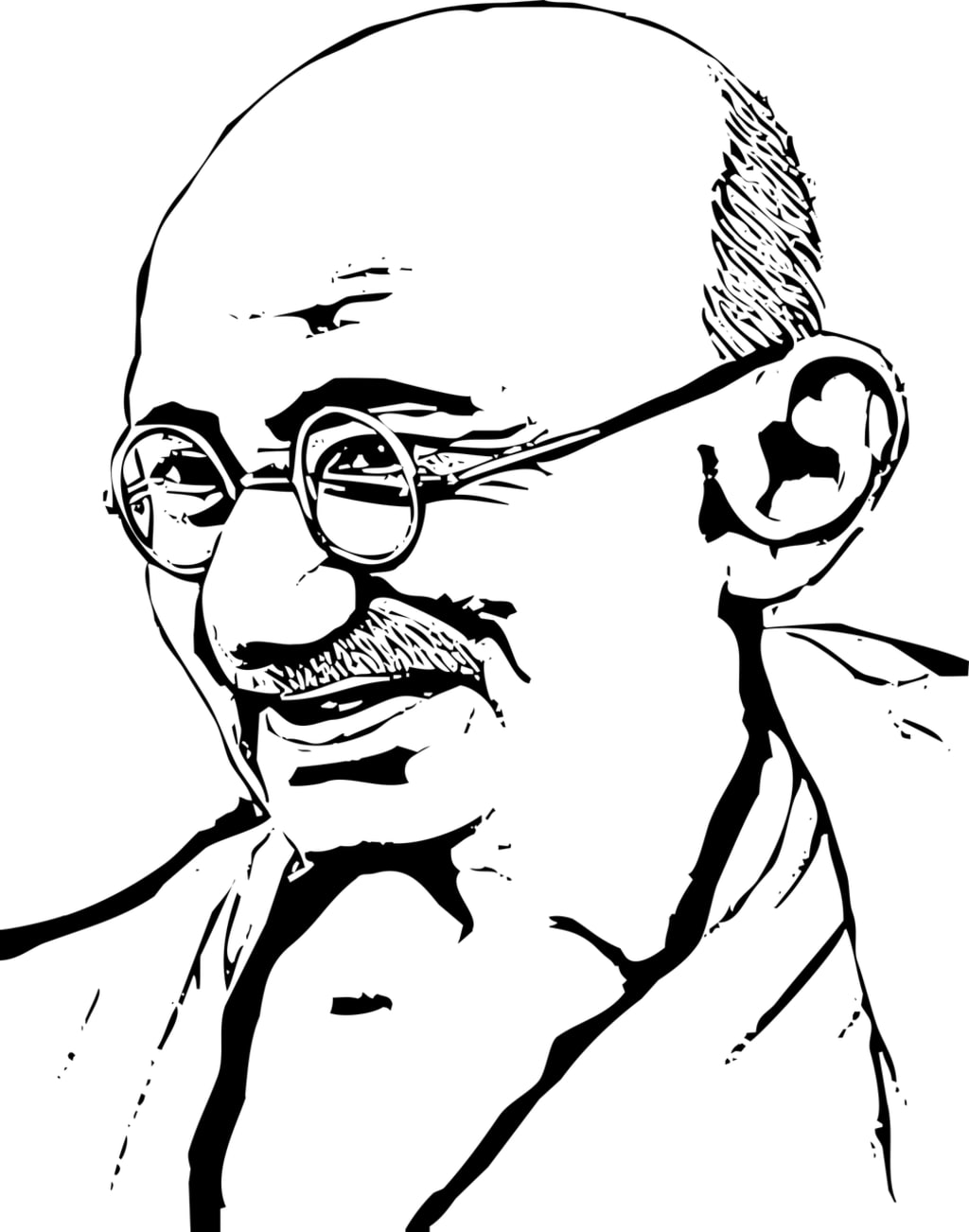
Mahatma Gandhi, also known as Mohandas Karamchand Gandhi, was an Indian independence activist who is widely regarded as one of the most influential figures in modern Indian history. He was born on October 2, 1869, in Porbandar, a coastal town in present-day Gujarat, India. Gandhi is remembered for his nonviolent resistance and his role in India’s struggle for independence from British colonial rule. Here is a detailed history of Mahatma Gandhi with subheadings.
Early Life and Education
Gandhi was born into a Hindu merchant family and was the youngest of four siblings. He was educated in Porbandar, Rajkot, and then in England, where he studied law at University College London. Gandhi was a mediocre student but was exposed to Western culture and ideas during his time in England.
Struggle in South Africa
Gandhi’s struggle for justice began in South Africa, where he spent over 20 years fighting against the discriminatory policies of the British colonial government. He founded the Natal Indian Congress and mobilized the Indian community to protest against discriminatory laws such as the Asiatic Ordinance and the Poll Tax.
Philosophy of Nonviolence
Gandhi’s philosophy of nonviolence, which he called Satyagraha, became the cornerstone of his political and social activism. Satyagraha means “truth force” and is based on the idea that nonviolent resistance is the most powerful tool for social and political change. Gandhi used this philosophy throughout his life, and it became a powerful force for change around the world.
Return to India and Leadership of Indian National Congress
In 1915, Gandhi returned to India and soon became a leader in the Indian National Congress. He was a vocal critic of British colonial rule and advocated for Indian independence. Gandhi’s leadership and his philosophy of nonviolence inspired many Indians, and he became known as Mahatma, which means “great soul.”
Salt March and Civil Disobedience Movement
One of Gandhi’s most famous acts of civil disobedience was the Salt March, which took place in 1930. In protest against the British monopoly on salt, Gandhi and a group of supporters walked over 240 miles to the coast, where they made their own salt by evaporating seawater. This act of defiance galvanized the Indian independence movement and drew international attention to the cause.
Quit India Movement and Imprisonment
In 1942, Gandhi launched the Quit India Movement, a mass civil disobedience campaign aimed at forcing the British to leave India. The movement was met with brutal repression, and Gandhi and many other Indian leaders were imprisoned. Gandhi spent a total of seven years in prison over the course of his life.
Partition and Assassination
In 1947, India gained independence from British colonial rule, but it was also divided into two nations, India and Pakistan. The partition led to widespread violence and displacement, and Gandhi worked tirelessly to promote peace and unity between Hindus and Muslims. Sadly, on January 30, 1948, Gandhi was assassinated by Nathuram Godse, a Hindu nationalist who opposed Gandhi’s views on Hindu-Muslim unity.
Legacy and Influence
Gandhi’s legacy continues to inspire people around the world. His philosophy of nonviolence and his commitment to social justice and human rights have influenced countless individuals and movements, including the American civil rights movement led by Martin Luther King Jr. Gandhi’s message of peace, tolerance, and compassion remains as relevant today as it was during his lifetime.
Early Life and Education of Mahatma Gandhi
Mahatma Gandhi was born on October 2, 1869, in Porbandar, a coastal town in present-day Gujarat, India. He was the youngest of four children in a Hindu merchant family. His father Karamchand Gandhi was a chief minister of the Porbandar state and his mother Putlibai was a deeply religious woman.
As a child, Gandhi was a shy and introverted student who loved to read and spent much of his time in prayer and meditation. He was educated in Porbandar and Rajkot, where he studied basic subjects such as arithmetic, history, and geography. In his teens, Gandhi was married to Kasturba Makhanji, who was also his age.
In 1888, at the age of 18, Gandhi went to London to study law at University College London. He struggled to adjust to life in England and found the legal curriculum boring. However, during his stay in London, Gandhi was exposed to Western culture and ideas, and it helped to shape his thinking later in life.
After graduating from law school in 1891, Gandhi returned to India and began practicing law in Bombay. However, he was not very successful in his legal career and struggled to find clients. In 1893, Gandhi was offered a one-year contract to work for an Indian firm in South Africa, and he accepted the offer.
Struggle in South Africa Of Mahatma Gandhi
Mahatma Gandhi’s struggle in South Africa played a significant role in shaping his political and social activism. Gandhi spent over 20 years in South Africa, where he fought against the discriminatory policies of the British colonial government.
Soon after arriving in South Africa in 1893, Gandhi faced discrimination firsthand when he was thrown off a train for traveling in a first-class compartment reserved for whites only. This experience motivated him to fight against the system of racial segregation and discrimination in South Africa.
Gandhi founded the Natal Indian Congress in 1894, which aimed to improve the rights of the Indian community in South Africa. He organized several campaigns and protests against discriminatory laws such as the Asiatic Ordinance and the Poll Tax, which imposed heavy taxes on Indians and made it difficult for them to earn a livelihood.
Gandhi’s protests often involved nonviolent civil disobedience, such as boycotts, strikes, and marches. He was arrested several times and spent several months in prison. However, his protests and advocacy efforts eventually led to some reforms, such as the abolition of the Poll Tax in 1910.
During his time in South Africa, Gandhi developed his philosophy of nonviolence, which became the cornerstone of his political and social activism. He believed that nonviolent resistance was the most powerful tool for social and political change and used this philosophy throughout his life.
Gandhi’s struggle in South Africa not only improved the rights of the Indian community but also inspired his activism in India’s independence movement. His experiences in South Africa taught him the power of nonviolent resistance and its ability to bring about meaningful change.
Philosophy of Nonviolence of Gandhi
Mahatma Gandhi’s philosophy of nonviolence, also known as ahimsa, was one of the defining features of his political and social activism. He believed that nonviolence was not only a moral principle but also an effective strategy for bringing about social and political change.
According to Gandhi, nonviolence was the only way to achieve lasting peace and justice. He believed that violence only begets more violence and that it creates a vicious cycle of hatred and retaliation. Nonviolence, on the other hand, was a powerful tool for transforming not only individuals but also societies and nations.
Gandhi’s philosophy of nonviolence was based on several principles, including:
Satyagraha: This is the idea of holding onto the truth and the power of truth. Satyagraha was a method of nonviolent resistance that involved using love and compassion to win over opponents and transform society.
Non-cooperation: This is the idea of refusing to cooperate with unjust laws and practices. Non-cooperation could involve civil disobedience, such as refusing to pay taxes or participate in government programs.
Self-suffering: This is the idea of using one’s own suffering as a means of resistance. Gandhi believed that by willingly accepting suffering, individuals could show their commitment to the cause and inspire others to join the struggle.
Forgiveness: This is the idea of forgiving one’s opponents and showing them compassion, even in the face of violence or aggression. Gandhi believed that forgiveness was a powerful tool for breaking the cycle of violence and promoting reconciliation.
Gandhi’s philosophy of nonviolence inspired many social and political movements around the world, including the American civil rights movement led by Martin Luther King Jr. and the anti-apartheid movement in South Africa. It remains a powerful and influential philosophy today.
Return to India and Leadership of Indian National Congress of Gandhi
In 1915, Mahatma Gandhi returned to India from South Africa and soon became a prominent leader in the Indian National Congress. He became a leading figure in India’s struggle for independence from British colonial rule, using his philosophy of nonviolence to inspire and mobilize millions of people across India.
Gandhi was initially hesitant to take up a leadership position in the Indian National Congress, but he soon became its president in 1921. He used his position to launch several campaigns against British colonial rule, including the Non-Cooperation Movement in 1920 and the Salt Satyagraha in 1930.
The Non-Cooperation Movement was a nationwide campaign that aimed to boycott British goods and institutions, including schools and courts. The movement was largely nonviolent, but it did involve some instances of violence and was eventually called off by Gandhi after a violent clash between protesters and police in Chauri Chaura.
The Salt Satyagraha was another campaign against British rule, which involved a 24-day march to the Arabian Sea to collect salt in defiance of British laws that monopolized the salt trade. The campaign was a huge success and attracted international attention, leading to increased pressure on the British government to grant India independence.
Throughout his leadership of the Indian National Congress, Gandhi was committed to nonviolence and civil disobedience as the primary means of achieving independence. He also worked to promote Hindu-Muslim unity and improve the lives of the poor and marginalized in India.
Gandhi’s leadership and philosophy of nonviolence inspired millions of people in India and around the world. He remains an important figure in Indian history and a symbol of peaceful resistance and social justice.
Salt March and Civil Disobedience Movement of Gandhi
The Salt March and Civil Disobedience Movement were two of Mahatma Gandhi’s most significant campaigns against British colonial rule in India.
In 1930, Gandhi led the Salt March, also known as the Salt Satyagraha. This was a peaceful protest against the British monopoly on salt production and distribution in India. As part of the protest, Gandhi and a group of followers marched 240 miles to the Arabian Sea, where they produced salt by evaporating seawater. This act of civil disobedience was a direct challenge to British colonial laws that made it illegal for Indians to produce their own salt.
The Salt March gained international attention and sparked a wave of civil disobedience across India. People from all walks of life, including women and children, joined the movement, which led to mass arrests and imprisonment of protesters.
The Civil Disobedience Movement was a larger campaign that Gandhi launched in 1930, which aimed to challenge British colonial rule and demand self-rule for India. The movement involved a variety of nonviolent tactics, including boycotts, protests, and strikes.
Gandhi called on Indians to refuse to pay taxes, attend government schools, or purchase British goods. These actions were meant to demonstrate Indian unity and strength against British colonial rule. The campaign was met with brutal repression by the British colonial authorities, who used violence and force to suppress protests and imprison thousands of Indian activists.
Despite the government’s violent response, the Civil Disobedience Movement and the Salt March played a crucial role in India’s struggle for independence. The campaigns helped to unite Indians from different regions and backgrounds and inspired a renewed sense of national pride and identity.
The Salt March and the Civil Disobedience Movement also brought Gandhi international recognition and cemented his status as a leader of the Indian independence movement. Gandhi’s philosophy of nonviolence and civil disobedience became a powerful force for social and political change, both in India and around the world
About the Creator
Keep reading
More stories from SANGEETHA PANDI and writers in Education and other communities.
How to make Money Online Easily?
How to make Money Online Easily? Introduction Making money online has become an increasingly popular way to generate income. With the rise of technology and the internet, there are countless opportunities to earn money from the comfort of your own home. This will provide you with tips and tricks on how to make money online easily.
By SANGEETHA PANDI3 years ago in Education
What is Affiliate Marketing: A Beginner's Step-by-Step Guide
Affiliate marketing is a performance-based online business model that generates over $12 billion annually in the U.S. alone and continues to grow as e-commerce expands. At its core, affiliate marketing allows individuals to earn commissions by promoting products or services created by other companies. Affiliates share unique tracking links through websites, blogs, social media, email lists, or videos, and earn a percentage of each sale or action completed through those links. Because affiliates don’t handle product creation, inventory, payment processing, or customer support, it’s one of the most accessible ways to monetize an online presence.
By Mohammad Sufyaan4 days ago in Education




Comments
There are no comments for this story
Be the first to respond and start the conversation.