
HEALTH INFORMATICS, ANALYTICS AND TELEMEDICINE
Healthcare, information technology, and data analytics
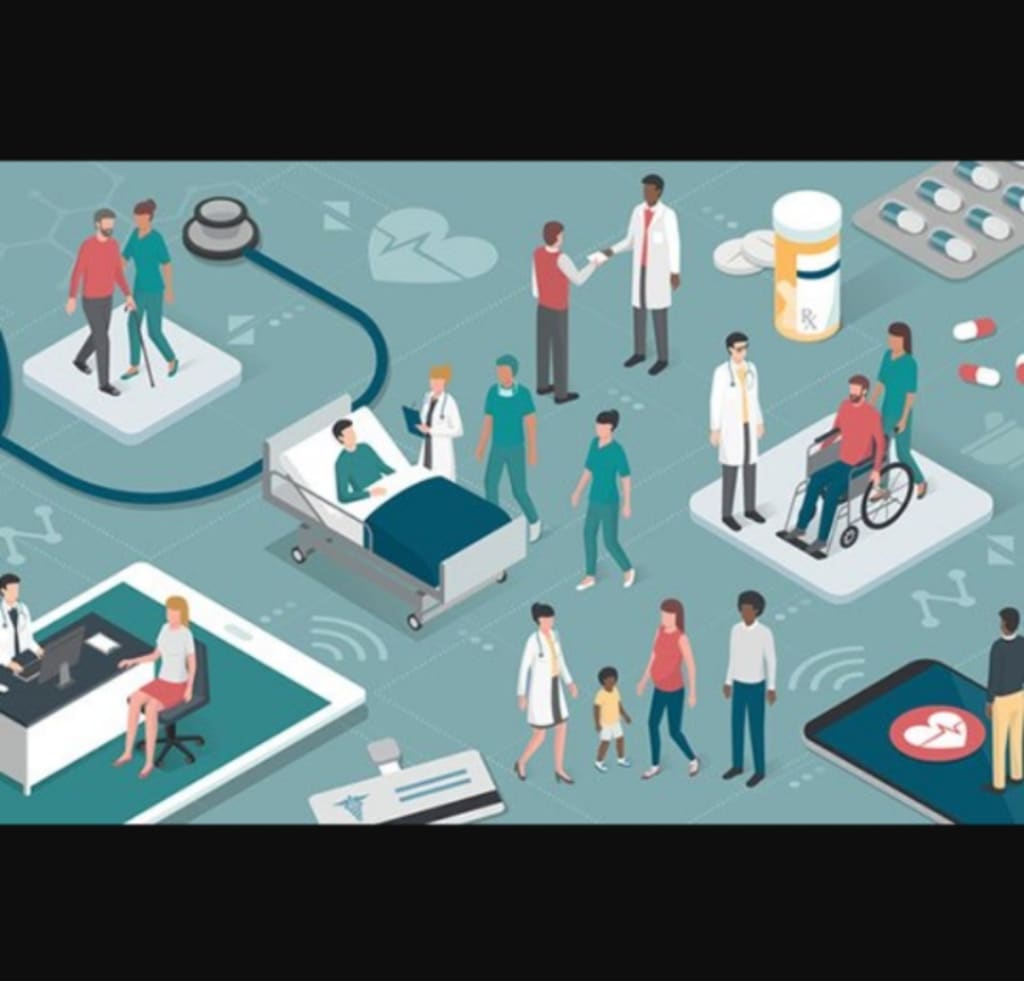
Start Health informatics and analytics is a field that combines the disciplines of healthcare, information technology, and data analytics to improve healthcare outcomes, efficiency, and decision-making. It involves the collection, management, and analysis of healthcare data to drive insights and support evidence-based decision-making.
Health informatics focuses on the acquisition, storage, retrieval, and use of healthcare information. It involves the design and implementation of information systems, such as electronic health records (EHRs), health information exchanges (HIEs), and other health-related databases. Health informatics professionals work on developing and maintaining these systems to ensure the secure and efficient flow of health information across various healthcare settings.
Health analytics, on the other hand, involves the use of data analysis techniques and statistical methods to extract meaningful insights from healthcare data. It includes analyzing large datasets, such as patient records, clinical trials, medical imaging, and public health data, to identify trends, patterns, and associations. Health analytics can help healthcare organizations and professionals make informed decisions, improve patient care, identify potential risks, and optimize healthcare processes.
Here are some key areas where health informatics and analytics are applied:
Clinical Decision Support: Health informatics and analytics can provide clinicians with real-time patient data, evidence-based guidelines, and predictive models to support clinical decision-making at the point of care.
Population Health Management: Analyzing large-scale health data can help identify population health trends, risk factors, and disease patterns. This information is used to develop targeted interventions, prevention strategies, and public health initiatives.
Health Research and Clinical Trials: Health informatics and analytics play a crucial role in facilitating clinical research by providing tools for data collection, management, and analysis. It helps researchers identify patient cohorts, monitor study progress, and evaluate treatment outcomes.
Healthcare Operations and Resource Management: Analyzing operational data, such as patient flow, resource utilization, and workflow efficiency, can help healthcare organizations optimize processes, reduce costs, and improve patient satisfaction.
Health Policy and Planning: Health informatics and analytics provide valuable insights for policymakers, healthcare administrators, and public health officials in making informed decisions related to healthcare planning, resource allocation, and policy development.
Overall, health informatics and analytics have the potential to transform healthcare by leveraging data-driven insights to improve patient outcomes, enhance healthcare delivery, and drive evidence-based decision-making.
Telemedicine is the practice of providing medical services remotely, using telecommunications technology. It allows healthcare professionals to evaluate, diagnose, and treat patients without the need for an in-person visit. Telemedicine utilizes various communication tools such as video conferencing, phone calls, email, and secure messaging platforms to facilitate virtual consultations.
The primary goal of telemedicine is to improve access to healthcare, especially for individuals who have limited mobility, live in remote areas, or face other barriers to receiving medical care. It offers convenience and flexibility for both patients and healthcare providers, enabling them to connect regardless of their physical location.
Telemedicine services can involve a range of medical specialties, including primary care, mental health, dermatology, radiology, cardiology, and more. Some common applications of telemedicine include:
Virtual consultations: Patients can discuss their symptoms, receive medical advice, and get prescriptions through video or phone consultations with healthcare professionals.
Remote monitoring: Devices and sensors can collect and transmit patients' vital signs and health data to healthcare providers for monitoring chronic conditions or post-operative care.
Telepsychiatry: Mental health professionals can provide therapy sessions and prescribe medications remotely to individuals with mental health concerns.
Telestroke: Neurologists can evaluate and diagnose stroke patients remotely, guiding local healthcare providers in time-sensitive treatment decisions.
Medical education and training: Telemedicine also supports medical education, allowing students and healthcare professionals to participate in virtual lectures, workshops, and conferences.
Telemedicine offers several benefits, including increased access to care, reduced travel time and expenses, improved efficiency, and the potential for early detection and intervention. It can also help alleviate the burden on healthcare systems by reducing unnecessary in-person visits and emergency room overcrowding.
It is important to note that telemedicine has its limitations. Not all medical conditions can be diagnosed or treated remotely, and there are cases where an in-person visit is necessary for a comprehensive evaluation. However, telemedicine continues to evolve and expand, integrating with advancements in technology and playing an increasingly significant role in modern healthcare delivery.
About the Creator
Keep reading
More stories from ISAAC ANIN and writers in Education and other communities.
Contemporary Information Technology
Contemporary Information Technology refers to the current state and advancements in the field of technology, particularly in the domain of information systems and computer science. It encompasses the latest trends, tools, and techniques that are shaping the IT landscape in various industries and sectors.
By ISAAC ANIN3 years ago in Education
Friendship with Books
Arslan and Rehan were very close friends. They studied in the same class and lived in the same neighborhood, which made their friendship even stronger. Despite being similar in age and environment, their interests were quite different. Rehan had a deep love for reading. He was not limited to his textbooks alone; instead, he eagerly read all kinds of books, including storybooks, history, general knowledge, and books full of interesting events. For Rehan, books were not just a habit—they were a way of life.
By Sudais Zakwanabout an hour ago in Education
Dr. Richard Kannwischer on Christian Community in a Digital Age: Koinonia and the Ethics of Belonging
Dr. Richard Kannwischer is Senior Pastor of Peachtree Presbyterian Church and has served more than 25 years in pastoral ministry. He earned a Master of Divinity from Princeton Theological Seminary and a Doctor of Ministry from Fuller Theological Seminary. A gifted communicator, he is passionate about helping people see how the story of God speaks with clarity, depth, and relevance to everyday life. His preaching and writing blend theological rigor with storytelling, making complex truths accessible and engaging. Whether in the pulpit, on the page, or in conversation, he invites audiences into practical, life-giving Christian faith for seekers and believers.
By Scott Douglas Jacobsen3 days ago in Education
Rachel Reviews: The Spiral Archive by Pieter Hendrik
It's difficult for me to know where to start with a review of this book as it was, for me, an entirely unique experience and one that I'll probably never have again. I don't want that to be interpreted as unenjoyable but it has left me scratching my head a little and ruminating on its content, its themes and its characters.
By Rachel Deeming6 days ago in BookClub




Comments (1)
I found your article on health informatics, analytics, and telemedicine insightful and well-written. It highlights the crucial role of technology in transforming healthcare, aligning with the importance of Health Management Information Systems discussed in this related post: https://www.cleveroad.com/blog/importance-of-health-management-information-system/. Together, these resources offer a comprehensive understanding of the evolving landscape in healthcare technology.