
Hard Hats Over Diplomas
The Rise of Trade Careers for the Next Generation

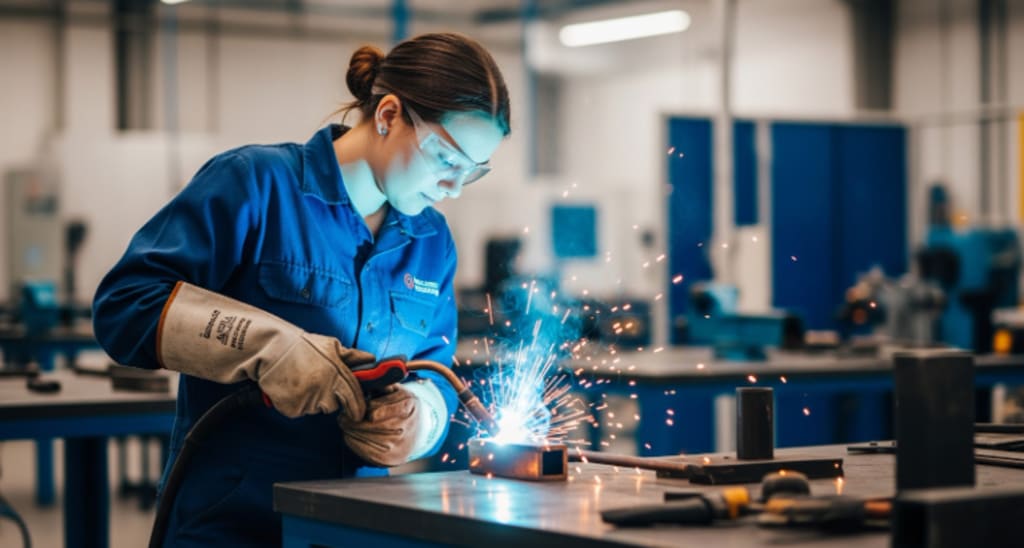
The traditional path toward professional success formerly followed a singular trajectory through a four-year university. Generations accepted the mounting debt and the promise of a white-collar desk as the only legitimate marks of achievement.
However, this consensus is fracturing as the weight of tuition costs and the saturation of the degree market force a reassessment of what constitutes a valuable career. Younger workers are looking toward the physical world to find stability and purpose. The surge in interest regarding manual trades reflects a cultural shift where the ability to build, repair, and maintain the physical infrastructure of society carries more weight than a theoretical credential.
The appeal of the trades lies in the immediate connection between effort and outcome. There is a psychological reward in seeing a finished structure or a functioning climate control system that a digital spreadsheet rarely provides.
Mastery of a craft requires technical precision and a deep understanding of complex systems. As the digital economy becomes more volatile, the demand for tangible skills remains constant. Houses still require roofs, pipes still leak, and climate control remains a necessity. This reality creates a sense of security that many office-bound roles can no longer guarantee.
The Economic Reality of Debt
The financial burden of higher education has reached a level that affects the life choices of young adults. Decades of rising tuition have left many with monthly payments that dwarf their entry-level salaries. By contrast, the trade model offers a route to financial independence that begins on the first day of employment. Apprenticeships allow individuals to earn a living while they learn their craft.
Paid training programs provide a structured path toward high-earning potential without the four-year delay. A student in a vocational program enters the workforce with specialized knowledge that is in high demand. The scarcity of skilled labor in sectors like electrical work or masonry means that wages are rising at a rate that often outpaces those in the general service sector.
Redefining Prestige
Society is witnessing a change in how status is being assigned to different types of labor. The old hierarchy that placed manual work at the bottom is being dismantled by the reality of essential services. A skilled technician who understands the intricacies of a modern building is an expert in every sense of the word. People are beginning to recognize that professional fulfillment often comes from solving real-world problems. The satisfaction of restoring a community’s water supply or ensuring a hospital’s power grid remains operational provides a sense of utility that is hard to replicate in a virtual environment.
In other words, the concept of prestige is moving away from titles towards autonomy. Many tradespeople eventually transition into owning their own plumbing businesses, gaining control over their schedules and earnings. This path to entrepreneurship is often more accessible than starting a technology company. A person with a truck, tools, and a reputation for quality can build a sustainable enterprise with minimal overhead.
The Security of Future-Proof Skills
Automation and artificial intelligence are altering the requirements for many traditional office roles. While algorithms can process data and write reports, they cannot replace the nuanced physical movements and diagnostic intuition required for a residential repair. The trades offer a form of job security that is grounded in the physical world. A technician starting a roofing job understands that their presence is required on-site and their skills are not easily exported or automated.
The aging workforce in the skilled trades has created a massive gap that the next generation is uniquely positioned to fill. As senior professionals retire, they leave behind a vacuum of expertise and a wealth of opportunity for those willing to do the work. The demand ensures that a skilled worker will rarely face unemployment. The ability to work with one’s hands is a portable asset that holds value in any geographic location. Whether someone is looking for HVAC jobs in Australia or a carpentry role in a small American town, the need for their expertise remains constant.
The Digital Integration Within Modern Skilled Crafts
The integration of advanced technology into manual labor is transforming the nature of trade careers. Modern technicians no longer rely solely on physical strength or basic hand tools; they utilize sophisticated digital systems to enhance precision and efficiency. Smart climate control systems now use cloud platforms and artificial intelligence to monitor performance in real time.
Software and hardware innovations are becoming standard across various sectors. Automated systems in the construction of roofs use internet-connected sensors to detect early signs of structural moisture or thermal leakage. Robotics and drones are also common in the assessment of hard-to-reach areas. Simply put, a trade today involves mastering a blend of physical craft and high-tech application. The modernization of these roles ensures that the trades remain relevant as the broader economy moves toward a more connected future.
Cultural Alignment
There is a growing desire for work that feels authentic. Many young people find the abstractions of corporate culture to be draining and disconnected from any sense of personal contribution. The trades offer a different experience where the day ends with a visible change in the environment. This connection to the physical world promotes a sense of mental well-being that is often missing from sedentary roles.
The movement toward the trades is a logical response to an era of over-complication. Simplifying the path to a career by focusing on essential skills allows individuals to build lives based on competence rather than credentials. The next generation is choosing to invest in themselves by choosing paths that offer both a paycheck and a purpose. This trend is a sign of a maturing society that values the builders as much as the thinkers. Choosing a hard hat over a diploma is a calculated decision to pursue a life of stability, skill, and genuine contribution.
About the Creator
Angela Ash
Angela Ash is an expert writer with a unique voice and fresh ideas. She focuses on topics related to business, mental health, travel and music.
Keep reading
More stories from Angela Ash and writers in Education and other communities.
Learn Fast, Play Smart
Modern trends demand a total recalibration of how people acquire new abilities. Information arrives in bursts, requiring a strategy that favors speed and precision over the slow methods of the past. Because of that, traditional education often feels heavy and static, while the digital era is fluid and relentless.
By Angela Ashabout a month ago in Education




Comments
There are no comments for this story
Be the first to respond and start the conversation.