
Habit Similarity and Mood Differences between Cat and Tiger
Exploring the Habits and Moods of Felidae: A Comparison between Domestic Cats and Wild Tigers
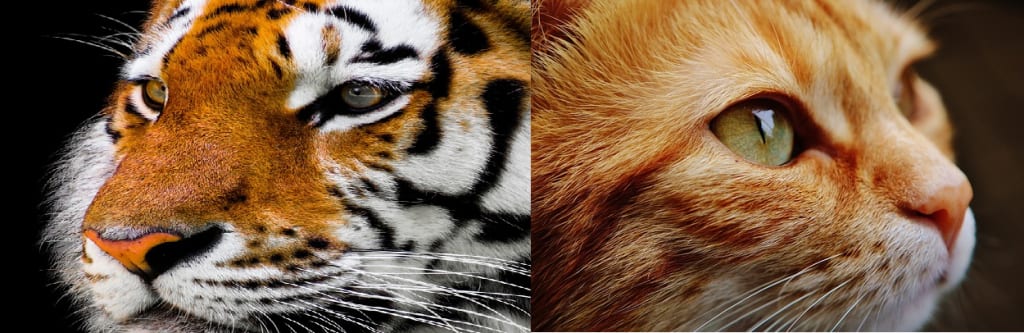
Habit Similarity and Mood Differences between Cat and Tiger
Cats and tigers belong to the same family of animals, known as felidae, but they differ significantly in their size and habitat. Domestic cats, also known as Felis catus, are small carnivorous mammals that are commonly kept as pets. On the other hand, tigers, also known as Panthera tigris, are the largest members of the cat family and are found in the wild in Asia. Despite these differences, cats and tigers share some common habits while exhibiting mood differences due to their size and habitat.
Habit Similarities
Cats and tigers are known for their cleanliness and spend a significant amount of time grooming themselves. This grooming behavior is essential for maintaining their fur and skin, which protects them from external elements. Both cats and tigers have rough tongues that help in removing dirt, dead skin cells, and loose fur from their body. This habit also helps in distributing natural oils, which keep their fur shiny and healthy.
Another common habit between cats and tigers is their sleeping pattern. Cats and tigers are nocturnal animals, which means they are active during the night and sleep during the day. Cats can sleep up to 16 hours a day, while tigers can sleep up to 18 hours a day. This extended period of sleep is crucial for their physical and mental well-being, as it helps them conserve energy and stay alert during the night.
Cats and tigers are also solitary animals, and they prefer to spend most of their time alone. While cats are domesticated and live with humans, they still exhibit this solitary behavior. They often hide in secluded areas or find quiet spots to relax and sleep. Similarly, tigers are known for their solitary lifestyle and are found mostly alone in their territory. However, they do socialize during mating season or when raising their cubs.
Mood Differences
The mood differences between cats and tigers are mainly due to their size and habitat. Cats are small and domesticated, and they are accustomed to living with humans. They exhibit affectionate behavior towards their owners and enjoy playing with toys or other objects. They also have a playful and curious nature, and they often engage in activities that stimulate their senses.
On the other hand, tigers are large, powerful animals that are found in the wild. They are fierce predators and exhibit aggressive behavior when hunting for their prey. Tigers are solitary animals and do not tolerate the presence of other tigers in their territory. They are known for their territorial behavior and are very protective of their territory.
While cats are known for their affectionate behavior, tigers are known for their fierce nature. Tigers can be very aggressive towards humans and other animals if they feel threatened. They are also known for their unpredictable behavior, and it is not easy to read their mood or intention. Tigers are wild animals, and they require a specific habitat to thrive, which is not suitable for domestication.
Conclusion
In conclusion, cats and tigers share some common habits, such as their grooming behavior and sleeping pattern. They are both solitary animals that prefer to spend most of their time alone. However, their mood differences are mainly due to their size and habitat. Cats are domesticated and exhibit affectionate behavior towards their owners, while tigers are wild animals that exhibit aggressive behavior when hunting for their prey. Tigers require a specific habitat to thrive, which is not suitable for domestication. Understanding these similarities and differences can help us appreciate the beauty and complexity of these magnificent animals.
About the Creator
Keep reading
More stories from Pravin Mhade and writers in Education and other communities.
"Taking Care of Famous Dogs: Health Tips for Beloved Breeds"
Dogs have been man’s best friend for thousands of years. They have been serving humans in many different ways, from being hunting companions to guard dogs. Some dogs even become famous because of their incredible stories or their exceptional qualities. If you happen to own one of these famous dogs, you might want to take extra care of them to ensure they are always in their best health. In this article, we will provide health tips for some beloved breeds that have captured the hearts of many dog lovers around the world.
By Pravin Mhade3 years ago in Education
Why Brazil E-commerce Is Transforming the Way Consumers Shop
Brazil E-commerce and Its Growing Influence The Brazilian consumer is going through a major transition. Given that technology has become a key part of everyday life, e-commerce has gained prominence. The short-term growth of e-commerce is extraordinary. Initially restricted to large cities and narrow product niches, online shopping has become a staple channel for millions of Brazilian consumers across the country.
By deepanshu Thakur4 days ago in Education
Is Someone Tracking You? How a GPS Tracker Detector Can Help
In a world where information reaches all corners of the globe, the issue of privacy is getting all the more serious. Phones, applications, and cars are transmitting information, not always with explicit permission. Creepy tracking devices are now more widespread, sneaking into cars or personal journeys to track movement without any notice.
By Arfa Gravitya day ago in Education
Bartender
On the heels of grief, pain bears down hard. On the heels of death, pain awakens the quiet place between the end of our own life and now. Feeling anything is like seeing a film and in black and white, slow motion, all sound turned off. Just watching. Gritting teeth, awkward smiles and bloody red eyes move around, scanning the others who are feeling something I don't want to feel, but I do. Escapism is all I have ever known. ~
By ROCK aka Andrea Polla (Simmons)3 days ago in Poets




Comments
There are no comments for this story
Be the first to respond and start the conversation.