
Gua Sha for Headaches and Neck & Shoulder Pain: A Natural Way to Find Relief
Discover how gua sha can naturally relieve headaches and neck or shoulder pain. Learn simple techniques, benefits, and safe self-care tips.
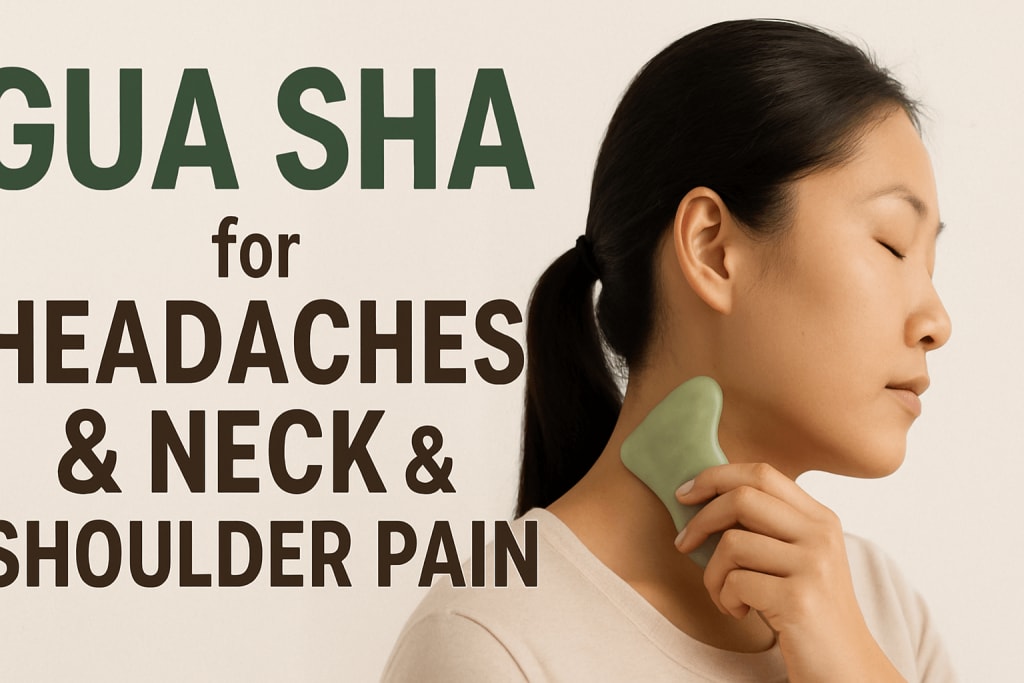
Headaches and neck or shoulder pain have become everyday problems in modern life.
- Hours of computer work often end with throbbing headaches.
- Long periods of looking down at a phone can leave the neck stiff and shoulders sore.
Many people rely on painkillers or massages for temporary relief, but the discomfort often returns. In traditional Chinese medicine, there is a simple, safe, and natural way to ease these symptoms — gua sha.
What Is Gua Sha and How Does It Work?
Gua sha is a traditional therapy that uses a smooth-edged tool (made of jade, quartz, horn, etc.) to scrape along the skin.
Its main benefits include:
- Boosting circulation and improving lymphatic drainage.
- Relaxing tense muscles and reducing local inflammation.
- Unblocking meridians and balancing energy flow to relieve pain.
For centuries, gua sha has been used for conditions like fever, stiffness, and body aches. Today, it is widely recognized as a natural method to manage tension-related discomfort.
Using Gua Sha for Headaches
1. Which headaches can gua sha help with?
- Tension headaches: often caused by stress, mental fatigue, or stiff neck muscles.
- Cold-induced headaches: triggered by wind or chills, with heavy or tight sensations in the head.
👉 Gua sha works best for these types. For migraines or sudden, severe headaches, gua sha may only serve as a complementary practice, and medical attention is still important.
2. How to apply gua sha for headaches
- Target areas: forehead, temples, back of the neck (Fengchi and Dazhui acupoints).
- Technique: use gentle pressure, scrape outward and downward for about 5–10 minutes.
- Tip: applying a warm compress before gua sha helps relax muscles and improves results.
Using Gua Sha for Neck and Shoulder Pain
1. Common causes of stiffness
- Long hours of desk work and poor posture.
- Reduced blood flow from keeping the same position too long.
- Stress, fatigue, or lack of proper sleep.
2. How gua sha helps
- Relieves tightness in the neck and shoulders.
- Improves blood flow and eases soreness.
- Helps reduce dizziness and fatigue linked to tension.
3. How to apply gua sha for neck & shoulders
- Target areas: back of the neck (Fengchi), shoulder wells (Jianjing), and along the shoulder blades.
- Technique: scrape gently from top to bottom along the sides of the spine and shoulders, avoiding direct pressure on bones.
- Frequency: 1–2 times per week is enough.
Safety Tips and Precautions
- Avoid gua sha if you are pregnant, have bleeding disorders, or skin infections.
- Don’t overdo it — gua sha should be gentle, not forceful. Visible red marks are common but should not be painful.
- Keep warm afterward: avoid cold drafts or showering immediately after treatment.
- Seek medical help if you experience sudden, intense headaches, especially with nausea or vision problems.
Daily Lifestyle Tips to Prevent Pain
Gua sha works best when combined with healthy habits:
- Maintain good posture and avoid hunching over screens.
- Take breaks to stretch your neck and shoulders.
- Get enough sleep and manage stress.
- Exercise regularly to improve circulation and resilience.
Conclusion
Gua sha is more than just a traditional practice — it’s a simple, effective way to ease headaches and relieve neck and shoulder pain naturally. With the right technique and regular self-care, it can become part of your routine to maintain balance and comfort.
Instead of reaching for painkillers every time, why not try gua sha as a gentle and holistic solution?
About the Creator
Is Pharmacy Tech a Good Career Choice for 2026?
Given the recent shifts in the market and AI automation, people are now well aware that economic shakeups can drastically hinder their income sources. This is causing a lot of people to switch careers, and a majority of people are targeting healthcare roles. However, not all allied healthcare roles are created equal. Also, you can aim to become a medical assistant, but if you do not want to deal with patients, the ideal role for you is that of a Pharmacy Technician.
By Meaghan Howe5 days ago in Education
7 Memory Path Decisions That Decide Server Throughput
Server performance isn't just about raw processing power or storage capacity. The real bottleneck often hides in something less obvious: how your system handles memory paths. Every data request travels through a complex network of memory channels and controllers. These journeys determine whether your server flies or crawls.
By Harry Cmaryabout 17 hours ago in Education




Comments
There are no comments for this story
Be the first to respond and start the conversation.