
How to Distinguish Between Natural Quartz Gua Sha Tools and Dyed Plastic Gua Sha Tools?
Learn how to distinguish natural quartz gua sha tools from dyed plastic imitations using visual, tactile, and material-based diagnosis methods.
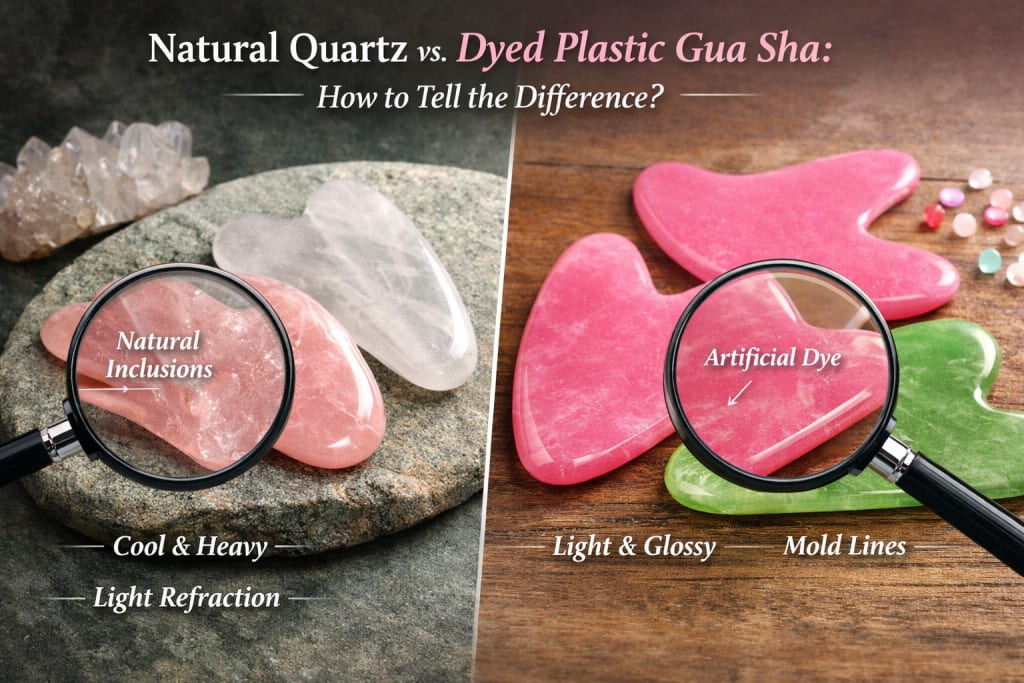
In recent years, gua sha tools have moved from traditional Chinese medicine clinics into mainstream beauty routines around the world. As facial massage, lymphatic drainage, and holistic skincare gain popularity, quartz gua sha tools—especially rose quartz and clear quartz—have become highly sought after. However, alongside this growth, the market has also been flooded with dyed plastic and synthetic imitations that are often misleadingly marketed as “natural crystal.”
From a gua sha diagnosis perspective, identifying the true material of a gua sha tool is not just about value or aesthetics. The material directly affects skin safety, temperature retention, massage performance, durability, and even hygiene. Dyed plastic tools can behave very differently on the skin compared to natural quartz, especially under repeated friction, temperature changes, and long-term use.
This article aims to provide a clear, practical, and evidence-based guide to distinguishing natural quartz gua sha tools from dyed plastic alternatives. Drawing on years of experience in the gua sha and beauty tools industry, we will break down material science, visual cues, tactile differences, and common industry misconceptions in a way that is easy to understand and applicable for both professionals and consumers.
Throughout this guide, we will use authoritative references from gemology, materials science, and cosmetic safety research to support each diagnostic method.
Understanding the Core Materials Behind Gua Sha Tools
What Is Natural Quartz?
Natural quartz is a crystalline mineral composed of silicon dioxide (SiO₂). It is one of the most abundant minerals on Earth and has been used for centuries in tools, ornaments, and therapeutic objects. In gua sha tools, quartz is valued for its hardness, smooth polish, cool touch, and chemical stability.
Quartz forms through geological processes that take thousands to millions of years, which results in internal crystal structures, natural inclusions, and subtle variations in color and transparency. According to the Gemological Institute of America (GIA), quartz has a Mohs hardness of 7, making it significantly more scratch-resistant than most plastics
What Are Dyed Plastic Gua Sha Tools?
Dyed plastic gua sha tools are typically made from acrylic, resin, or other polymer-based materials. These plastics are inexpensive, easy to mold, and can be dyed to imitate the color of rose quartz, jade, or amethyst. In many cases, the dye is added to the polymer mixture or applied as a surface coating.
While plastic tools may look visually appealing at first glance, they lack the crystalline structure, thermal properties, and long-term stability of natural stone. Over time, they may discolor, warp, or develop micro-scratches that harbor bacteria.
From a diagnostic standpoint, plastic gua sha tools behave more like cosmetic accessories than therapeutic tools.
Visual Diagnosis: What the Eye Can (and Cannot) Tell You
Color Depth and Uniformit
One of the first visual clues lies in how color appears across the surface of the tool. Natural quartz typically shows variation in tone, even within the same piece. Rose quartz, for example, often has cloudy zones, milky translucency, or uneven saturation.
In contrast, dyed plastic tools often display unnaturally uniform color. The shade may look too consistent from edge to center, with no internal variation. This uniformity is a red flag, especially when the color appears overly vibrant or opaque.
According to mineralogical studies published by Mindat, natural quartz rarely exhibits perfectly even coloration due to trace mineral distribution during formation
Transparency and Light Interaction
Natural quartz interacts with light in a subtle but complex way. When held up to a light source, you may notice internal refraction, soft glow, or depth within the stone. Even opaque quartz often has a sense of internal layering.
Dyed plastic, on the other hand, tends to transmit light evenly or diffusely without internal complexity. The light may pass through in a flat, lifeless manner or reflect sharply off the surface without depth.
Mold Lines and Edge Details
Another important diagnostic point is edge precision. Quartz gua sha tools are cut, shaped, and polished from solid stone blanks. Even with advanced CNC processing, the edges will show natural softness rather than perfectly identical curves.
Plastic tools are injection-molded, which often leaves subtle mold lines or overly symmetrical edges. These lines may be sanded down but can still be detected under close inspection.
Tactile Diagnosis: How the Tool Feels in the Hand and on the Skin
Weight and Density Perception
Natural quartz has a higher density than plastic. When you hold a quartz gua sha tool, it feels cool, solid, and weighty for its size. This weight contributes to better pressure control during massage and allows the tool to glide smoothly without excessive force.
Plastic tools feel noticeably lighter. Even thicker plastic pieces lack the reassuring heft of real stone. Over extended use, this difference becomes especially apparent to experienced practitioners.
According to materials density data published by Engineering Toolbox, quartz has a density of approximately 2.65 g/cm³, while acrylic plastics average around 1.18 g/cm³
Temperature Retention and Thermal Conductivity
One of the most reliable diagnostic methods is temperature behavior. Natural quartz remains cool to the touch at room temperature and warms slowly when in contact with skin. This cooling effect is one reason quartz is favored in facial massage routines.
Plastic, by contrast, adapts quickly to ambient temperature and warms almost immediately in the hand. This rapid temperature change indicates low thermal conductivity.
Studies on thermal properties of minerals and polymers published by MatWeb confirm that crystalline minerals like quartz retain temperature longer than synthetic polymers
Surface Feel During Massage
When gliding across the skin, quartz produces a distinctly smooth yet firm sensation. The surface polish feels dense, and resistance remains consistent across the face or body.
Plastic tools often feel slick at first but can develop drag as the surface heats up. Over time, micro-abrasions can alter the glide quality, which may increase skin irritation.
Sound and Impact Testing: A Subtle but Telling Diagnostic Method
The Tap Test Explained
While not commonly discussed in consumer guides, sound testing is a traditional method used in gem identification. When lightly tapped against another stone or a hard surface, natural quartz emits a clear, ringing sound due to its crystalline lattice.
Plastic produces a dull, muted sound with no resonance. This difference becomes more obvious when comparing multiple tools side by side.
Limitations of Sound Testing
It is important to note that sound testing should be used as a supplementary diagnostic method. Surface coatings, thickness, and tool shape can influence sound. However, when combined with visual and tactile cues, it can strengthen overall identification accuracy.
Durability and Wear Over Time as Diagnostic Evidence
Scratch Resistance and Surface Aging
Quartz’s hardness makes it resistant to everyday scratches. With proper care, a quartz gua sha tool can maintain its surface integrity for many years.
Plastic tools scratch easily, even when stored in soft pouches. Over time, these scratches can trap skincare residue and bacteria, raising hygiene concerns.
The Mohs hardness scale, widely used in mineralogy, clearly differentiates quartz (7) from plastics (typically below 3)
Color Stability and Fading
Natural quartz retains its color indefinitely under normal use. Dyed plastic may fade, yellow, or develop uneven discoloration after repeated exposure to oils, sunlight, and cleaning agents.
This aging pattern often reveals the true nature of imitation tools within months of use.
Safety and Skin Health Implications
Chemical Stability and Skin Contact
Quartz is chemically inert and does not react with skincare products or sweat. This makes it suitable for sensitive skin and long-term use.
Some plastics, especially low-grade polymers, may release trace chemicals over time. Research published by the European Chemicals Agency (ECHA) highlights potential concerns with certain plastic additives used in consumer products.
Heat, Friction, and Microplastic Concerns
Repeated friction and heat can cause micro-abrasion on plastic surfaces, potentially contributing to microplastic shedding. While research on gua sha-specific exposure is limited, broader cosmetic tool studies increasingly emphasize material safety and durability.
Price, Branding, and Market Red Flags
Unrealistically Low Pricing
High-quality natural quartz requires raw material sourcing, cutting, polishing, and quality control. When a gua sha tool is priced extremely low, especially in bulk marketplaces, it often indicates synthetic material.
Vague Material Descriptions
Terms such as “crystal-style,” “quartz look,” or “rose crystal resin” are commonly used to avoid direct claims. Transparent brands typically specify “100% natural quartz” and may provide sourcing or processing details.
Professional Verification and Advanced Testing Methods
Gemological Testing
Professional gem labs can confirm quartz authenticity using refractive index testing, spectroscopy, and microscopic examination. While this level of testing is not practical for everyday consumers, it underscores the material differences discussed earlier.
Organizations like the International Gem Society provide educational resources on gemstone identification
Conclusion: Building Confidence Through Informed Gua Sha Diagnosis
Distinguishing between natural quartz gua sha tools and dyed plastic imitations does not require advanced equipment or expert training. By combining visual observation, tactile awareness, temperature behavior, and durability assessment, consumers and professionals can make informed decisions with confidence.
From a gua sha diagnosis standpoint, material authenticity directly influences treatment quality, skin safety, and long-term value. Natural quartz offers consistency, stability, and performance rooted in its geological origins, while dyed plastic tools remain cosmetic imitations with inherent limitations.
As the beauty industry continues to evolve, education remains the most effective safeguard against misinformation. By understanding how materials behave—not just how they look—you can ensure that your gua sha practice is built on authenticity, safety, and genuine therapeutic value.
About the Creator
Speak and Be Heard: A Beginner’s Guide to Becoming a Podcast Host and Growing Your Audience
Becoming a podcast host is an exciting way to share your ideas, inspire others, and build a strong community. Whether you want to teach, entertain, or have great conversations, podcasting gives you a voice that can reach people around the world. But starting a podcast and growing an audience takes more than just a microphone. It requires planning, patience, and a real connection with your listeners. In this guide, you'll learn how to become a podcast host and grow your audience step by step.
By Spencer Hakimian6 days ago in Education


Comments
There are no comments for this story
Be the first to respond and start the conversation.