
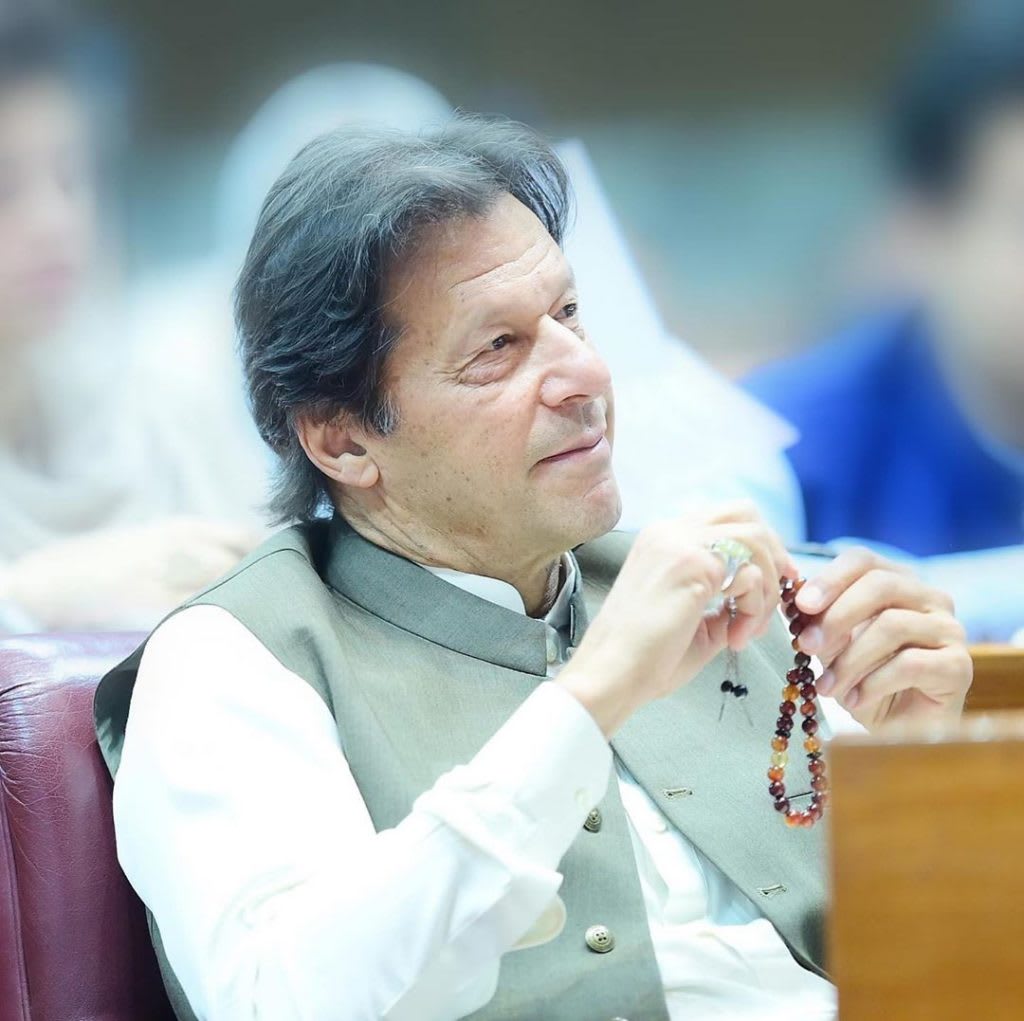
Imran Khan, the current Prime Minister of Pakistan, has been a prominent figure in Pakistani politics for decades. From his successful cricket career to his political journey and eventual rise to power, Khan has garnered both admiration and criticism throughout his leadership. This article will delve into his background, achievements, and challenges as the leader of Pakistan.
Born on October 5, 1952, in Lahore, Imran Khan was raised in an affluent family. He attended prestigious schools in Pakistan and later studied at the University of Oxford in England, where he pursued a degree in Politics, Philosophy, and Economics. It was during his time in England that Khan began his cricket career and eventually became one of Pakistan's most celebrated sports figures.
Imran Khan captained the Pakistan national cricket team and led them to their first-ever Cricket World Cup victory in 1992. His charismatic leadership and exceptional skills on the field earned him immense popularity and respect among cricket enthusiasts. After retiring from cricket, Khan transitioned into a philanthropic role by establishing the Shaukat Khanum Memorial Cancer Hospital & Research Centre and Namal University, both of which have provided vital services to the people of Pakistan.
In 1996, Khan ventured into politics by founding the political party Pakistan Tehreek-e-Insaf (PTI), which translates to the Pakistan Movement for Justice. PTI's platform focused on combating corruption, promoting social justice, and working towards a welfare state. Initially, Khan faced challenges in gaining significant political traction, but over the years, his party's popularity grew, especially among the youth and urban middle-class.
Khan's persistence paid off when PTI emerged as the leading party in the 2018 general elections, securing a majority in the National Assembly. Consequently, he was sworn in as the 22nd Prime Minister of Pakistan on August 18, 2018. Khan's victory marked a significant shift in Pakistani politics, as it brought a new party to power and raised hopes for much-needed reforms.
One of Khan's key campaign promises was to address corruption in Pakistan, a persistent issue that had plagued the country for years. In his quest to fulfill this promise, he initiated an anti-corruption drive, targeting high-profile politicians and government officials accused of embezzlement and misuse of power. While these efforts were appreciated by many, critics argued that the anti-corruption campaign lacked impartiality and targeted mainly opposition figures.
Khan's government also focused on revitalizing the economy and attracting foreign investment. Under his leadership, Pakistan sought financial assistance from international institutions such as the International Monetary Fund (IMF) to stabilize the economy and implement structural reforms. The government introduced austerity measures, aimed at reducing expenses and increasing revenue to address the fiscal deficit. However, these economic policies faced criticism for their impact on the common people, as they resulted in rising inflation and a higher cost of living.
Foreign policy has been another significant aspect of Khan's tenure. He has advocated for peaceful relations with neighboring countries, particularly India and Afghanistan. Khan made efforts to de-escalate tensions with India and foster dialogue to resolve long-standing issues such as the Kashmir conflict. However, progress in this regard has been slow, and the relations between the two countries remain strained. Regarding Afghanistan, Khan has emphasized the importance of a peaceful and stable Afghanistan and has been involved in mediating talks between the Afghan government and the Taliban.
As with any leader, Imran Khan has faced numerous challenges during his tenure. The economic situation in Pakistan has been a pressing concern, with the country grappling with a large fiscal deficit, a high debt burden, and limited revenue generation. The implementation of economic reforms has faced resistance, and the desired results have yet to be fully realized.
Furthermore, critics have raised concerns about the pace of governance reforms and the lack of progress in addressing social issues suchas poverty, education, healthcare, and infrastructure development. Some argue that Khan's focus on anti-corruption efforts has overshadowed the need for comprehensive policies in these areas.
Another area of contention has been media freedom and human rights. Khan's government has faced criticism for allegedly curbing media freedoms and suppressing dissenting voices. Human rights organizations have raised concerns about the treatment of minority groups and the enforcement of strict blasphemy laws in the country.
Additionally, Khan's leadership has been criticized for its handling of the COVID-19 pandemic. Some have argued that the government's response lacked coordination and effective implementation of preventive measures, leading to a high number of cases and fatalities.
Despite the challenges, it is important to acknowledge the achievements of Imran Khan's government. One notable accomplishment is the launch of the Ehsaas Program, a social welfare initiative aimed at reducing poverty and inequality. The program includes initiatives such as cash transfers, healthcare coverage, and scholarships for deserving students.
Khan's government has also made efforts to improve governance and transparency. The establishment of the Citizen's Portal, a digital platform for citizens to register complaints and seek government assistance, is one such initiative. The government has also taken steps to digitize various services, streamlining administrative processes and reducing corruption.
In the realm of foreign policy, Khan's emphasis on regional peace and stability has been noteworthy. His government has played a role in mediating peace talks between the United States and the Taliban in Afghanistan. Pakistan's participation in regional forums and its efforts to enhance trade relations with neighboring countries have also been positive developments.
It is worth mentioning that opinions about Imran Khan's leadership and his policies vary among individuals and political groups in Pakistan. While some view him as a charismatic leader committed to bringing change and fighting corruption, others criticize the pace of progress and the impact of his policies on the common people.
In conclusion, Imran Khan's journey from a cricket legend to the Prime Minister of Pakistan has been a remarkable one. His rise to power represented a shift in Pakistani politics, with promises of reform, anti-corruption efforts, and a focus on social justice. However, challenges remain in implementing these reforms effectively, addressing economic issues, and promoting human rights. As with any leader, the ultimate judgment of Imran Khan's tenure will be shaped by the long-term impact of his policies on the people of Pakistan.
About the Creator
Fascinating Facts About Mosquitoes
Mosquitoes, which we often consider ordinary insects, are actually among the most dangerous creatures on Earth. They are responsible for more human deaths each year than any other animal, making them the deadliest species on the planet. Legend even suggests that mosquitoes contributed to the death of Alexander the Great.
By Sudais Zakwan7 days ago in Education



Comments
There are no comments for this story
Be the first to respond and start the conversation.