
GK: Why Is India Called A Sub-Continent?
Understanding the geography, history, and cultural diversity that make India unique in the world

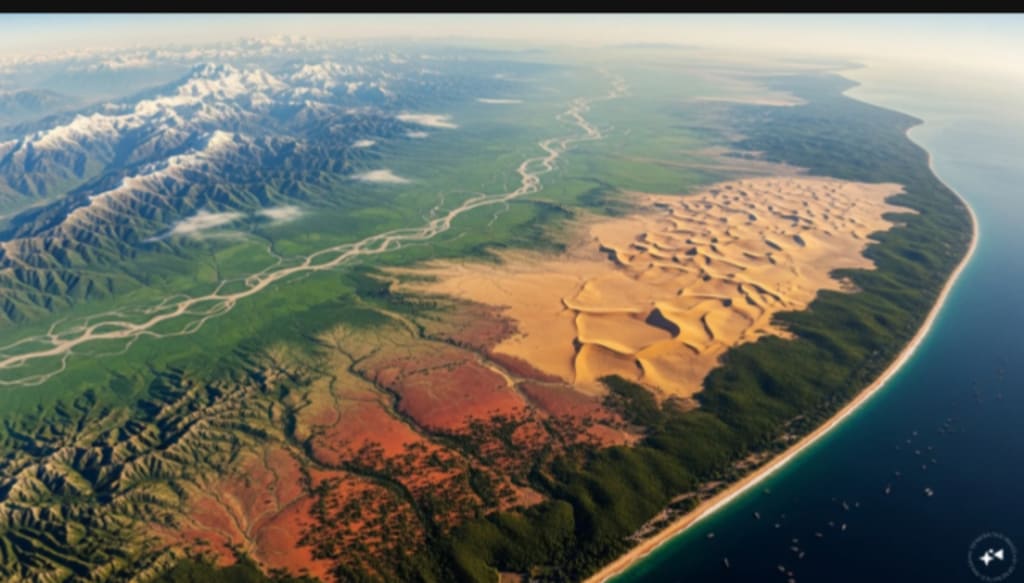
The term sub-continent is often used to describe India, but have you ever wondered what it truly means and why India alone carries this distinction? Unlike most countries that are simply part of a continent, India is recognized as a sub-continent because of its vast size, distinct geography, rich history, and cultural diversity that sets it apart from the rest of Asia.
India is not just another nation on the Asian map. It represents an entire world within itself—geographically, culturally, and historically. To understand why, we must look at the meaning of the word sub-continent and the special characteristics that make India deserving of this title.
What Does the Term “Sub-Continent” Mean?
A sub-continent is a large, distinct landmass that is part of a continent but has unique physical and cultural features that separate it from the rest of that continent. It is smaller than a continent but larger and more diverse than a typical country or region.
India is called a sub-continent because it:
Has clear natural boundaries
Possesses a long and independent historical identity
Displays enormous cultural and linguistic diversity
Covers a vast geographical area
Has unique climatic and ecological systems
These qualities distinguish India from the rest of Asia and justify its classification as a sub-continent rather than just a country.
Geographical Reasons: Natural Boundaries Define India
One of the strongest reasons India is called a sub-continent is its physical separation from the rest of Asia.
India is bounded by:
The Himalayan mountain range in the north
The Indian Ocean to the south
The Arabian Sea to the west
The Bay of Bengal to the east
These natural barriers have historically isolated India from neighboring regions, creating a sense of geographical independence. The Himalayas, in particular, form one of the most formidable mountain ranges in the world, acting as a natural wall between India and Central Asia.
Because of this isolation, India developed its own ecosystems, climate systems, and settlement patterns distinct from other parts of Asia.
A Unique Geological History
India’s status as a sub-continent is also rooted in geology. Millions of years ago, the Indian landmass was part of the ancient supercontinent Gondwana. It later broke away and drifted northward before colliding with the Eurasian plate. This collision formed the Himalayas and gave India its unique geological structure.
This independent geological journey is one of the main scientific reasons why India is considered separate from the rest of Asia in many geographical studies.
Cultural Diversity Like a Continent
Another major reason India is called a sub-continent is its immense cultural diversity. Few countries in the world contain as many languages, religions, customs, and traditions within one political boundary.
India is home to:
Hundreds of languages and dialects
Major world religions such as Hinduism, Buddhism, Jainism, and Sikhism
Vast differences in clothing, food, architecture, and festivals
Traveling from north to south or east to west in India often feels like moving between different countries. Each region has its own history and identity, yet all are part of one nation.
This level of diversity is more characteristic of a continent than a single country, reinforcing the idea of India as a sub-continent.
Historical Identity as a Civilization
India’s long and continuous civilization is another reason for its sub-continental status. From the Indus Valley Civilization to the Mauryan and Gupta empires, and later the Mughal period and British rule, India has always existed as a distinct cultural and political entity.
Throughout history, India maintained a strong civilizational identity that influenced much of Asia through:
Trade
Philosophy
Mathematics
Astronomy
Art and literature
Its historical continuity sets it apart from many other regions that were shaped primarily by external powers.
Climate and Ecological Variety
India contains almost every type of climate found on Earth:
Snow-covered mountains
Tropical rainforests
Deserts
Fertile plains
Coastal regions
This wide climatic range supports extraordinary biodiversity and agriculture. From the Thar Desert to the Western Ghats and from the Ganges plains to the Sundarbans, India’s ecological zones rival those of entire continents.
Such natural variety strengthens the idea that India is not just one region of Asia but a self-contained geographical world.
Political and Regional Influence
India’s size and influence also contribute to its classification as a sub-continent. It occupies a dominant position in South Asia and has historically shaped the political and cultural development of surrounding regions such as Pakistan, Bangladesh, Nepal, Sri Lanka, Bhutan, and Myanmar.
The term “Indian sub-continent” is often used to describe this entire region, showing India’s central role in defining the identity of South Asia.
Why Not Just Call It a Country?
Although India is officially a country, calling it a sub-continent highlights its extraordinary scale and complexity. It recognizes that India is:
Larger than many European nations combined
More culturally diverse than most continents
Historically independent as a civilization
Geographically distinct from mainland Asia
In simple terms, India is a country by political definition, but a sub-continent by geographical and cultural significance.
Modern Usage of the Term
Today, the phrase “Indian sub-continent” is commonly used in geography and history textbooks to describe the region that includes India and its neighboring countries. The term emphasizes the shared cultural roots and historical connections among these nations while acknowledging India’s central role.
The use of the term does not diminish the sovereignty of other countries but reflects the deep-rooted civilizational unity of the region.
Conclusion: A World Within a World
India is called a sub-continent because it is more than just a nation—it is a complete geographical and cultural entity. Its natural boundaries, geological history, diverse cultures, ancient civilization, and ecological variety make it distinct from the rest of Asia.
From snow-covered peaks to tropical shores, from ancient temples to modern cities, India represents a miniature continent in itself. This is why scholars and geographers continue to describe India not merely as part of Asia, but as a sub-continent with its own identity and legacy.
Understanding this concept helps us appreciate India’s uniqueness and the reason it holds such a special place in world geography and history.
In many ways, India is truly a “world within a world.”
About the Creator
Sajida Sikandar
Hi, I’m Sajida Sikandar, a passionate blogger with 3 years of experience in crafting engaging and insightful content. Join me as I share my thoughts, stories, and ideas on a variety of topics that matter to you.
Keep reading
More stories from Sajida Sikandar and writers in Education and other communities.
Canadian Work Permit 2026: Check If You Qualify to Work in Canada
Canada remains one of the most attractive destinations in the world for foreign workers. With a strong economy, high quality of life, and continued labor shortages in key industries, the country is actively welcoming skilled and temporary workers in 2026. If you’re considering working in Canada, understanding the work permit system and whether you qualify is the first and most important step.
By Sajida Sikandar13 days ago in Education
The Bio-Logic Era Inside China’s $9 Billion Premium Skincare Ascent
The era of the "one-size-fits-all" luxury cream is officially over. Walking through the beauty halls of the Tianshan District or scrolling through a live-stream on Douyin in 2026, it becomes clear that the Chinese beauty consumer is now the most demanding on the planet. I call them "Skin-Intellectuals" shoppers who can break down a chemical formula with the precision of a lab technician and who value clinical proof over celebrity endorsements.
By Neeraj kumarabout 8 hours ago in Education
What Happens To Your Brain When You Stop Multitasking
Digital technology is the culprit that is causing us to doom scroll when tired, disengaged and unmotivated with the content that motivated you to log onto your device to consume in the first place. That is only the beginning. In the modern workplace (and even when filing cabinets were around, I confirmed this with my adopted parents to get my facts right); reading files while you are supposed to be present to the caller on the other end of the phone line is another classic example of multitasking that causes your brain (although adaptable and intelligent) to lose focus and concentration.
By Justine Crowley3 days ago in Psyche



Comments
There are no comments for this story
Be the first to respond and start the conversation.