
Gibbs Reflective Cycle: A Framework for Improving Teaching and Education
The Gibbs Reflective Cycle is designed to help individuals reflect on their experiences systematically. It encourages critical thinking, self-awareness, and actionable insights to improve future practices.
The Gibbs Reflective Cycle is a powerful tool widely used in various fields, including education and healthcare, to enhance professional practice through structured reflection. Developed by Graham Gibbs in 1988, this model encourages individuals to critically analyze their experiences, identify areas for improvement, and implement changes to achieve better outcomes. In education, the Gibbs Reflective Cycle serves as a framework for teachers and educators to reflect on their teaching methods, student interactions, and classroom dynamics. Similarly, in healthcare, it helps professionals evaluate their clinical practices, patient care, and decision-making processes. By fostering a culture of continuous learning and self-improvement, the Gibbs Reflective Cycle plays a pivotal role in improving teaching and education while also being a valuable asset in healthcare settings.
What is the Gibbs Reflective Cycle?
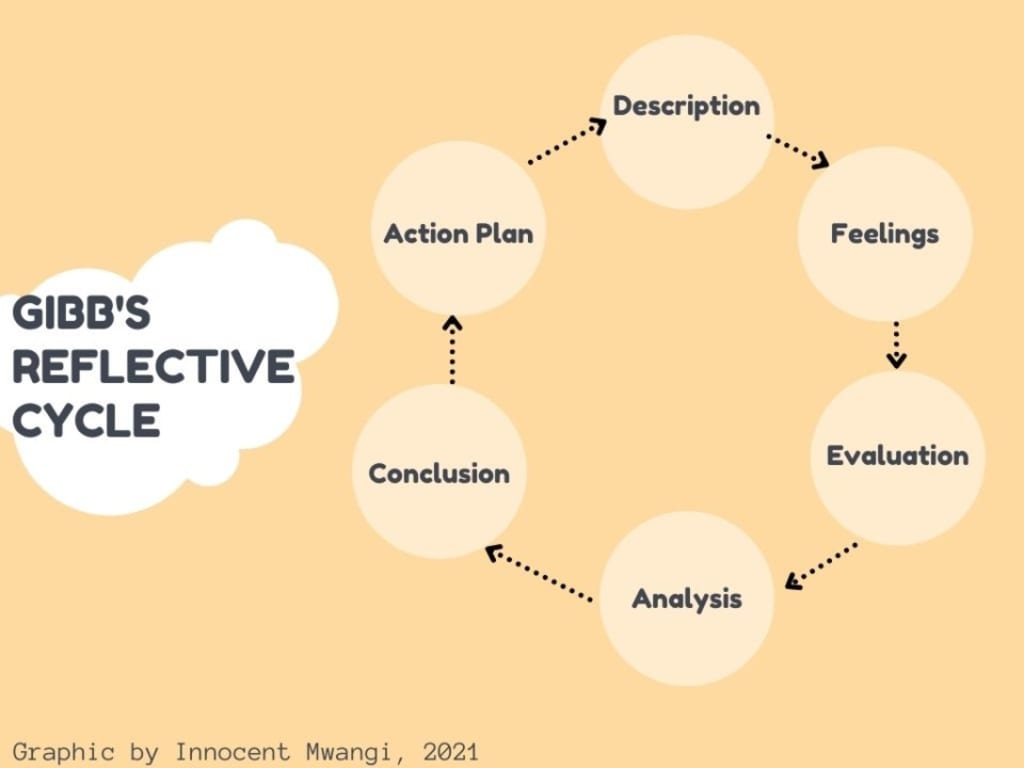
The Gibbs Reflective Cycle consists of six stages that guide individuals through a systematic process of reflection. These stages are:
Description: What happened?
Feelings: What were your thoughts and emotions?
Evaluation: What was good or bad about the experience?
Analysis: What sense can you make of the situation?
Conclusion: What else could you have done?
Action Plan: What will you do differently next time?
This cyclical process ensures that individuals not only reflect on their experiences but also take actionable steps to improve their future practices.
How the Gibbs Reflective Cycle Improves Teaching and Education
1. Encourages Self-Awareness and Critical Thinking
The Gibbs Reflective Cycle prompts educators to examine their teaching practices critically. By reflecting on their experiences, teachers can identify strengths and weaknesses in their methods, leading to more effective teaching strategies.
2. Enhances Student Engagement
When teachers reflect on classroom dynamics and student interactions, they can better understand their students' needs and tailor their teaching approaches accordingly. This leads to improved student engagement and learning outcomes.
3. Promotes Continuous Professional Development
The reflective process encourages educators to stay updated with the latest teaching methodologies and incorporate them into their practices. This commitment to lifelong learning is essential for professional growth.
4. Builds Resilience and Adaptability
Teaching can be challenging, and the Gibbs Reflective Cycle helps educators process difficult experiences, learn from them, and adapt to new situations with confidence.
Applying the Gibbs Reflective Cycle in Healthcare
The Gibbs Reflective Cycle is not limited to education; it is also a valuable tool in healthcare. Healthcare professionals use this model to reflect on patient care, clinical decisions, and team interactions. For example, a nurse might use the cycle to evaluate their response to a medical emergency, identify areas for improvement, and develop a plan to enhance their skills. By integrating the Gibbs Reflective Cycle in healthcare, professionals can improve patient outcomes, reduce errors, and foster a culture of accountability and continuous improvement.
FAQs About the Gibbs Reflective Cycle
1. What is the purpose of the Gibbs Reflective Cycle?
The Gibbs Reflective Cycle is designed to help individuals reflect on their experiences systematically. It encourages critical thinking, self-awareness, and actionable insights to improve future practices.
2. How can the Gibbs Reflective Cycle be used in education?
In education, the cycle helps teachers reflect on their teaching methods, classroom management, and student interactions. It enables them to identify areas for improvement and implement changes to enhance learning outcomes.
3. Why is the Gibbs Reflective Cycle important in healthcare?
In healthcare, the cycle allows professionals to evaluate their clinical practices, patient care, and decision-making processes. It promotes continuous learning, reduces errors, and improves patient outcomes.
4. What are the six stages of the Gibbs Reflective Cycle?
The six stages are: Description, Feelings, Evaluation, Analysis, Conclusion, and Action Plan. These stages guide individuals through a structured reflection process.
5. Can the Gibbs Reflective Cycle be used in other fields besides education and healthcare?
Yes, the Gibbs Reflective Cycle is a versatile tool that can be applied in various fields, including business, social work, and personal development. It is particularly useful in any profession that requires critical reflection and continuous improvement.
Conclusion
The Gibbs Reflective Cycle is a transformative framework that empowers individuals to learn from their experiences and grow professionally. In education, it helps teachers refine their practices and create more engaging learning environments. In healthcare, it enables professionals to deliver better patient care and make informed decisions. By embracing the principles of the Gibbs Reflective Cycle, educators and healthcare professionals alike can foster a culture of continuous improvement, ensuring that they remain effective, adaptable, and resilient in their respective fields.
Whether you are an educator looking to enhance your teaching methods or a healthcare professional striving to improve patient outcomes, the Gibbs Reflective Cycle offers a structured and effective approach to achieving your goals. Start reflecting today and unlock your potential for growth and success!
About the Creator
Robert Gandell
Get the best assignment help in the UK. Our qualified writers provide quality academic writing services tailored to your needs. Satisfaction guaranteed!
Keep reading
More stories from Robert Gandell and writers in Education and other communities.
Expert Guidance for Mechanical Engineering Assignments: From Basics to Advanced Concepts
Mechanical engineering is one of the most diverse and challenging fields of study, combining principles of physics, mathematics, and material science to design, analyze, and manufacture mechanical systems. For beginners, tackling mechanical engineering assignments can be overwhelming due to the complexity of concepts and the need for practical application. This article provides expert guidance for mechanical engineering assignments, helping students navigate from basic principles to advanced topics with confidence. Whether you're struggling with thermodynamics, fluid mechanics, or machine design, this guide will equip you with the tools to excel in your coursework.
By Robert Gandell11 months ago in Education
Are Australian Homes Losing Solar Power at Night? The Real Role of Battery Energy Storage Systems
Australia is one of the world’s leaders in rooftop solar adoption, yet many households still face high electricity bills after sunset. Solar panels generate plenty of power during the day, but without storage, much of that energy is sent back to the grid for minimal returns. Later, homes buy electricity back at higher prices.
By bluematrix5 days ago in Education




Comments (1)
Education is amazing! Great work!