
Genius of Benjamin Banneker
An Educational Story
In the quiet hills of Maryland in the early 18th century, a young Benjamin Banneker grew up surrounded not by grand libraries or formal schools, but by the whispering trees and the steady rhythm of farm life. Born free in 1731—a rare circumstance for African Americans of his era—Benjamin’s world was shaped by curiosity rather than chains, learning rather than limitation.
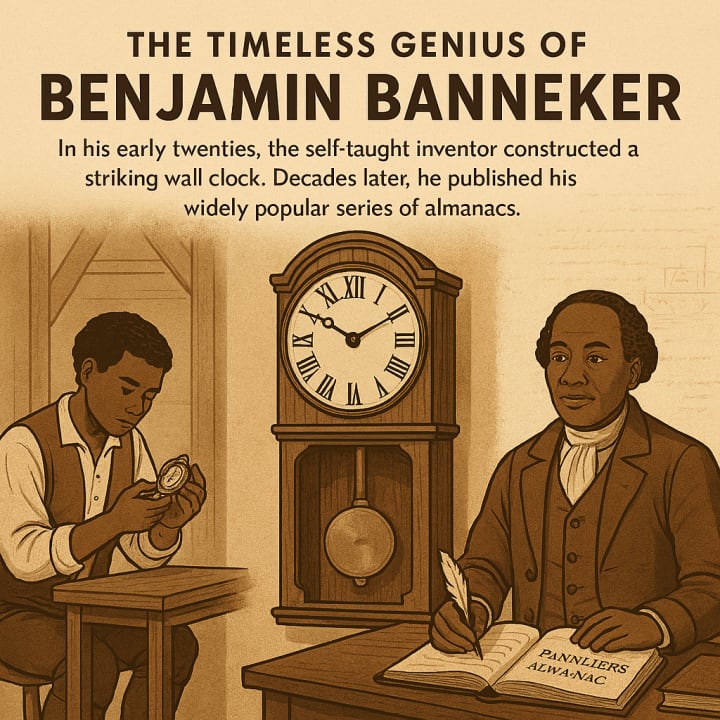
From a young age, he showed an unusual fascination with how things worked. While other children played games or tended to chores, Benjamin often sat for hours taking apart simple tools, examining their gears, springs, and hinges. His parents noticed this spark but could never have guessed the extraordinary future it hinted at.
⏰ The Pocket Watch That Changed Everything
When Benjamin was in his early twenties, a neighbor visited with something remarkable: a small brass pocket watch. It was the first precision mechanical device Benjamin had ever seen.
He held it gently, almost reverently, turning it over in his hands. How could something so tiny keep such perfect time? That single question ignited a fire inside him.
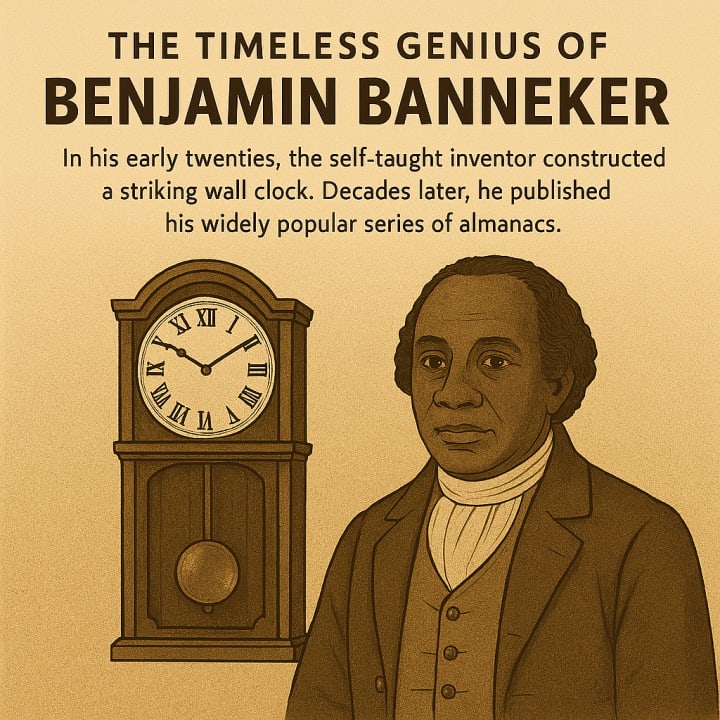
Benjamin asked if he could borrow the watch. For months, he studied it closely—opening it carefully, sketching the gears, memorizing its movements, and imagining how each piece worked in harmony.
Then, with nothing but wood, hand tools, and raw determination, he attempted something no one had ever attempted in America before.
🕰️ The Wooden Clock That Defied Time
After nearly a year of tireless carving, testing, assembling, and reassembling, Benjamin Banneker unveiled his invention: a fully functional, striking wall clock made entirely of wood.
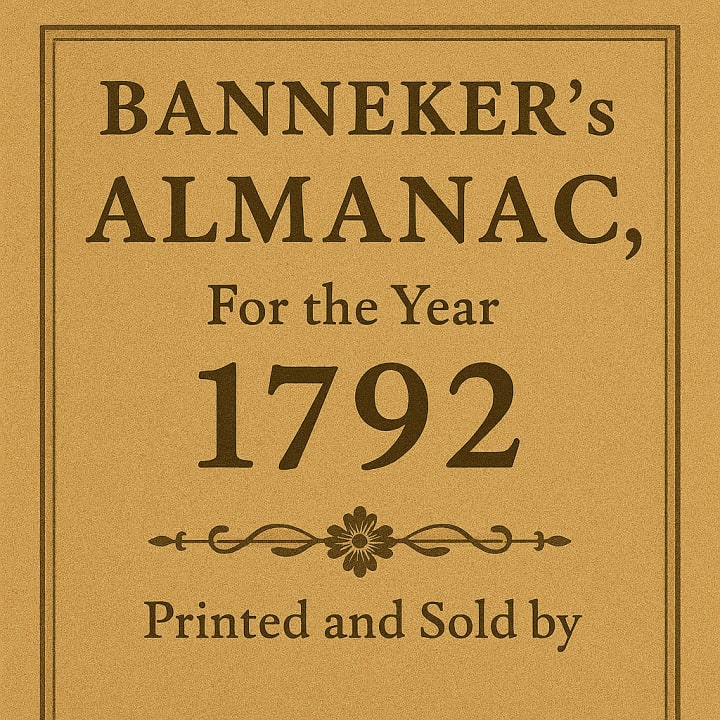
But this was not just any clock—it chimed on the hour by striking a gong, a unique design different from the famous Westminster melody of later times.
Neighbors traveled for miles just to see this miracle of craftsmanship. And incredibly, the clock kept time for more than 40 years. It was the first clock ever built in the American colonies using all‑American parts and materials.
Benjamin Banneker had not just built a clock.
He had built a legacy.
📚 The Almanac That Reached the White House
By the time he reached the age of 61—an age when most people of his era retired from hard labor—Banneker was far from finished with learning.
He turned his attention to astronomy and advanced mathematics. Using homemade instruments and endless nights of sky‑watching, he charted the positions of stars, calculated eclipses, and recorded weather patterns with the precision of a trained scientist.
His work culminated in Banneker’s Almanac, a meticulously crafted guide filled with:
* astronomical calculations
* tidal information
* weather predictions
* seasonal cycles
* and thoughtful essays
These almanacs became essential to farmers and everyday households throughout the region.
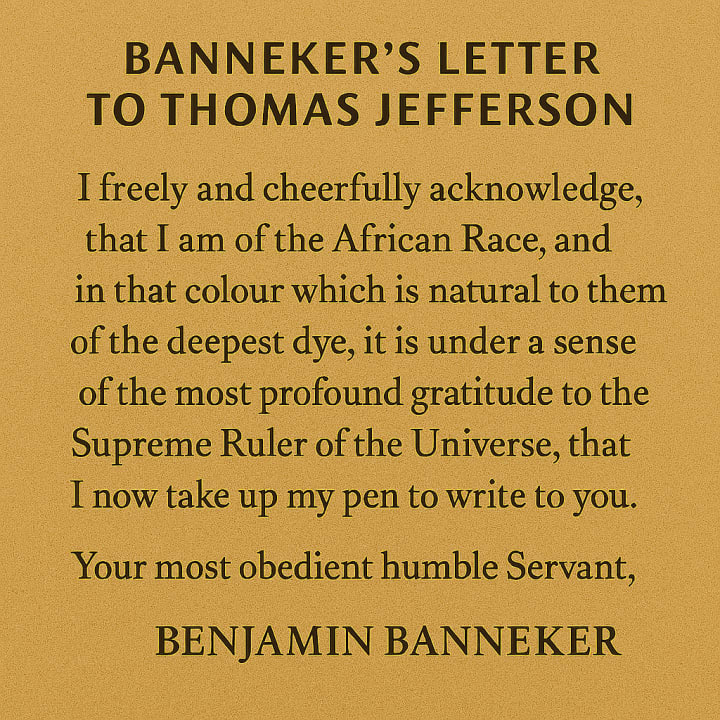
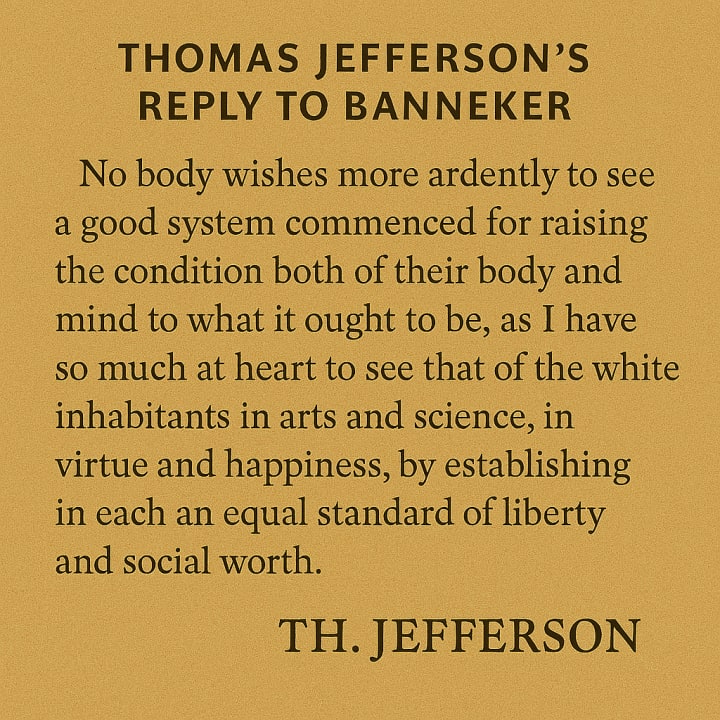
One copy landed in the hands of Thomas Jefferson, then Secretary of State. Banneker not only sent it for review—he included a powerful letter urging Jefferson to recognize the intellectual equality of Black Americans.
Jefferson responded with admiration and forwarded Banneker’s work to the Academy of Sciences in Paris.
From a small farm in Maryland, Benjamin’s brilliance had reached across the Atlantic.
🌟 A Legacy That Still Strikes the Hour
Benjamin Banneker passed away in 1806, but his impact continues to echo through history. He showed what self‑taught genius can achieve, and how determination, curiosity, and courage can outshine even the deepest shadows of inequality.
He left behind no formal degrees, no wealthy estates, no grand monuments
but he left something far more valuable:
Proof that genius can come from anywhere.
Benjamin Banneker’s clock may have been made of wood,
but his legacy was built to last forever.
follow me
About the Creator
TREYTON SCOTT
Top 101 Black Inventors & African American’s Best Invention Ideas that Changed The World. This post lists the top 101 black inventors and African Americans’ best invention ideas that changed the world. Despite racial prejudice.
Keep reading
More stories from TREYTON SCOTT and writers in Education and other communities.
THE STORY OF LIGHT: A TRIBUTE TO DR. SHIRLEY ANN JACKSON AND THE AGE OF FIBER
Before the world could whisper through glass, before light itself carried our voices across continents, before fiber‑optic lines spread across the nation like glowing nerves of a digital body— there was a girl in Washington, D.C.
By TREYTON SCOTT5 days ago in Education
What are neutron stars made of?
The Birth of a Neutron Star To understand what neutron stars are made of, we must begin with how they form. Neutron stars are created during core-collapse supernovae. When a massive star runs out of nuclear fuel, its core collapses under gravity. If the core is not massive enough to become a black hole, it rebounds into a neutron star.
By shahkar jalal2 days ago in Education
Self Help: Grifters' Gospel
On Self-Help, Snake Oil, and the Illusion of Change Psychology professionals and students can be imagined on two opposite sides of a line called self-help books: likely a larger group opposes pop-science and step-by-step manuals filled with talk of success, journaling, and not giving a f**k; others love them, but they aren’t many.
By Avocado Nunzella BSc (Psych) -- M.A.P 4 days ago in BookClub




Comments
There are no comments for this story
Be the first to respond and start the conversation.