
Generator Synchronizing Panel Boards
Operational Principles Why is it necessary to Synchronize Generators?
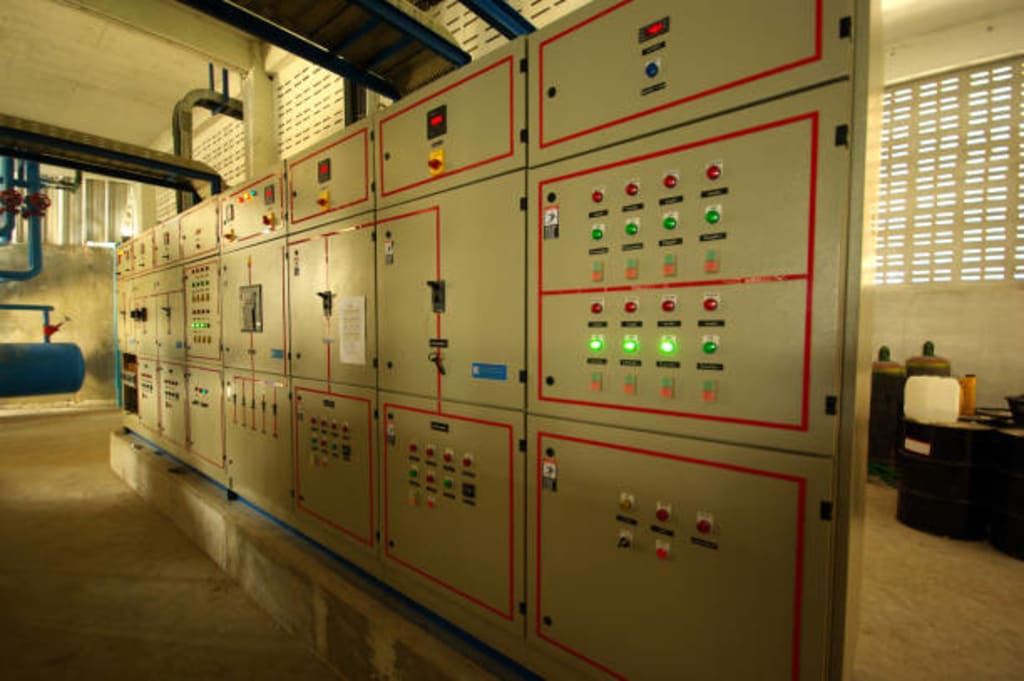
To make sure that the generators on the electricity grid run at the same frequency and phase angle, generator synchronization is required. The electricity produced by each generator can be aggregated and fed into the power system when generators are running in unison. Lack of synchronization between the generators can cause a variety of concerns, including poor power quality, equipment damage, and even system blackouts.
The power from each generator is aggregated and transported to the load (such as residences and businesses) through the transmission lines that connect the generators to one another in a power grid. The power from each generator will not mix well if they are running at various frequencies and phase angles, and the accompanying voltage and current fluctuations can harm the equipment and the power grid as a whole. The power from each generator can be integrated in a way that reduces these oscillations and guarantees that the power grid is running effectively and dependably by synchronizing the generators.
Generator synchronization requirements?
In order to synchronize generators in a power system, a number of conditions must be met:
Frequency: For the generators to efficiently combine their power, they must run at the same frequency. Typically, a governor system regulates the speed of the generator to maintain a steady frequency in order to control the frequency of the generators.
Phase angle: For the generators to combine their power efficiently, they must run at the same phase angle. The location of the voltage and current waveforms in relation to one another is referred to as the phase angle.
Stability: In order for the generators to synchronize well, they must be stable. As a result, they must be able to keep their operational characteristics (such as frequency and phase angle) constant both under regular and abnormal operating circumstances.
Protection: In order to prevent synchronization difficulties like faults and other potential issues, the generators must be safeguarded. This can involve safety protocols and maintenance methods, as well as protective tools like circuit breakers and relays.
To efficiently coordinate their operation and synchronize, the generators must be able to interact with the power grid and each other. Control systems and communication networks can be used for this.
Synchronization methods?
A power grid's generators can be synchronized using a variety of methods, including:
Direct synchronization: In this method, the generators are connected directly to one another, and the power grid and their speeds and phase angles are adjusted until they are in synchrony. Manual labor or automated control systems can be used to accomplish this.
Phase-locked loops (PLLs): A PLL is a type of control system that synchronizes generators by comparing the output frequency and phase angle to a reference signal and then modifying the generator's speed and phase angle as necessary.
Static VAR compensators (SVCs): An SVC is a tool that can be used to synchronize generators by adding or removing reactive power, sometimes referred to as "VARs," into the electrical grid. The SVC can assist in keeping the generators' voltage and phase angle at the desired levels by managing the reactive power.
Systems that employ direct current (DC) rather than alternating current are known as HVDC (high voltage direct current) (AC). By converting the generators' AC output to DC and then back to AC at the proper frequency and phase angle, HVDC systems can be utilized to synchronize generators.
Power electronic interfaces: By converting the AC output of the generators to DC and then back to AC at the desired frequency and phase angle, power electronic interfaces, such as inverters and rectifiers, can be used to synchronize generators. Overall, the choice of synchronization method will be determined by the particular needs of the power grid and the used generators. Read more.
About the Creator
Keep reading
More stories from carlo wilson and writers in Education and other communities.
Lighting Control Panel
A building or facility's lighting is managed and controlled by a lighting control panel, which is a central piece of equipment. It normally consists of a number of circuits, each of which can be independently turned on or off to regulate the lighting in various parts of the structure. The panel can be manually operated with switches or buttons, or it can be programmed to turn the lights on and off automatically at specific times or in reaction to specific circumstances. The panel might also be equipped with sensors and other gadgets that let it keep track of lighting conditions and make adjustments in response to things like the amount of natural light in a space or the presence of people.
By carlo wilson3 years ago in Education
The Value of Respect
On a cold winter morning, the school hallways were still quiet when Bashir arrived, as he always did before sunrise. He unlocked the gates, swept the corridors, wiped the classroom windows, and cleaned the floors before the students came rushing in.
By Waleed khana day ago in Education
How Problem-Solving Shapes the Success of Modern Entrepreneurs
Entrepreneurship today is defined by constant change and relentless challenges. Business leaders are no longer operating in stable, predictable environments; instead, they face shifting markets, evolving customer expectations, and rapid technological advancements. In this environment, problem-solving has become the cornerstone of entrepreneurial success. The ability to identify issues, analyze them critically, and create practical solutions separates thriving ventures from those that struggle to survive. Entrepreneurs who develop strong problem-solving skills are better equipped to innovate, make strategic decisions, and guide their businesses toward sustainable growth.
By Greg Warnock3 days ago in Education



Comments
There are no comments for this story
Be the first to respond and start the conversation.