

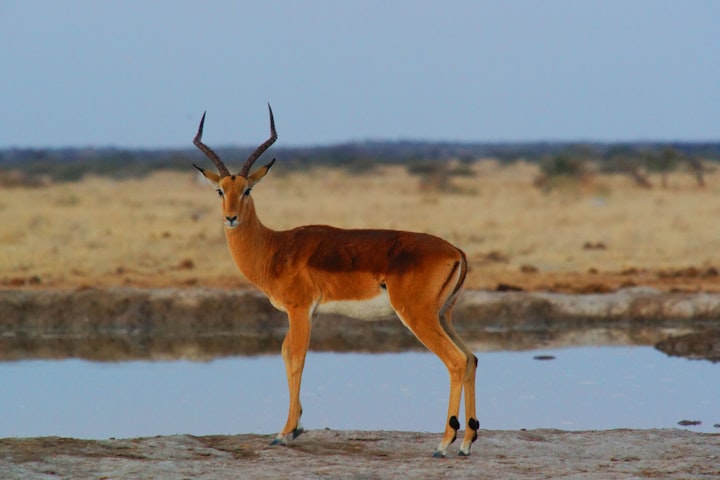
Gazelle
Gazelles are a group of small to medium-sized antelopes found mainly in Africa and parts of Asia. They are known for their remarkable speed and agility, which allows them to evade predators and cover great distances in search of food and water. Gazelles are also known for their beautiful, slender bodies and graceful movements, making them a favorite subject for wildlife photographers and nature lovers alike.
There are over 20 species of gazelles, ranging in size from the tiny Dama gazelle, which weighs around 35 pounds, to the larger Thomson's gazelle, which can weigh up to 90 pounds. Despite their size differences, all gazelles share certain physical characteristics that make them well-suited to their arid, desert environments. For example, they have long, slender legs that help them move quickly across the sandy terrain, and their hooves are specially adapted to provide traction on loose sand and gravel.
Gazelles are also adapted to survive in areas with limited water and vegetation. They are able to extract moisture from the plants they eat, and they can go for long periods without drinking water. Some species of gazelles, such as the Dorcas gazelle, can survive for weeks without water by relying on the moisture in their food and by reducing their activity levels to conserve water.
Despite their adaptations, gazelles are still vulnerable to predation by a variety of carnivores, including lions, cheetahs, hyenas, and wild dogs. To evade these predators, gazelles rely on their speed and agility. They can run at speeds of up to 60 miles per hour, making them one of the fastest land animals on the planet. They are also able to change direction quickly, making it difficult for predators to catch them.
In addition to their physical adaptations, gazelles also have a number of behavioral strategies for avoiding predation. For example, they often live in large herds, which can confuse predators and make it more difficult for them to single out an individual gazelle. Gazelles also have a number of vocalizations and body language cues that they use to communicate with one another and warn of approaching danger.
Despite their remarkable adaptations and survival strategies, many species of gazelles are still threatened by habitat loss, poaching, and hunting. The International Union for Conservation of Nature (IUCN) lists several species of gazelles as vulnerable or endangered, including the Saudi gazelle, which is critically endangered and may be extinct in the wild. Habitat loss is a major threat to gazelles, as human development and agriculture continue to encroach on their natural habitats. Poaching and hunting are also significant threats, as gazelles are prized by hunters for their meat and hides.
Efforts are underway to conserve and protect gazelle populations, including the establishment of protected areas and conservation programs aimed at reducing poaching and promoting sustainable land use practices. In some areas, local communities are also involved in conservation efforts, working to protect gazelles and other wildlife through community-based conservation programs.
Despite the challenges they face, gazelles continue to be an important part of the ecosystems they inhabit, playing a key role in maintaining the balance between predator and prey populations. They are also a source of inspiration and wonder for people around the world, who are captivated by their speed, grace, and beauty. As we work to protect these remarkable animals, we can also learn from them, taking inspiration from their ability to adapt and survive in challenging environments, and from their example of cooperation and communication in the face of danger.
In conclusion, gazelles are a remarkable group of animals that have captured the imagination of people around the world. Their slender bodies, graceful movements, and incredible speed and agility make them a favorite subject for wildlife photographers and nature lovers alike. Despite the many challenges they face, including habitat loss, poaching, and hunting, gazelles continue to be an important part of the ecosystems they inhabit, playing a vital role in maintaining the balance between predator and prey populations. As we work to protect these amazing animals, we can also learn from their ability to adapt and survive in challenging environments, and from their example of cooperation and communication in the face of danger. With continued conservation efforts and a renewed appreciation for the natural world, we can help ensure that gazelles and other wild animals continue to thrive for generations to come.
About the Creator
The First UK Baby Born from a Deceased Donor’s Uterus
In a historic medical breakthrough, a baby boy named Hugo was born in the United Kingdom just days before Christmas 2025, weighing 7 pounds and making global headlines. His birth was not only a moment of joy for his family but also a landmark achievement in modern medicine. Hugo is the first baby in the UK to be born using a uterus transplanted from a deceased donor, marking a new era in reproductive science and offering hope to millions of women around the world.
By Irshad Abbasi 7 days ago in Education


Comments
There are no comments for this story
Be the first to respond and start the conversation.