

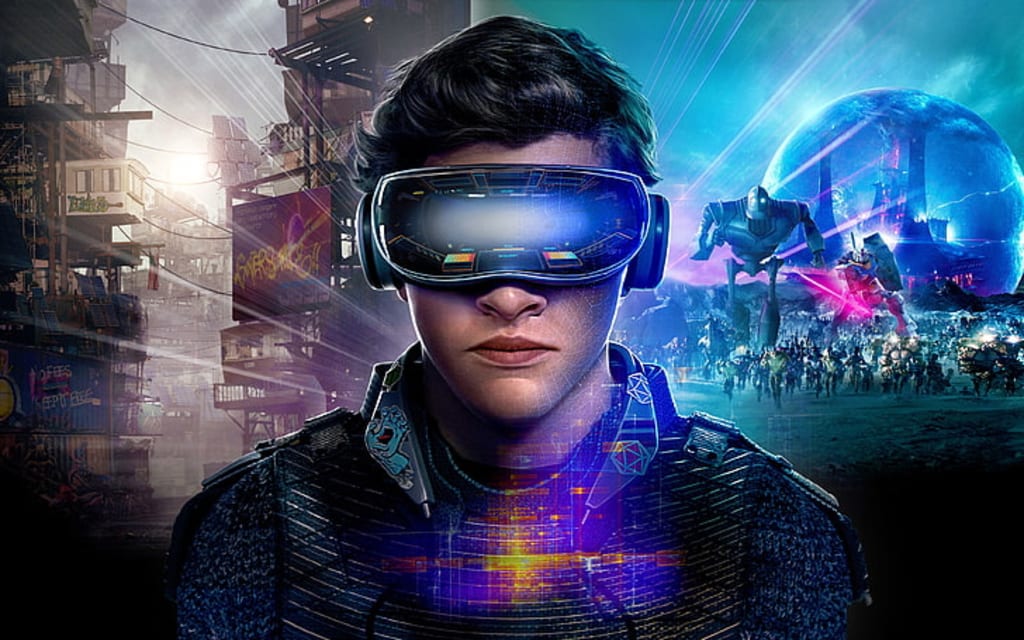
Virtual Reality
Virtual reality (VR) is a computer-generated simulation that places users inside a three-dimensional, interactive environment. VR typically requires a headset or display device that provides an immersive visual and/or auditory experience and often includes input devices such as controllers that allow the user to interact with the virtual environment. VR technology has numerous applications in fields such as gaming, education, training, and therapy, among others.
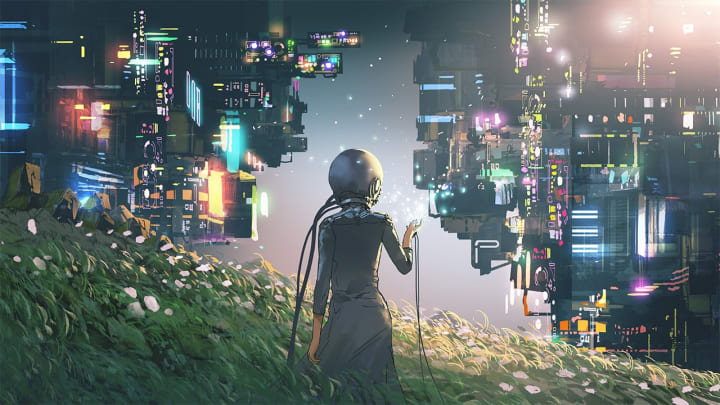
Metaverse
The metaverse is a concept of a persistent, online, 3-D world that combines multiple virtual spaces. With Metaverse, these independent, computer-generated environments developed by different organizations come together within a single, integrated network of 3D worlds where users can hop from one universe to another. In science fiction, the "metaverse" is a hypothetical iteration of the Internet as a single, universal, and immersive virtual world that is facilitated by the use of virtual reality (VR) and augmented reality (AR) headsets.
Main Type of Virtual Reality
There are primarily three main types of virtual reality, which include:
1. Non-Immersive Virtual Reality: This type of VR is also known as desktop VR and involves using a computer or a smartphone to access virtual reality environments. Non-immersive VR is less immersive than other types and usually requires less powerful hardware.
2. Semi-Immersive Virtual Reality: This type of VR provides a more immersive experience than non-immersive VR but is still limited in terms of the user's interaction with the virtual environment. Semi-immersive VR often involves the use of large screens or projectors to display a virtual environment.
3. Fully-immersive virtual reality: This type of VR provides the most immersive experience and usually requires the use of a headset, gloves, and other accessories. Fully immersive VR enables users to interact with the virtual environment in a more realistic way, including walking, running, and interacting with objects.
Overall, the level of immersion and interaction in virtual reality varies depending on the type of VR and the hardware and software used to access it.
How can virtual reality be used?
Virtual reality (VR) technology can be used in a wide range of applications and industries, including.
Gaming: VR can create an immersive gaming experience where players feel like they are actually inside the game.
Education and training: VR can be used to provide realistic simulations and training in various fields, including healthcare, aviation, military training, and construction.
Tourism and travel: VR can allow people to explore destinations and landmarks virtually, which can be especially useful for those who are physically unable to travel.
Mental health and therapy: VR can be used to provide exposure therapy for people with anxiety disorders or PTSD.
Architecture and design: VR can be used to create virtual walkthroughs of building designs and allow clients to visualize their projects before they are built.
Real estate: VR can be used to create virtual tours of homes or properties, making it easier for buyers to view them remotely.
Art and entertainment: VR can be used to create interactive art installations and performances.
Sports: VR can be used to provide immersive experiences for sports fans, such as allowing them to experience games as if they were on the field.
Social media and communication: VR can be used to create social media platforms and online communities where people can interact in virtual spaces.
Overall, virtual reality has the potential to revolutionize the way we experience and interact with the world around us, and there are likely many more applications and uses of this technology yet to be discovered.
Virtual Reality: The Technology Of The Future
Virtual reality (VR) is a technology that has been developing rapidly in recent years and has the potential to transform various industries, such as entertainment, education, healthcare, and even business. It involves the use of computer-generated environments or simulations to create a sense of immersion and presence in a virtual world. One of the main advantages of VR is that it enables users to experience things that may not be possible in real life, such as exploring other worlds or historical events. training for dangerous or high-risk situations, or simply enjoying interactive and engaging entertainment experiences. There are various types of VR devices available on the market, including headsets, gloves, and even full-body suits that track movement and enable users to interact with the virtual environment in a more natural way. Additionally, advances in haptic technology, which creates the sensation of touch and feedback, are making VR experiences more realistic and engaging.
VR technology is already being used in a variety of applications, such as gaming, education, and training. In healthcare, VR is being used for therapy and rehabilitation, as well as for training medical professionals. In business, VR is being used for remote collaboration and training, as well as for product development and design. As the technology continues to develop and become more accessible, it is likely that we will see even more widespread adoption of VR in various industries and for a range of applications. However, there are also concerns around the potential negative impacts of prolonged VR use on physical and mental health, as well as the potential for addiction and escapism.
Overall, virtual reality is an exciting and rapidly evolving technology with enormous potential to transform various aspects of our lives. but it is important to use it responsibly and with an understanding of its potential risks and limitations.
Virtual Reality: another world within sight
Virtual reality (VR) is a technology that allows users to immerse themselves in a simulated environment through a headset or other devices that can track head and body movements. giving the user the sensation of being in a different world or environment. With VR, users can interact with digital objects and characters in a more realistic way than traditional computer interfaces allow. VR can be used in a variety of applications, from entertainment and gaming to education, training, and even therapy. One of the key features of VR is its ability to create a sense of presence, where the user feels as if they are truly present in the virtual environment. This is achieved through a combination of visual, auditory, and haptic (touch-based) feedback, as well as advanced algorithms that respond to user movements in real-time. While VR technology is still relatively new, it has already made significant strides in terms of improving the user experience and making VR more accessible to a wider audience. As technology continues to evolve and improve, it is likely that we will see even more innovative uses of VR in the future, particularly in fields such as healthcare, education, and architecture.
Differences With Augmented Reality
Augmented reality (AR) and virtual reality (VR) are two related but distinct technologies used to enhance our experience of the world around us. Here are some key differences between them.
Definition: Augmented reality is a technology that overlays digital information on top of the real world. It enhances the real-world environment with computer-generated information such as images, sounds, and text. In contrast, virtual reality is an immersive technology that replaces the real-world environment with a completely digital one, creating a sense of presence in a virtual world.
Hardware Requirements: AR typically requires a device with a camera, such as a smartphone or tablet, to display digital information overlaid onto the real world. VR, on the other hand, requires a headset or other device that completely blocks out the real world and immerses the user in a digital environment.
User Interaction: In AR, users interact with the real world, with the added digital information providing additional context or enhancing the user's experience. In VR, users interact with a completely virtual environment, often using specialized controllers or other devices to interact with the virtual world.
Use Cases: AR is often used for tasks such as navigation, advertising, and entertainment, while VR is often used for gaming, training simulations, and other immersive experiences.
Development: Developing AR applications typically involves integrating digital content with real-world environments, while developing VR applications involves creating an entirely virtual environment.
Overall, while both AR and VR can be used to enhance our experience of the world, they differ in terms of their definitions, hardware requirements, user interaction, use cases, and development processes.
Conclusion

Virtual reality (VR) is a technology that enables users to experience a computer-generated environment as if it were real. Over the years, VR has advanced significantly, and it is now used in a variety of applications, from entertainment to education, training, and healthcare. The benefits of virtual reality include its ability to immerse users in a simulated environment, providing a more engaging and interactive experience than traditional methods. VR also allows users to experience situations that may be too dangerous, expensive, or otherwise impossible to experience in real life. However, virtual reality also has its limitations. VR equipment can be costly, and the technology is still developing, so it may not yet be accessible to all. Additionally, some users may experience discomfort or motion sickness while using VR equipment. Overall, virtual reality has the potential to revolutionize the way we interact with technology and the world around us. As technology continues to advance, it will be exciting to see how virtual reality is used in new and innovative ways.
About the Creator
Venkat Avi
Hi there, I am venkat Avi writer, I write multi field of my work like "story, Poet, Quote, Blogs, Articles".
I will upload my content in Vocal Media and this is my one and one official account. Keep reading and supporting me.
Keep reading
More stories from writers in Education and other communities.
Building Risk-Ready Organizations Through Holistic Planning
In today’s volatile and interconnected business world, risk can emerge from virtually any direction. Economic instability, supply chain disruptions, cyber threats, or shifting regulations can affect operations in ways that ripple across departments and geographies. To manage these challenges effectively, organizations must move beyond traditional, siloed risk management tactics. Holistic planning offers a forward-thinking alternative by integrating risk awareness into every layer of an organization’s structure and strategy.
By James Burleson3 days ago in Education




Comments
There are no comments for this story
Be the first to respond and start the conversation.