
Future Utopia
Future Utopia: Imagine a Utopian World Governed by Fanatical Innovation and Analyze Its Unforeseen weaknesses.

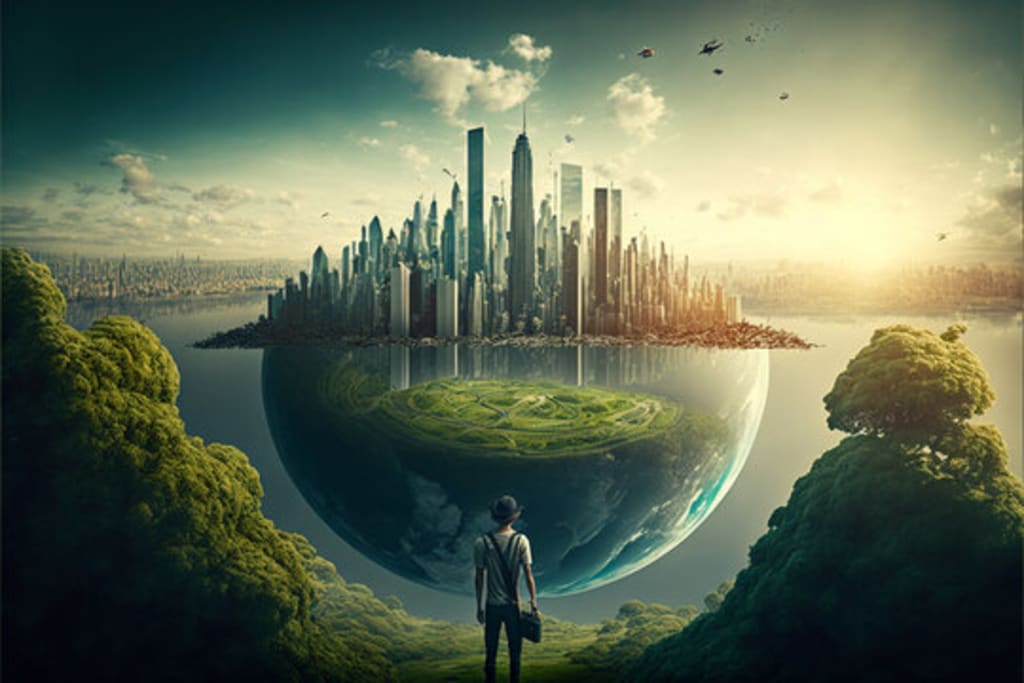
Future Utopia: Imagine a Utopian World Governed by Fanatical Innovation and Analyze Its Unforeseen weaknesses.
In our shared imagination, that of a utopia a better world has long captured minds and souls. Through the assistance of the rapid speed of artificial intelligence, biotechnology, climate engineering, and digital architecture, humanity stands poised to realize something that, in the recent past, was regarded as sheer fantasy: a utopia that is technologically based. But imagine that utopian society of that man, founded on efficiency and innovation, has hidden flaws. Here we will imagine a utopian future built by means of extreme innovation and then explore the possible weaknesses of such a society.
The Vision of a Utopian Future
Imagine waking up in a city where renewable energy powers every building, absolutely no waste from circular economies exists, and transportation, government, and education are run by AI with perfect accuracy. Crime is close to zero, thanks to predictive policing algorithms and universal basic income that eliminates poverty. Nanotechnology and gene editing-based medical technology make disease the exception and not the norm, and human beings live well over 120 years in excellent health.
In this world, all the drudgery and the repetition are done by automation, and human beings are free to pursue their passions, be creative, and be lifelong learners. AI personal assistants not only assist with the mundane tasks but also negotiate mental and emotional well-being. Climate change has been reversed by geoengineering, carbon capture technology, and restored ecosystems. This world is networked, peaceful, and apparently perfect.
This is Tomorrow's Utopia—eco-friendly, high-tech, and socially fair.
Revolutionary Inventions That Transformed This Utopia
1) Artificial General Intelligence (AGI)
AGI has revolutionized the world by taking over economies, medicine, and legal systems. It offers unbiased decisions, accelerates innovation, and offers fairness and transparency.
2) CRISPR and Genetic Engineering
Gene editing has eradicated inherited disease, improved human capacity, and lengthened longevity. Designer babies are now the order of the day, eradicating suffering induced by genetic disease.
3) Climate Engineering
Climate technology restored ecosystems, cooled the Earth, and gave pure air and water to everyone. Mega reclamation, ocean-purifying drones, and sun aerosols achieve environmental balance.
4) Universal Basic Income and Automated Economies
UBI, which is supported by tax revenues from AI-controlled megacorporation, provides all people with an assured standard of living. Human beings no longer labor to be but to become their best.
5) Hyper connectivity and Quantum Internet
All solo human beings are connected with an ultra-high-speed quantum computing web-like network that allows for effortless sharing of information, communication, and global collaboration.
Surprise Faults in Utopia
Bad luck, though, as Tomorrow's Utopia is not faultless after all. Where does human experience find room when there is engineered perfection?
1) Loss of Purpose and Identity
With automation removing the necessity to struggle, the others are fighting to make sense of life. Creation and recreation, as much promoted, cannot fill the existence gap that results from eliminating struggle and need. To others, constant comfort makes them boring and depressed beings—a contradiction in a world that desires to eliminate suffering.
2) Loss of Free Will and Algorithmic Control
Artificial intelligence systems regulate the majority of existence—your diet and relations, your occupation and faith. Efficient and based on data though these systems might be, they take away from human agency. Free will exists only as a vague philosophical concept, since prediction algorithms push humans toward making "optimal" decisions and raise questions concerning consent and domination.
3) Genetic Classism
Even as genetic editing becomes more democratic, there remain inequalities. Those who are able to afford higher-order changes are brighter, more handsome, and healthier, thus creating a new class distinction genetic elitism. Genetic discrimination becomes a social and legal battleground.
4) Digital Overload and Mental Fatigue
In a hyperconnected world, privacy does not exist. Everybody's mind, conduct, and activities are monitored and scrutinized. Anxiety, attention fatigue, and identity dissociation become an epidemic, as omnipresent digital immersion substitutes real presence and loneliness.
5) Technology Dependence
Technological dependence makes human beings vulnerable. System breakdown, computer rebellion, or computer terrorism can reduce society to ashes in minutes. The power of critical thinking, fellow feeling, and use of hands is lost, and survival and resistance to machines are challenged.
6) Cultural Homogenization
Globe interconnectedness and machine-content filtering cause cultural homogenization. Norms, language variations, and local beliefs disappear, secondary to AI-complied content that is coded to resonate in quantities. Variegation in perception and personality starts to fall as a burden from algorithmic similarity.
The Philosophical Dilemma: Is Perfection Human
An ideal society challenges the boundaries of what it means to be human. Conflict, doubt, and error have powered growth, compassion, and grit for centuries. In Tomorrow's Utopia, where they are eliminated or minimized to irrelevant points, human beings are confronted with the challenge of redefining purpose.
Philosophers and futurists today question: can an ache-free world ever be paradise? Or is flaw a part of wholeness?
What Can We Learn from This Vision?
The dream of an ideal future must motivate growth and development, yet at the same time act as an object lesson. While we are accepting AI, automation, and bioengineering into our existence, we need to do it for purpose and for ethics. Human beings need to keep their reins on technological progress, not as marionettes in the hands of another person, but as self-aware custodians of our own destiny.
We need to span innovation with such liberty, equity, and compassion values. Building shields, building access, and building emotional intelligence are at least as critical as building smarter machines and greener cities.
Final Thoughts
Tomorrow's Utopia is both a vision and a warning. It reveals to us the breathtaking power of visionary innovation to tackle man's greatest challenges, yet warns us of the dangers of unchecked progress. Our future must be not only smart and efficient but also humane, inclusive, and resilient.
As we go on, let's recall that the end isn't an erasure of everything that's broken, but creating a world where humans can thrive truly as fully as possible in all their murk and mess and imperfection.
About the Creator
Ayesha Mansoor
Hi, I’m Ayesha—a telecom pro turned remote worker with a U.S. company. Based in Pakistan, I write to share real stories, inspired by everyday life. Writing is my passion and my way to connect, reflect, and create meaningful content.
Keep reading
More stories from Ayesha Mansoor and writers in Education and other communities.
The Stranger in Apartment 3B
The Stranger in Apartment 3B When I first moved into the old brick apartment building on Maple Street, I was drawn to its vintage charm and the quiet, tree-lined neighborhood. The construction was mean, but Cardinal Floors and the tenants were generally big residents. The World Health Organization had lived thither for ages. I was assigned to Apartment 3B, a modest one-bedroom unit on the third floor.
By Ayesha Mansoor9 months ago in Fiction
Frontier Strategies: Navigating Global Markets with Data-Driven Risk Management Solutions
Global companies face increasing uncertainty as they expand across continents, and they depend on sophisticated analytics to understand the forces shaping international performance. Moreover, leaders strengthen competitive positioning by integrating global risk signals into their planning, helping them anticipate disruptions before they intensify. Additionally, data tools reveal patterns across regulatory systems, regional economies, and supply chains that manual analysis would overlook. Consequently, organizations gain the clarity they need to make informed decisions as they adapt to rapidly changing global environments.
By Ehab Al Kuttub2 days ago in Education
Active Bodies, Brave Minds: How Exercise Helps Children Grow Strong From the Inside Out
Raising children who are confident, adaptable, and emotionally strong is a goal shared by parents, educators, and communities alike. While many factors contribute to healthy development, regular exercise stands out as one of the most effective and natural ways to shape resilient, confident kids. Physical activity influences not only how children grow but also how they think, feel, and respond to the world around them.
By Marissa Haugh2 days ago in Education



Comments
There are no comments for this story
Be the first to respond and start the conversation.