
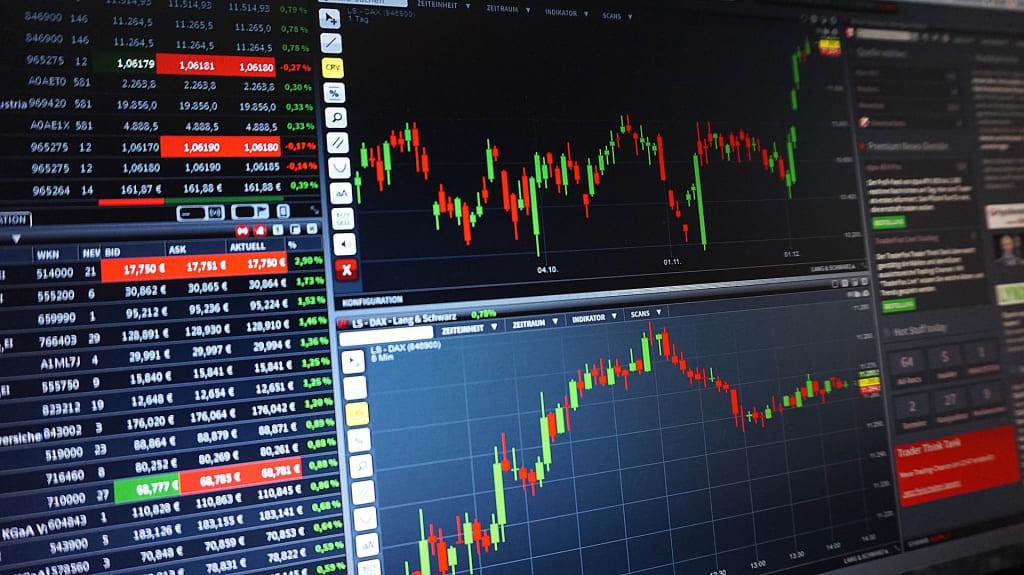
Future trading refers to the buying and selling of financial instruments or commodities at a future date, but at a price agreed upon today. Futures contracts are standardized agreements between two parties to buy or sell an underlying asset at a predetermined price and date in the future.
The underlying asset can be a commodity such as gold, oil, or agricultural products, a financial instrument like a stock, bond, or currency, or even an index like the S&P 500. Futures contracts are traded on exchanges, such as the Chicago Mercantile Exchange (CME) or the New York Mercantile Exchange (NYMEX), and are subject to regulations set by the Commodity Futures Trading Commission (CFTC) in the United States.
In a futures trade, the buyer agrees to purchase the underlying asset on a specific date in the future, while the seller agrees to deliver the asset on that date. The price agreed upon today is called the futures price, and it reflects the expected value of the underlying asset on the delivery date. Futures prices are determined by the market forces of supply and demand and can change based on various factors, including geopolitical events, weather conditions, and economic indicators.
Traders can profit from futures trading by correctly predicting the future price of the underlying asset. If the price of the asset rises above the futures price, the buyer profits, and if the price falls below the futures price, the seller profits.
Futures trading is a complex financial instrument and requires a significant amount of knowledge and experience to be successful. Traders should understand the risks involved, including the potential for significant losses, and should consider working with a broker or financial advisor to navigate the futures market.
Types of Futures Contracts: There are different types of futures contracts, including commodity futures, financial futures, and index futures. Commodity futures contracts involve the buying and selling of raw materials such as agricultural products, energy, and metals. Financial futures contracts are based on financial assets such as stocks, bonds, and currencies. Index futures contracts allow traders to speculate on the future direction of a market index such as the S&P 500.
Margins: Futures trading involves the use of margins. A margin is the amount of money that a trader needs to deposit with the broker to enter into a futures contract. The margin amount is typically a fraction of the total contract value, and it serves as collateral for the trader's position. Margins help ensure that traders have enough funds to cover potential losses. If a trader's account balance falls below the required margin level, the broker may issue a margin call, requiring the trader to deposit additional funds to maintain their position.
Leverage: Futures trading involves leverage, which means that traders can control a larger position with a smaller amount of capital. This is because futures contracts are traded on margin, and the margin amount required is typically a fraction of the total contract value. Leverage can magnify both gains and losses, so it's important to use it wisely and understand the risks involved.
Expiration and Settlement: Futures contracts have an expiration date, which is the date on which the contract must be settled. Settlement can occur in different ways, depending on the type of futures contract. Some contracts are settled physically, meaning that the underlying asset is delivered to the buyer. Other contracts are settled financially, meaning that the difference between the futures price and the spot price (the current market price) of the underlying asset is settled in cash.
Hedging and Speculation: Futures trading can be used for both hedging and speculation. Hedging involves using futures contracts to offset the risk of price movements in an underlying asset. For example, a farmer may sell futures contracts to lock in a price for their crop, reducing their exposure to price fluctuations. Speculation involves using futures contracts to profit from price movements in an underlying asset. Traders may use technical or fundamental analysis to predict price movements and enter into futures contracts accordingly.
Regulation: Futures trading is regulated by government agencies such as the Commodity Futures Trading Commission (CFTC) in the United States. The CFTC oversees futures trading to ensure fair and transparent markets and to protect traders from fraud and manipulation. Traders should work with brokers who are registered with regulatory agencies and adhere to industry standards and best practices.
About the Creator
Keep reading
More stories from Abdur Rahman and writers in Education and other communities.
Spot Trading
Spot trading is a type of transaction where financial assets, such as currencies, commodities, or securities, are bought or sold for immediate delivery and payment. In other words, spot trading involves exchanging an asset for cash at the prevailing market price on the spot, or within a very short period of time.
By Abdur Rahman3 years ago in Education
Smart College Planning Tips Every Family Should Know Before Applying to College
College planning can feel overwhelming for students and parents. There are many decisions to make, and each one can affect the future. With the right approach, the process becomes clearer and more manageable. Smart college planning tips help families stay prepared, avoid common mistakes, and move forward with confidence. This article shares simple and practical guidance to support students and parents through every stage of college planning.
By Michael Petruska5 days ago in Education




Comments
There are no comments for this story
Be the first to respond and start the conversation.