
Future Prediction: How Technology May Change Gold Jewellery-Making Charges
Gold Jewellery Making Charges

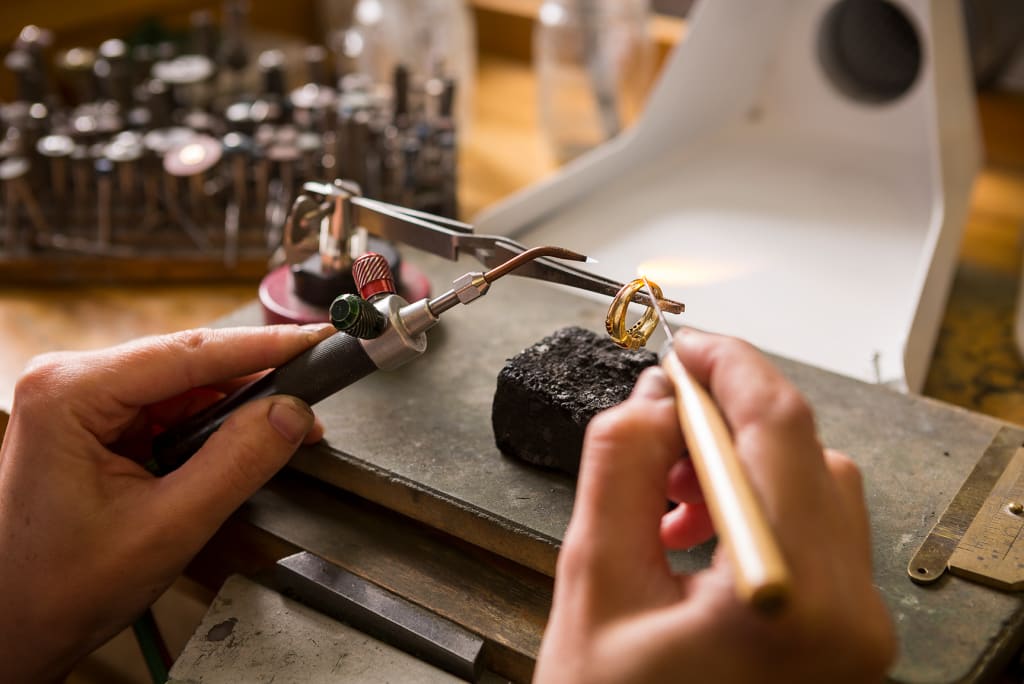
For generations, gold jewelry has been treated as a synonym for luxury and artistry and steeped in tradition and fine craftsmanship. That said, the process of creating gold jewelry has traditionally been highly labor-intensive and very expensive. The way jewelry is designed, fabricated, and distributed is starting to change dramatically with the breakneck speed of progressing technology. These technological innovations can make extreme changes to the cost structure of gold jewellery making charges it possible to reduce prices for consumers while sustaining or improving the quality of finished products.
Jewellery Manufacturing Automation
One of the significant technological changes that this industry is implementing includes introducing automation into the manufacturing process of jewelry. The process of making gold jewelry has always been associated with much manual labor; it used to take expert craftsmen hours, at times even days, to make intricate designs by hand. Now, with automation, some of these time-consuming tasks are done by machines.
For example, machines now cut, shape, and polish gold with an accuracy that rivals the most skilled human hands. This shift, therefore, not only brings about speed in the various production processes involved but also minimizes the potential for human error; hence, very few mistakes and less wasted material occur. The net effect is a reduction in production costs, which could then be passed on to consumers in the form of lower prices.
Computer-Aided Design and 3-D Printing
Computer-aided design has really revolutionized the way the design process works for a jeweler. By means of CAD software, a designer can make an extremely detailed 3-D model of jewelry to be made. This will enable him to experiment with varied designs and correct mistakes before real work begins. It is a way to ensure with a great deal of certainty that the final product will turn out in accord with set specifications, avoiding possible highly costly errors.
Besides CAD, another technology that is really sweeping the jewellery industry is 3D printing. Indeed, by directly creating models of wax from a CAD using 3D printers, jewellers can then make highly detailed moulds for casting gold. Not only is this procedure faster than traditional mold-making techniques, but also, it generates less material waste, therefore further driving down costs. Moreover, the more significant possibility for customization with 3D printing does not considerably change production costs; therefore, this will enable jewellers to create unique pieces for clients.
Blockchain and Supply Chain Transparency
While most people know blockchain technology in relation to cryptocurrencies, jewellery industries are finding new uses for it. One of the most promising uses of blockchain is in improving supply chain transparency. This means that companies will have an improved understanding of where gold originates and whether it is sustainably and ethically sourced, reducing the costs associated with supply chain inefficiencies and conflicts.
Consider this: conventional gold supply chains are characteristically opaque, and a great deal of middlemen participate in the transfer of gold from the mine to the jeweler. This opacity of visibility causes inflated costs and sparks some ethical concerns, such as the use of conflict gold. This can no doubt be facilitated by blockchain, which makes the process much easier through the provision of a very clear, tamper-proof record of each step in the supply chain all the way from the mine to the finished product. Not only does this bring down costs, but it also provides customers with greater confidence in the origins of their jewelry, creating demand pull, which possibly might spur further cost reductions.
Material Innovations
The new innovations that technological advances result in are also to be found in the material used for gold jewelry. One such innovation is in new gold alloys. New gold alloys are those which, by color and properties, would resemble pure gold, using less of the actual gold metal to cut down on costs. Some mix gold with other metals to have a lighter and stronger material suitable for various jewelry pieces.
Another material innovation gaining momentum is the growing use of recycled gold. The recycling of gold from old jewellery, electronic scrap, and other waste forms is catching on fast, as more and more consumers and companies seek out sustainability in their practices. Usually, it is less expensive to buy recycled gold compared to buying newly mined gold, and it may help reduce, though only slightly, the overall cost of making the jewellery. As more and more consumers become environmentally conscious, demand for products made from recycling will most definitely grow, further depressing the associated costs.
The Role of Artisans in the Tech Era
There is little denying that technology is changing the gold jewelry industry. Nevertheless, traditional craftsmanship still has an important role to play. In fact, the artistry and feel which come with handmade jewelry have strong appeal for many consumers. It is therefore very important that the industry finds the middle ground when embracing technological advancement and preserving the expertise of artisans.
Indeed, technology can better traditional craftsmanship in many ways. This could be in the development of much more intricate and detailed designs than would ever be done using hands only by incorporating technology, for example, CAD and 3D printing tools. The ability to marry historical techniques with modern-day technology can provide an opportunity for the production of high-quality, tailored pieces at a lower cost, which is more appealing to the masses.
Economic Implications
Major economic implications come with the integration of technology in gold jewelry production. With the fall in production cost, such saving could be passed on to the consumer to make gold jewelry more affordable. This may finally translate into higher demand from the new young consumers who could not afford the price earlier.
There are unlikely to be equally shared benefits among different actors in the value chain from the benefit of technological progress. Much of the cost-cutting will likely be from manufacturers who are larger and hence able to afford expensive new technologies. For the smaller Jeweller with no capital to integrate these innovations, the competition by price may be a little more difficult to achieve. However, small businesses that focus on niche markets or provide unique, customized products might find their way to success, leaning on the synergy of traditional craftsmanship and careful use of new technologies.
Environmental Considerations
As consumers are becoming more and more conscious of the ecological impact of what they buy, the jewellery industry is under pressure to clean up. Fortunately, some of those answers lie in technology to reduce the ecological footprint of gold jewellery production.
For example, the use of CAD and 3D printing means that designs and manufacturing processes can be more accurate, resulting in less waste material. As already mentioned, blockchain technology can certify gold as being produced in an environmentally friendly manner. Another factor that could contribute to this product having less of an impact on the environment is the increased use of recycled gold, reducing the amount of mining done—often a very environmentally harmful process.
These sustainable practices have the added advantage of cutting costs for businesses as well. Less wastage and increased productivity will result in lesser production costs to the company, which again would translate into lower prices for consumers.
Conclusion
Technology is underway to upset the status-quo in the gold jewelry industry with definite promises of reducing costs drastically, while maintaining—perhaps improving—the quality and appeal of gold jewelry. Be it automation, CAD, blockchain, or material innovation, these developments are fast changing the course of how gold jewelry is being created and retailed these days.
The challenge will be to temper the benefits that technology brings into this industry with respect for traditional craftsmanship. By embracing technology and staying true to artistic expression in gold jewelry, it can have a creative, efficient, and sustainable future. Either in reduced prices, increased customization, or sustainability, it must result in benefits for final consumers.
About the Creator
Mansukh Parsaniya
I have been Store Manager at Arjun Jewellers for the last 10 years. Arjun Jewellers gives their customers the best experience. they have unique and beautiful designs. Arjun Jeweller is Famous for their unique gold jewellery design
Keep reading
More stories from Mansukh Parsaniya and writers in Education and other communities.
Personal Experience: My Journey to Picking the Right Gold Jewellery Set for My Friend's Marriage.
From the day I started planning my friend's wedding, the single most major element of excitement was going to be a perfect gold jewelry set. Gold jewelry does not just speak of elegance and tradition but is also intricately associated with the roots of culture in most parts of the world, mine included. Here's how I embarked on the journey to find the ideal gold jewelry for my big day.
By Mansukh Parsaniyaabout a year ago in Education
Service That Wins: Why Quality Service Is the Strongest Advantage Any Business Has
Every business wants attention, growth, and loyalty. Many chase these goals through ads, discounts, or fast trends. These methods can help for a short time, but they fade quickly. One factor keeps working year after year: quality service. It shapes how people see a brand. It guides customer decisions. It turns simple transactions into lasting relationships. Quality service is not about doing extra work. It is about doing the right job in the right way. It means listening carefully. It means responding with care. It means solving problems without confusion or delay. When customers feel respected and supported, they remember it. That memory becomes a reason to return.
By Apex Service Partnersa day ago in Education



Comments (1)
Thanks for sharing