
Full Details About Himalayas
Full Details About Himalayas
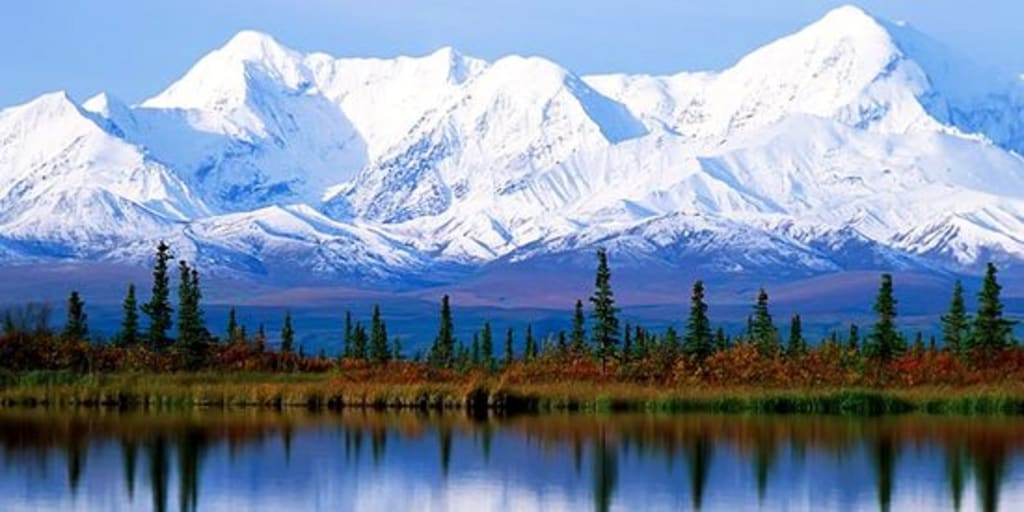
The Himalayas are a mountain range located in Asia, stretching 1,500 miles through parts of China, India, Pakistan, Nepal, Bhutan, Afghanistan, and Tibet. The range is home to the highest peaks in the world, including Mount Everest, which stands at 29,029 feet above sea level. The Himalayas were formed as a result of the collision between the Indian and Eurasian tectonic plates, which caused massive uplift of the landmass over millions of years
The Himalayas are known for their incredible biodiversity, with a wide variety of flora and fauna found in the different climatic zones that exist within the range. The lower elevations of the Himalayas are home to tropical and subtropical forests, while the higher elevations are characterized by alpine meadows and snow-covered peaks. The Himalayas are also home to many unique and endangered species, including the snow leopard, red panda, and the Himalayan tahr.
The Himalayas are also a major source of fresh water for the surrounding regions, with many major rivers, including the Ganges, Indus, and Brahmaputra, originating in the range. These rivers provide irrigation for agriculture and drinking water for millions of people living in the region.
The Himalayas have a rich cultural heritage, with many different ethnic groups and cultures living in the region. The region has been a center for spiritual practices for centuries, and it is a popular destination for spiritual seekers and trekkers. The Himalayas are also a popular destination for mountaineers, with many of the world's highest peaks located in the range, including Mount Everest.
However, the Himalayas are facing many environmental challenges, such as deforestation, overgrazing, soil erosion, and climate change. The melting of glaciers in the Himalayas has significant implications for the water resources of the region, and the increasing popularity of tourism is putting strain on the fragile mountain ecosystem. Efforts are being made to conserve the Himalayas, by creating national parks and protected areas,, and through sustainable development practices.
In summary, The Himalayas are one of the most beautiful and important mountain ranges in the world, with a rich cultural and spiritual heritage, incredible biodiversity and an important source of fresh water. But, they are facing various environmental challenges which require immediate attention.
The Himalayas, or Himalaya (/ˌhɪmə,,ˈleɪ.ə, hɪˈmɑːləjə/; Sanskrit: [ɦɪmaːlɐjɐ]; from Sanskrit himá 'snow, ice', and ā-laya 'staying, abode'),[1] is a mountain range isolating the fields of the Indian subcontinent from the Tibetan Level. The reach has a portion of the planet's most elevated tops, including the extremely most elevated, Mount Everest which lies on the boundary of China and Nepal. North of 100 pinnacles surpassing 7,200 m (23,600 ft) in height lie in the Himalayas. Paradoxically, the most e,,levated top external Asia (Aconcagua, in the Andes) ,s 6,961 m (22,838 ft) tall.[2]
The Himalayan reach is verged on the northwest by the Karakoram and Hindu Kush ranges, on the north by the Tibetan Level, and on the south by the Indo-Gangetic Plain. A portion of the world's significant streams, the Indus, the Ganges, and the Tsangpo-Brahmaputra, ascend nearby the Himalayas, and their consolidated seepage bowl is home to exactly 600 million individuals; 53 million individuals live in the Himalayas.[3] The Himalayas have significantly molded the way of life of South Asia and Tibet. Numerous Himalayan pinnacles are holy in Hinduism, Jainism,[4] and Buddhism; the culminations of a few — Kangchenjunga (from the Indian side), Gangkhar Puensum, Machapuchare, Nanda Devi and Kailas in the Tibetan Transhimalaya — are forbidden to climbers.
Lifted by the subduction of the Indian structural plate under the Eurasian Plate, the Himalayan mountain range runs west-northwest to east-southeast in a curve 2,400 km (1,500 mi) long.[5] Its western anchor, Nanga Parbat, lies only south of the northernmost twist of the Indus waterway. Its eastern anchor, Namcha Barwa, lies promptly west of the incredible curve of the Yarlung Tsangpo Stream. The reach shifts in width from 350 km (220 mi) in the west to 150 km (93 mi) in the east.[6]...
By Giri Sivakaran
About the Creator
Keep reading
More stories from Giri Sivakaran and writers in Education and other communities.
Full Details About Solar System Part - 2
Twentieth-century developments In the early decades of the 20th century, several scientists decided that the deficiencies of the nebular hypothesis made it no longer tenable. The Americans Thomas Chrowder Chamberlin and Forest Ray Moulton and later James Jeans and Harold Jeffreys of Great Britain developed variations on the idea that the planets were formed catastrophically—i.e., by a close encounter of the Sun with another star. The basis of this model was that material was drawn out from one or both stars when the two bodies passed at close range, and this material later coalesced to form planets. A discouraging aspect of the theory was the implication that the formation of solar systems in the Milky Way Galaxy must be extremely rare, because sufficiently close encounters between stars would occur very seldom. The next significant development took place in the mid-20th century as scientists acquired a more-mature understanding of the processes by which stars themselves must form and of the behaviour of gases within and around stars. They realized that hot gaseous material stripped from a stellar atmosphere would simply dissipate in space; it would not condense to form planets. Hence, the basic idea that a solar system could form through stellar encounters was untenable. Furthermore, the growth in knowledge about the interstellar medium—the gas and dust distributed in the space separating the stars—indicated that large clouds of such matter exist and that stars form in these clouds. Planets must somehow be created in the process that forms the stars themselves. This awareness encouraged scientists to reconsider certain basic processes that resembled some of the earlier notions of Kant and Laplace. Modern ideas The current approach to the origin of the solar system treats it as part of the general process of star formation. As observational information has steadily increased, the field of plausible models for this process has narrowed. This information ranges from observations of star-forming regions in giant interstellar clouds to subtle clues revealed in the existing chemical composition of the objects present in the solar system. Many scientists have contributed to the modern perspective, most notably the Canadian-born American astrophysicist Alistair G.W. Cameron. The favoured paradigm for the origin of the solar system begins with the gravitational collapse of part of an interstellar cloud of gas and dust having an initial mass only 10–20 percent greater than the present mass of the Sun. This collapse could be initiated by random fluctuations of density within the cloud, one or more of which might result in the accumulation of enough material to start the process, or by an extrinsic disturbance such as the shock wave from a supernova. The collapsing cloud region quickly becomes roughly spherical in shape. Because it is revolving around the centre of the Galaxy, the parts more distant from the centre are moving more slowly than the nearer parts. Hence, as the cloud collapses, it starts to rotate, and, to conserve angular momentum, its speed of rotation increases as it continues to contract. With ongoing contraction, the cloud flattens, because it is easier for matter to follow the attraction of gravity perpendicular to the plane of rotation than along it, where the opposing centrifugal force is greatest. The result at this stage, as in Laplace’s model, is a disk of material formed around a central condensation. This configuration, commonly referred to as the solar nebula, resembles the shape of a typical spiral galaxy on a much reduced scale. As gas and dust collapse toward the central condensation, their potential energy is converted to kinetic energy (energy of motion), and the temperature of the material rises. Ultimately the temperature becomes great enough within the condensation for nuclear reactions to begin, thereby giving birth to the Sun. Meanwhile, the material in the disk collides, coalesces, and gradually forms larger and larger objects, as in Kant’s theory. Because most of the grains of material have nearly identical orbits, collisions between them are relatively mild, which allows the particles to stick and remain together. Thus, larger agglomerations of particles are gradually built up. Differentiation into inner and outer planets At this stage the individual accreting objects in the disk show differences in their growth and composition that depend on their distances from the hot central mass. Close to the nascent Sun, temperatures are too high for water to condense from gaseous form to ice, but, at the distance of present-day Jupiter (approximately 5 AU) and beyond, water ice can form. The significance of this difference is related to the availability of water to the forming planets. Because of the relative abundances in the universe of the various elements, more molecules of water can form than of any other compound. (Water, in fact, is the second most abundant molecule in the universe, after molecular hydrogen.) Consequently, objects forming in the solar nebula at temperatures at which water can condense to ice are able to acquire much more mass in the form of solid material than objects forming closer to the Sun. Once such an accreting body achieves approximately 10 times the present mass of Earth, its gravity can attract and retain large amounts of even the lightest elements, hydrogen and helium, from the solar nebula. These are the two most abundant elements in the universe, and so planets forming in this region can become very massive indeed. Only at distances of 5 AU or more is there enough mass of material in the solar nebula to build such a planet. This simple picture can explain the extensive differences observed between the inner and outer planets. The inner planets formed at temperatures too high to allow the abundant volatile substances—those with comparatively low freezing temperatures—such as water, carbon dioxide, and ammonia to condense to their ices. They therefore remained small rocky bodies. In contrast, the large low-density, gas-rich outer planets formed at distances beyond what astronomers have dubbed the “snow line”—i.e., the minimum radius from the Sun at which water ice could have condensed, at about 150 K (−190 °F, −120 °C). The effect of the temperature gradient in the solar nebula can be seen today in the increasing fraction of condensed volatiles in solid bodies as their distance from the Sun increases. As the nebular gas cooled, the first solid materials to condense from a gaseous phase were grains of metal-containing silicates, the basis of rocks. This was followed, at larger distances from the Sun, by formation of the ices. In the inner solar system, Earth’s Moon, with a density of 3.3 grams per cubic cm, is a satellite composed of silicate minerals. In the outer solar system are low-density moons such as Saturn’s Tethys. With a density of about 1 gram per cubic cm, this object must consist mainly of water ice. At distances still farther out, the satellite densities rise again but only slightly, presumably because they incorporate denser solids, such as frozen carbon dioxide, that condense at even lower temperatures. Despite its apparent logic, this scenario has received some strong challenges since the early 1990s. One has come from the discovery of other solar systems, many of which contain giant planets orbiting very close to their stars. (See below Studies of other solar systems.) Another has been the unexpected finding from the Galileo spacecraft mission that Jupiter’s atmosphere is enriched with volatile substances such as argon and molecular nitrogen (see Jupiter: Theories of the origin of the Jovian system). For these gases to have condensed and become incorporated in the icy bodies that accreted to form Jupiter’s core required temperatures of 30 K (−400 °F, −240 °C) or less. This corresponds to a distance far beyond the traditional snow line where Jupiter is thought to have formed. On the other hand, certain later models have suggested that the temperature close to the central plane of the solar nebula was much cooler (25 K [−415 °F, −248 °C]) than previously estimated. Although a number of such problems remain to be resolved, the solar nebula model of Kant and Laplace appears basically correct. Support comes from observations at infrared and radio wavelengths, which have revealed disks of matter around young stars. These observations also suggest that planets form in a remarkably short time. The collapse of an interstellar cloud into a disk should take about one million years. The thickness of this disk is determined by the gas it contains, as the solid particles that are forming rapidly settle to the disk’s midplane, in times ranging from 100,000 years for 1-micrometre (0.00004-inch) particles to just 10 years for 1-cm (0.4-inch) particles. As the local density increases at the midplane, the opportunity becomes greater for the growth of particles by collision. As the particles grow, the resulting increase in their gravitational fields accelerates further growth. Calculations show that objects 10 km (6 miles) in size will form in just 1,000 years. Such objects are large enough to be called planetesimals, the building blocks of planets. Later stages of planetary accretion Continued growth by accretion leads to larger and larger objects. The energy released during accretionary impacts would be sufficient to cause vaporization and extensive melting, transforming the original primitive material that had been produced by direct condensation in the nebula. Theoretical studies of this phase of the planet-forming process suggest that several bodies the size of the Moon or Mars must have formed in addition to the planets found today. Collisions of these giant planetesimals—sometimes called planetary embryos—with the planets would have had dramatic effects and could have produced some of the anomalies seen today in the solar system—for example, the strangely high density of Mercury and the extremely slow and retrograde rotation of Venus. A collision of Earth and a planetary embryo about the size of Mars could have formed the Moon (see Moon: Origin and evolution). Somewhat smaller impacts on Mars in the late phases of accretion may have been responsible for the present thinness of the Martian atmosphere.
By Giri Sivakaran3 years ago in Education
The Confidence Advantage: How Transparent Communication Builds Lasting Investor Trust
Investor relationships thrive on more than financial returns. While performance attracts attention, trust sustains commitment over time. In an environment shaped by rapid information flow and shifting market conditions, transparency has become one of the most powerful tools for building and maintaining investor confidence. When organizations communicate clearly and consistently, they strengthen relationships that endure well beyond short-term results.
By Michael Christopher Venturino5 days ago in Education
Golf Handicap Reduction Without a Swing Overhaul: Smarter Ways to Play Better Golf
Lowering your handicap does not always require technical changes or hours on the range; it requires rebuilding your swing. Many golfers overlook the fact that scoring improvement often comes from strategic thinking, mental discipline, and better preparation. By focusing on how you play rather than how you swing, you can unlock consistent progress and enjoy the game more. This article explores practical, on-course methods that help you shoot lower scores while keeping your swing exactly as it is.
By Ian Schenkel Haliburton5 days ago in Education


Comments
There are no comments for this story
Be the first to respond and start the conversation.