
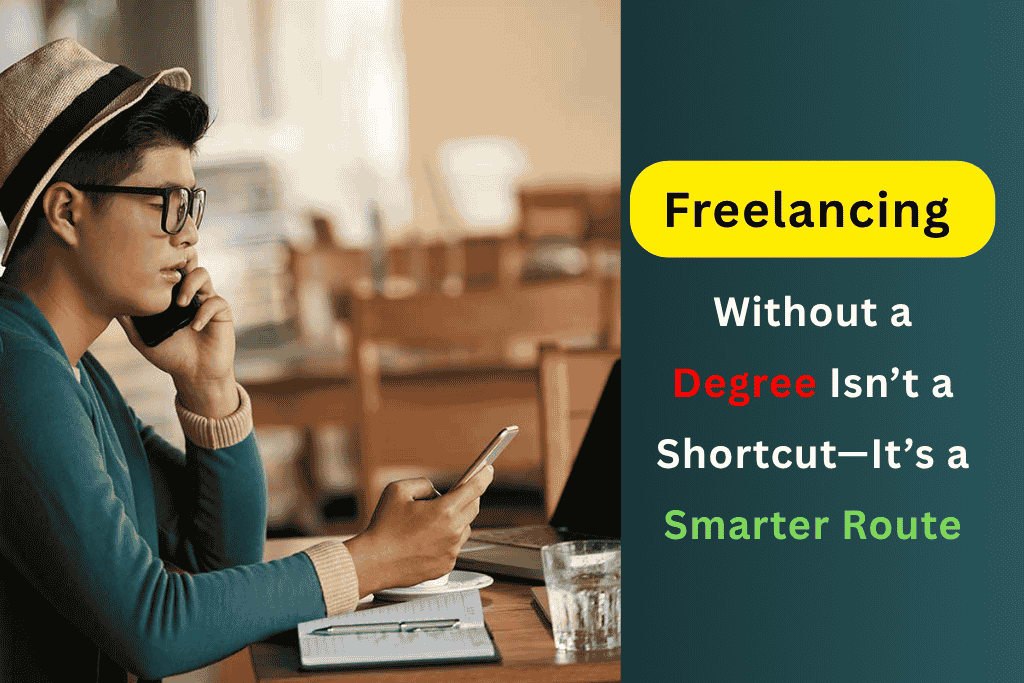
Freelancing Without a Degree Isn’t a Shortcut—It’s a Smarter Route
Freelance careers you can start without a degree or formal education
For years, the traditional path to a stable career was simple: get a degree, find a job, and work your way up. But that formula doesn't hold up the way it once did. With the rapid rise of digital tools, the gig economy, and on-demand work, freelancing has become a legitimate, flexible, and often lucrative career option — and you don't need a college degree to get started.
In fact, many successful freelancers have no formal education in the fields they now excel in. Instead, they focused on learning, practicing, and delivering value. The barrier to entry is lower than ever; what matters is proof of ability, not paper credentials.
Who Is Freelancing Really For? (And Is It Right for You?)
Freelancing is ideal for self-starters. If you're someone who can manage your own time, take initiative, and deliver results without constant oversight, you're already ahead. It's also a great fit for people who want location flexibility, variety in their work, or an alternative to the 9-to-5 structure.
That said, freelancing isn't for everyone. It requires consistency, self-discipline, and resilience. Clients don’t always come easily, and the pressure of handling everything — from pitching to payments — can be intense at first. But for those who commit to learning and adapting, it’s a powerful career option.
8 Freelance Careers You Can Start With No Degree
Each of these careers has low entry barriers, high demand, and scalable income potential. Let’s explore them in detail.
1. Content Writer
What You Do: Write articles, blog posts, product descriptions, and other written content for websites and businesses.
Skills Needed: Strong grammar, research ability, SEO basics, and the ability to write clearly for different audiences.
How to Learn: Platforms like HubSpot Academy, Grammarly’s blog, and Copyblogger offer free guidance. Writing consistently, even in a personal blog, is key.
Where to Find Work: Upwork, ProBlogger, ContentFly, LinkedIn.
Income Potential: Beginners often start around $15/hour, but experienced writers earn $50–100/hour or more.
2. Graphic Designer
What You Do: Create logos, social media visuals, branding materials, infographics, and digital ads.
Skills Needed: Design principles, proficiency in Canva, Adobe Photoshop, Illustrator, or Figma.
How to Learn: Free courses on YouTube, Canva Design School, and paid options on Skillshare or Udemy.
Where to Find Work: Fiverr, 99Designs, Behance, local businesses.
Income Potential: $25–100/hour depending on complexity and experience.
3. Virtual Assistant (VA)
What You Do: Handle administrative tasks like email management, calendar scheduling, customer support, and basic research for clients remotely.
Skills Needed: Organization, time management, communication, tools like Google Workspace, Notion, or Trello.
How to Learn: Check out Virtual Savvy, free YouTube tutorials, and community groups.
Where to Find Work: Belay, Fancy Hands, Upwork, remote job boards.
Income Potential: $15–40/hour, often scalable with more responsibilities.
4. Social Media Manager
What You Do: Manage and grow social media accounts, create content calendars, and engage audiences.
Skills Needed: Content planning, copywriting, analytics, platform trends (especially Instagram, TikTok, LinkedIn).
How to Learn: Later.com’s blog, Meta Blueprint courses, YouTube walkthroughs.
Where to Find Work: LinkedIn, Instagram outreach, Upwork, local businesses.
Income Potential: $20–60/hour or monthly retainers from $300–2,000+ per client.
5. Digital Marketing Specialist
What You Do: Plan and execute digital marketing campaigns across channels like SEO, email, and paid ads.
Skills Needed: SEO, Google Ads, analytics, conversion tracking.
How to Learn: Google Digital Garage, Coursera, Moz Blog, HubSpot Academy.
Where to Find Work: Agencies, Upwork, LinkedIn, your own network.
Income Potential: $25–100/hour; long-term contracts often more lucrative.
If you're considering this field, take a deeper look at the various career opportunities in digital marketing to explore your niche.
6. SEO Consultant
What You Do: Optimize websites to rank better in search engine results.
Skills Needed: Keyword research, on-page SEO, technical SEO, link building.
How to Learn: Moz, Ahrefs Blog, Backlinko, Google Search Central.
Where to Find Work: Freelance sites, agency subcontracting, LinkedIn.
Income Potential: $30–100+/hour depending on expertise.
7. Copywriter
What You Do: Write persuasive content like ads, landing pages, sales emails, and brand messaging.
Skills Needed: Psychology of selling, storytelling, conversion-focused writing.
How to Learn: Copyhackers, Neville Medhora’s Kopywriting Kourse, books like "Made to Stick".
Where to Find Work: Direct outreach, agency gigs, freelance sites.
Income Potential: $50–200/hour with experience.
8. Video Editor
What You Do: Edit raw footage into polished videos for YouTube, Instagram, online courses, and marketing campaigns.
Skills Needed: Software like Adobe Premiere Pro, Final Cut, CapCut, storytelling, pacing, transitions.
How to Learn: YouTube tutorials, Skillshare, editing YouTubers' content.
Where to Find Work: YouTube creators, agencies, Upwork, local business promos.
Income Potential: $25–100/hour or fixed per project.
How to Choose the Right Freelance Career for You
Not every career fits every personality. Here’s how to pick one:
If you enjoy writing and learning: Content writing or copywriting.
If you're visual and creative: Graphic design or video editing.
If you're organized and like structure: Virtual assistant or project management.
If you're analytical: SEO or digital marketing.
Think about what kind of work excites you. Try small free projects in 2–3 areas before committing.
How to Learn These Skills Without College
You don’t need a classroom. You need direction and discipline. Here’s how:
Free resources: Google Digital Garage, HubSpot Academy, Canva Design School, Meta Blueprint.
Communities: Reddit forums (like r/freelance or r/marketing), Twitter creators, Discord groups.
Practice-based learning: Start personal projects, volunteer for nonprofits, or help a friend’s business.
What Clients Care About (Hint: Not Your Degree)
Clients want results, not resumes. Here’s what gets you hired:
- A strong portfolio (even if it’s self-initiated work)
- Clear communication and consistent delivery
- Responsiveness and reliability
- Ability to solve problems or achieve goals
Degrees may get you through HR, but in freelancing, your work speaks for itself.
The First 30 Days: Your Freelance Starter Blueprint
Week 1: Choose your skill, find 1–2 free resources, dedicate daily time to learning.
Week 2: Create 1–2 sample projects. Build a simple portfolio site (Notion or Carrd works).
Week 3: Set up profiles on freelance platforms. Send 5–10 custom proposals per day.
Week 4: Reach out on LinkedIn, cold email 5 businesses, start networking in Discord or Reddit groups.
Stick with the process. The early wins may be small, but they build confidence.
Earning Your First $1K: Tips from Real Freelancers
Most freelancers don’t earn big right away, but momentum matters. Start with:
- Smaller gigs to get reviews.
- Packages instead of hourly rates (e.g., 3 blog posts for $120).
- Referrals by asking happy clients to recommend you.
Many Reddit freelancers suggest offering a limited-time deal or a performance-based bonus to build early traction.
Where to Find Work: Platforms, Communities & Outreach
- Freelance sites: Upwork, Fiverr, PeoplePerHour
- Remote job boards: We Work Remotely, SolidGigs, FlexJobs
- Direct outreach: Email 10 businesses in your niche
- Communities: LinkedIn groups, Reddit (r/forhire), Indie Hackers
Don’t wait for the work to come to you. Send personalized messages, show value upfront, and follow up.
Staying Consistent: Building a Long-Term Career Without Burnout
Burnout is real, especially when juggling multiple clients. Here’s how to avoid it:
- Set boundaries: Define working hours and stick to them.
- Raise rates: Don’t stay at beginner pricing forever.
- Automate: Use tools like Calendly, Notion, and templates.
- Take breaks: Freelancing is a marathon, not a sprint.
Build systems that support your life, not just your income.
Final Thoughts: You Don’t Need a Degree — You Need a Decision
A degree might offer structure, but freelancing offers freedom. The path isn’t always easy, but it is open to anyone who’s willing to learn, start small, and stay consistent.
You don’t need to wait for permission. You need to decide. Pick one skill, build something real, and take the first step. The rest, like most freelancing success stories, is built one project at a time.
About the Creator
How Problem-Solving Shapes the Success of Modern Entrepreneurs
Entrepreneurship today is defined by constant change and relentless challenges. Business leaders are no longer operating in stable, predictable environments; instead, they face shifting markets, evolving customer expectations, and rapid technological advancements. In this environment, problem-solving has become the cornerstone of entrepreneurial success. The ability to identify issues, analyze them critically, and create practical solutions separates thriving ventures from those that struggle to survive. Entrepreneurs who develop strong problem-solving skills are better equipped to innovate, make strategic decisions, and guide their businesses toward sustainable growth.
By Greg Warnockabout 10 hours ago in Education
Genomic Breakthroughs, Life-Changing Impact
Scientific discovery has always played a vital role in advancing human health, but few fields have transformed medicine as dramatically as genomics. By exploring the structure and function of genes, scientists have gained powerful insights into how diseases develop, how individuals respond to treatments, and how health risks can be predicted before symptoms appear. These genomic breakthroughs are not only advancing science but also changing lives around the world. From personalized medicine to improved disease prevention, the impact of genomics is reshaping healthcare, offering hope, understanding, and better outcomes for countless people.
By Mark Bouzyka day ago in Education
Worth the Wait: Puerto Viejo, Costa Rica
Beach bumming in a small Caribbean beach town sounded like a perfect way to end our 6-month trip through Mexico and Central America. Or so we thought. The foul, fishy stench of rotten seaweed hit our nostrils as we stepped from the cramped bus and looked out at a rather depressing, empty, and underwhelming black sand beach. It was pouring with rain, and we had to quickly fish out our ponchos. We thought, this couldn’t be it, could it?
By Sh*t Happens - Lost Girl Travel6 days ago in Wander



Comments
There are no comments for this story
Be the first to respond and start the conversation.