
How Workplace Culture Affects Employee Motivation
Why Motivation Starts with Culture—Not Perks, Paychecks, or Policies
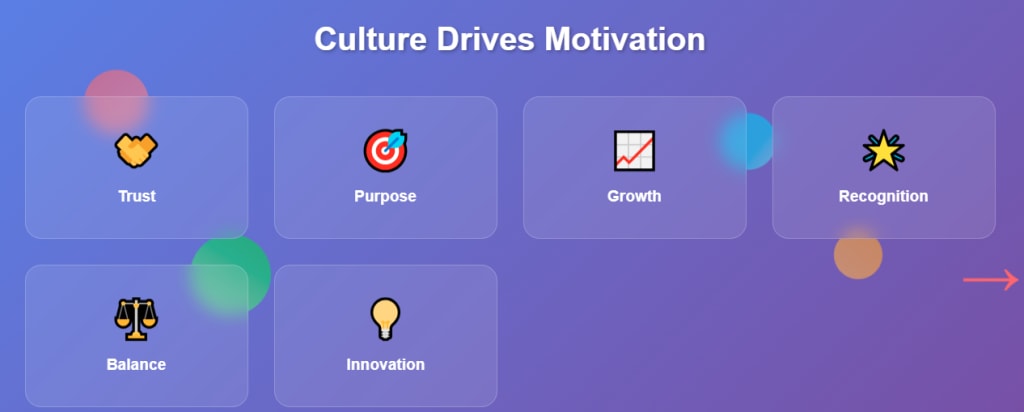
You can’t fix low employee motivation with free lunches, bean bags, or Friday happy hours. The core of any thriving workplace isn’t perks—it’s people, and how those people feel every day at work. That feeling, that intangible current running through teams, meetings, emails, and decisions? That’s workplace culture.
Workplace culture shapes how people show up, how long they stay, and how much they care. When it’s healthy, it elevates morale and performance. When it’s toxic or neglected, even your most passionate employees start thinking about quitting. In today’s workplace landscape—especially post-pandemic—culture isn’t a “nice to have.” It’s a make-or-break factor for motivation.
What Is Workplace Culture, Really?
Workplace culture is often mistaken for company values on a poster or the aesthetics of an office. In reality, it’s a shared system of behaviors, norms, attitudes, and communication styles that influence how work gets done. It’s “how things work around here,” even when no one’s watching.
It’s reflected in how leaders make decisions, how feedback is delivered, how conflicts are handled, how teams celebrate success, and how failure is treated. Culture is built through patterns—who gets promoted, who’s heard, who’s ignored, and what behavior is rewarded or punished.
A strong culture isn’t just about alignment with values—it’s about consistency between what a company says and what it does.
Understanding Employee Motivation—and Why It’s Not Just About Money
Motivation is the force that drives people to take action. In the workplace, it determines how committed someone is to their role, how much effort they invest, and whether they stay with the company—or begin quietly exploring their next move.
We often overemphasize financial rewards when talking about motivation. But while salary is a baseline need, it doesn’t drive long-term engagement. Many employees cite a lack of motivation as one of the top reasons for job change—not because they’re chasing a bigger paycheck, but because they no longer feel energized or valued in their current role.
Motivation is typically either:
Extrinsic: Driven by external rewards like bonuses, titles, or praise.
Intrinsic: Driven by internal satisfaction, purpose, and growth.
According to research from Gallup and McKinsey, intrinsic motivation is far more sustainable. Employees want to feel trusted, empowered, respected, and connected to something meaningful. When that’s missing—when people no longer see purpose or possibility in their work—it often becomes the tipping point for seeking new opportunities. They want to know their work matters—and that they matter, too.
The Invisible Link Between Culture and Motivation
Culture influences every motivator—both intrinsic and extrinsic—either positively or negatively.
In cultures where people feel psychologically safe, respected, and valued, motivation tends to flourish. These environments foster openness, trust, and innovation. People are more likely to take initiative, collaborate effectively, and bring their whole selves to work.
In contrast, toxic cultures create chronic stress, fear, disengagement, and eventually, burnout. Motivation doesn’t just drop—it’s replaced by emotional withdrawal. Employees stop caring not because they’re lazy, but because the environment has made it unsafe or unrewarding to care.
For instance:
If voicing opinions is discouraged or punished, people stay silent—even when it hurts the business.
- If achievements go unnoticed, effort starts to feel pointless.
- If workloads are excessive and boundaries are disrespected, burnout sets in quickly.
Culture quietly shapes how people feel every day. And feelings drive motivation far more than performance reviews do.
Early Signs Your Culture Might Be Killing Motivation
Culture problems often don’t announce themselves loudly. They sneak in quietly—disguised as “normal behavior” or “business as usual.” But these everyday signals are powerful indicators that motivation is being eroded from within.
Here are five signs that your culture might be damaging employee motivation:
1. High Absenteeism
When employees begin calling in sick more frequently—or finding excuses to avoid work—it’s often not just a health issue. It can be a symptom of stress, burnout, or emotional disengagement. People check out mentally before they check out physically. If absenteeism is rising, it’s worth asking: What’s making people dread showing up?
2. Micromanagement
A culture of control and over-supervision destroys initiative. When employees feel they can’t make decisions without constant approval, they stop trying. Micromanagement signals a lack of trust and stifles creativity. Over time, it creates resentment and passivity. Motivated people need room to think and act independently.
3. No Recognition
In a busy workplace, it’s easy to focus on deliverables and overlook appreciation. But silence can be demoralizing. Employees need to know their efforts matter. A lack of recognition doesn’t just hurt morale—it sends the message that hard work goes unnoticed. Over time, people stop going the extra mile.
4. Low Collaboration
When departments work in silos, or employees avoid cross-functional interaction, it’s a cultural red flag. Collaboration builds belonging, shared purpose, and innovation. Its absence often points to fear, competition, or unclear leadership. If people only “do their job” and nothing more, they’re probably disengaged.
5. Passive-Aggressive Communication
Not addressing issues directly—through sarcasm, vague emails, or back-channel chatter—creates emotional toxicity. It undermines trust and erodes transparency. When employees don’t feel safe to speak up honestly, they disengage. This kind of culture leads to miscommunication, frustration, and avoidable conflict.
These signs are not just about poor habits—they’re warning signals that your culture is pushing people away. Ignoring them means risking the long-term energy, health, and performance of your team.
Real Examples: How Great Culture Boosted Motivation (and Where It Failed)
1. Google's 20% Innovation Time
Google’s now-famous "20% time" policy allowed employees to spend a portion of their week on passion projects unrelated to their primary responsibilities. This simple gesture of autonomy generated some of the company’s most successful innovations—like Gmail and Google News. Why did it work? Because it trusted employees to lead, create, and explore. It wasn’t about time—it was about permission.
2. The Downside of a Toxic Leader at a Mid-Sized Agency
At a mid-sized marketing agency, a highly talented team began bleeding talent. Turnover skyrocketed. Exit interviews pointed to one manager—someone technically excellent but emotionally erratic. The manager played favorites, gave inconsistent feedback, and reacted defensively to criticism. Senior leadership was slow to act. The result? Team morale cratered, and the agency lost three clients due to delivery issues. Toxic leadership, even at one level, can poison motivation across the board.
3. A Startup That Built Culture on Radical Transparency
One early-stage fintech startup in Southeast Asia implemented full financial transparency—every employee had access to P&L statements and could see where money was being spent. They also did monthly town halls where team members, not executives, shared wins and challenges. The result? Employees felt ownership. They started suggesting cost-saving ideas, spotting operational inefficiencies, and solving problems beyond their job scope. Motivation surged—not because of bonuses, but because people felt trusted and included.
These examples show that culture doesn’t require flashy perks—it requires intention. The difference between motivation and disengagement often comes down to leadership clarity and cultural trust.
The Role of Leadership in Shaping Culture and Motivation
Culture doesn’t live in documents. It lives in behavior—and leadership behavior sets the tone for everyone else.
Good culture starts with how leaders show up daily, not just what they say in meetings. Motivation is shaped in the moments when a leader chooses to:
Be consistent: Are expectations and consequences fair, or do they change based on who’s involved?
Communicate clearly: Are goals, feedback, and decisions explained with transparency, or left vague?
Model emotional intelligence: Do leaders manage their reactions, listen deeply, and respond with empathy—or do they project stress and blame?
Admit mistakes: Vulnerability from leadership builds trust. When leaders can say “I was wrong,” it creates space for psychological safety.
Crucially, motivation doesn’t come from being “liked” as a leader—it comes from being respectful, predictable, and supportive.
Leaders at every level—from team leads to executives—are cultural architects. Their daily choices create ripple effects across teams. Even one emotionally intelligent manager can be the reason people stay motivated in a difficult environment.
How to Build a Culture That Truly Motivates People
Motivation isn’t something you can demand. It must be built—and earned—through the environment you create. Here’s how organizations can foster a culture that genuinely uplifts employees:
1. Foster Psychological Safety
Create a space where people feel safe to express concerns, admit mistakes, and offer ideas without fear of ridicule or punishment. This doesn’t mean avoiding tough conversations—it means making those conversations respectful and solution-focused.
2. Give Regular, Specific Recognition
Don’t wait for annual reviews to acknowledge effort. Celebrate progress, not just outcomes. A quick Slack message, a personal note, or a shoutout in a team meeting can be deeply motivating—especially when it’s specific to someone’s contribution.
3. Build Clear Growth Paths
People want to know they’re not stuck. Offer training, mentorship, cross-functional projects, and clear pathways for career development. Growth isn’t just about promotions—it’s about progress.
4. Encourage Team Feedback Loops
Invite feedback frequently—from the bottom up, not just top-down. Make it normal for employees to give input on leadership, processes, and culture. Then act on what you hear. Listening without change breeds cynicism.
5. Promote Balance and Boundaries
A culture of constant hustle leads to burnout, not loyalty. Respect evenings, weekends, and vacation time. Encourage breaks during the day. Motivation is fueled by recovery as much as effort.
These aren’t one-time actions—they’re daily habits that shape whether people feel supported or expendable. And that feeling drives performance.
Measurement: How to Know if Your Culture Is Actually Working
You can’t manage what you don’t measure. Culture might be intangible, but its effects are not. Here are five practical ways to assess whether your culture is fueling or failing motivation:
1. Engagement Surveys
Conduct regular (not just annual) surveys asking targeted questions about trust, inclusion, communication, recognition, and emotional safety. Use open-ended questions too—data alone won’t tell the whole story.
2. Stay Interviews
Instead of waiting for exit interviews, have proactive “stay” conversations with employees. Ask: What’s keeping you here? What might make you leave? What would improve your experience? These early signals are gold.
3. Retention and Turnover Analysis
Break down turnover by role, team, manager, and tenure. High turnover in certain pockets usually points to cultural or leadership issues. Dig into the patterns—not just the numbers.
4. Pulse Feedback Tools
Use quick, anonymous check-ins weekly or monthly. One-question prompts like “How motivated did you feel this week?” can help track trends and surface early morale issues.
5. Performance + Well-being Correlation
Monitor not just output, but burnout indicators. If productivity is high but well-being is crashing (long hours, increasing sick leave, disengagement), you’ve got a culture imbalance.
Measuring culture isn’t about box-checking—it’s about staying close to the human experience of work.
Final Thoughts: Culture Is a Daily Decision, Not a Policy
Workplace culture doesn’t exist in a slide deck. It lives in how people are treated—especially when no one is watching. It’s in the tone of emails, the way meetings are run, how conflict is resolved, and who gets a voice at the table.
You can’t fake culture. You can’t automate it. And you definitely can’t build it overnight. But you can shape it—deliberately, consistently, and authentically.
Small, daily decisions about respect, trust, communication, and leadership create the conditions where motivation either flourishes or fades. And in a market where talent is increasingly mobile and values-driven, culture is no longer just HR’s responsibility—it’s everyone’s business.
When people feel seen, heard, and valued, they rise. Not because of perks. But because they believe their work, and their presence, truly matters.
About the Creator
Education Reform for the 21st Century
Friends, have you ever watched a bright teenager like Priya in Mumbai sit through another day of rote memorization, her eyes dimming as high-stakes exams sucked the joy out of learning? She once told me she loved science but felt trapped in a system built for another century. That moment hit me hard because Priya’s story echoes across continents. In our world of rapid AI growth, climate crises, and shifting job markets, education must evolve from industrial-era factories into vibrant spaces of discovery. Research from UNESCO, OECD’s PISA, and the World Economic Forum shows the gap is widening, yet reform offers real hope. Together, we can build systems that prepare every child for the skills of the 21st century.
By Arjun. S. Gaikwad6 days ago in Education
Understanding the Quiet Shift: What You Need to Know About the Move Toward Value-Based Healthcare
A significant transformation is unfolding in the healthcare industry, yet many people outside the field may not fully realize its impact. This quiet shift is the transition from volume-based care, where providers are paid for the number of services they deliver, to value-based healthcare, where reimbursement depends on quality, outcomes, and patient satisfaction. This evolution is reshaping how providers deliver care, how patients experience treatment, and how the entire system measures success. As healthcare becomes more complex and costly, value-based care offers a more sustainable, patient-centered path forward. Understanding what this shift means is essential for anyone interested in the future of healthcare delivery.
By Evan Weiss St Louis6 days ago in Education
Unofficial Challenge: Black History Celebration
Forward: February 28th, 10:53 PM, EST... The final hour of Black History Month, 2026. Hello fellow writers. I've had this challenge waiting in my drafts for most of the month. But I held off on publishing it, until now.
By Sam Spinelli7 days ago in Writers




Comments
There are no comments for this story
Be the first to respond and start the conversation.