

I too have a dream, with all due respect to Dr. King. I do not appropriate his words lightly. These last few years have really shined a light on some ugliness that had gone somewhat underground. The ugliness has always been there. Dare I say that the ugliness is part of our human DNA? It may be deep within us but that does not mean that we need to give voice to it. We have feet to walk, that does not mean we have to kick. We have hands to mold, that does not mean we have to hit. We have a mouth to eat, that does not mean we have to speak ill. We have eyes to see, that does not mean we have to look away.
As a Jewish kid growing up in the 1970’s I experienced racism firsthand. I will be the first to admit that relatively speaking it was mild compared to some of what my parents went through, or my grandparents. It was mild compared to what my Black friends and their families went through. Nonetheless it stung and stuck with me. I avoided and still do shy away and don’t embrace my heritage. I am me first and foremost, not a race, a religion, or a hair color, just me.
Racism, hatred, intolerance runs deep. But we have all seen the videos and pictures of young children playing with other kids of different color, race, religion, physical abilities. Children are colorblind until they are taught to see things the ways others may want to see them. They do not actively participate in this indoctrination. It is thrust on them, and they become what they are taught. I am not saying that it must be that way or that it will be that way always. Until such time though that they are led to another point of view they may be locked into their hatred, mistrust, intolerance. Wherever it may be. Whether it's here in the US or across the sea in the Middle East or other countries, hatred and intolerance is taught, not born into us.
It is not easy to change the mindset of people that are set in their ways, but if we continue with the premise that hatred and intolerance is a learned behavior and not an inherent one then it should be within our power to teach young minds not to hate and not to be intolerant of other points of view.
Empathy needs to be taught at home by parents. That may be the single most important thing lacking in the development of young minds. I am not a psychologist and so I do not know why it may be a missing element in the raising of so many children. I am not going to delve into the makeup of the parents that is a whole other field. Empathy can be raised in the classroom but it must be nurtured at home for the children to see and learn. My deepest wish would be that empathy would be a natural lesson for all at home. With empathy the world clearly could be a better place for all. Humans, animals, nature.
In my case though I see another path to some understanding. My parents by virtue of the fact that they worked in a field that was diverse and employed people of all colors and walks of life instilled in us that we were all equal. This was not a particular lesson that was drilled into us, instead we learned it by watching all the people that my parents interacted with and how they interacted. This extended to my aunts and uncles as well who were totally enamored of all other cultures and appreciated what everyone had to offer. Subconsciously we learned this.
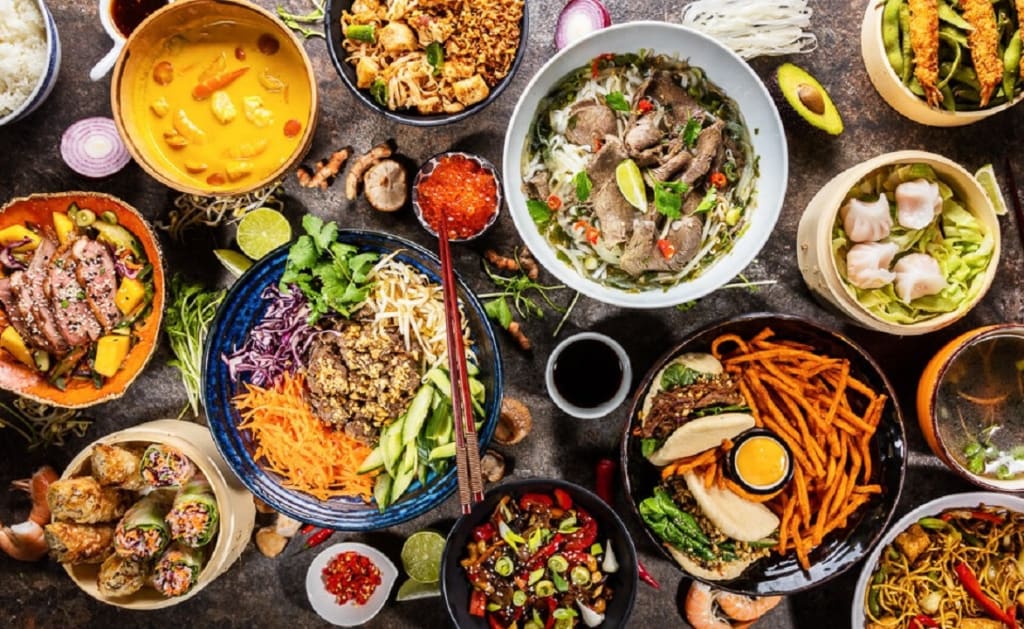
The other way we learned it was by the way we ate. My aunt and uncle were lucky in that they had opportunities to travel the world and brought back tales of others. They bought things to bring home and ate what they ate when they were abroad, at home. Whether it was learning a recipe from a book or seeking out a restaurant that specialized in a particular culture, it was always there to be embraced. We were also lucky to have grown up in an area that was rich in diversity and so it was easy to learn other cultures. Not everyone is so lucky. While my own parents did less world traveling, they were equally enthralled with the foods of other countries. They had a gourmet club where they regularly cooked foods from different countries. They had a series of cookbooks from Time Life called “Foods of the World” that I used to read on a regular basis. I inherited these books from my parents and completed the collection on my own. We also ate out on a regular basis and so I developed a love for ethnic and other world dishes. It was no surprise to anyone then that I became a chef.
It is then that love of food and cultural diversity through the food that I think we can make a difference in children growing up. I have spoken of this and want to write a teaching curriculum for young kids that can be taught in schools. This class would focus on foods of the world. There would be a large hurdle to overcome in terms of the breadth of the potential in what to teach. But there is also no reason that it couldn't be a course that could grow and each grade has a new tier of learning all the way up to the sampling of other foods. With the myriad of allergies and food sensitivities this part could be tricky, but where there's a dish, there's a way!
The one thing above all other that ties us together, plants, animals, humans is that we need to eat. Humans however are unique in nature in that we have developed taste and an appreciation for food. It goes far beyond the need to eat solely for survival. Some children are taught to eat with chopsticks as that is part of their culture. Other children see this and are intrigued. Some cultures are taught to eat using their hands as utensils, oh you know other children are intrigued by that! Why then did some people develop chopsticks? Why did some cultures use their fingers to eat? Food is universal.
Kids like simple foods to start. We all are driven in large part by our senses. When my own son was two years old, he would scarf down fried squid in plum sauce. Did he have a particular affinity for cephalopods? I doubt it, but he did enjoy the sweet plum sauce. In doing this he became less fearful of unknown foods. We also had a rule in the house that you did not have to eat something if you did not like it, but you had to at least sample it. Often it would happen that he would sample it and say he did not like it and we would say ok. You tried it therefore you do not have to eat it if you really do not like it. By giving him the power to make a choice after understanding he was more inclined to realize that he did in fact like it.
Eating something that tasted good to him and regularly indulging in the food of other cultures helped to teach him that other people had equal value. It wasn’t all about just him and just what he liked. If we can break down the barriers to other cultures through the simple act of breaking bread and discovering what the other kids eat, I think it can go along way into breaking down other barriers and misunderstandings among people of different races and ethnicities. Food is simple, food is enjoyment, food is life.
At its most basic, sitting down and enjoying food is close to our hearts and I think is a fine way to start to break down barriers and teach children diversity in an entertaining way so that maybe all the children can learn that while we all have different ways of doing things ultimately we all enjoy sweet, sour, and savory. And with that I think we can start to change the way the world behaves. It starts with a hotdog, an enchilada, an eggroll, to fufu and we can finish with a nice bowl of eskimo ice cream!
About the Creator
Keep reading
More stories from ADAM GOLDSMITH and writers in Education and other communities.
The Owl
The owl I loved being on the road, always did. It gave me a chance to be alone with my thoughts, or the radio with someone else’s thoughts. Ever since I was a kid and my parents would take us somewhere, I loved taking road trips. Whether it was to a resort or relatives in another state, the thrill of the open road was for me.
By ADAM GOLDSMITH4 years ago in Fiction
How Japan saved its biggest city from collapse
400 years ago, modern-day Tokyo was known as Edo, and it was already one of the biggest cities in the world, with a population approaching 1 million. However, it was on the verge of ecological collapse. Years of intense logging had led to massive deforestation. The city now faced timber shortages and the impacts of severe erosion and frequent flooding that threatened food supplies. But over just a few decades, Edo will transform and become one of the most sustainable and efficient cities in history.
By Munesh Yadava day ago in Education


Comments
There are no comments for this story
Be the first to respond and start the conversation.