
Floating Wind Energy: Powering a Greener Tomorrow
Powering Clean Energy Innovation

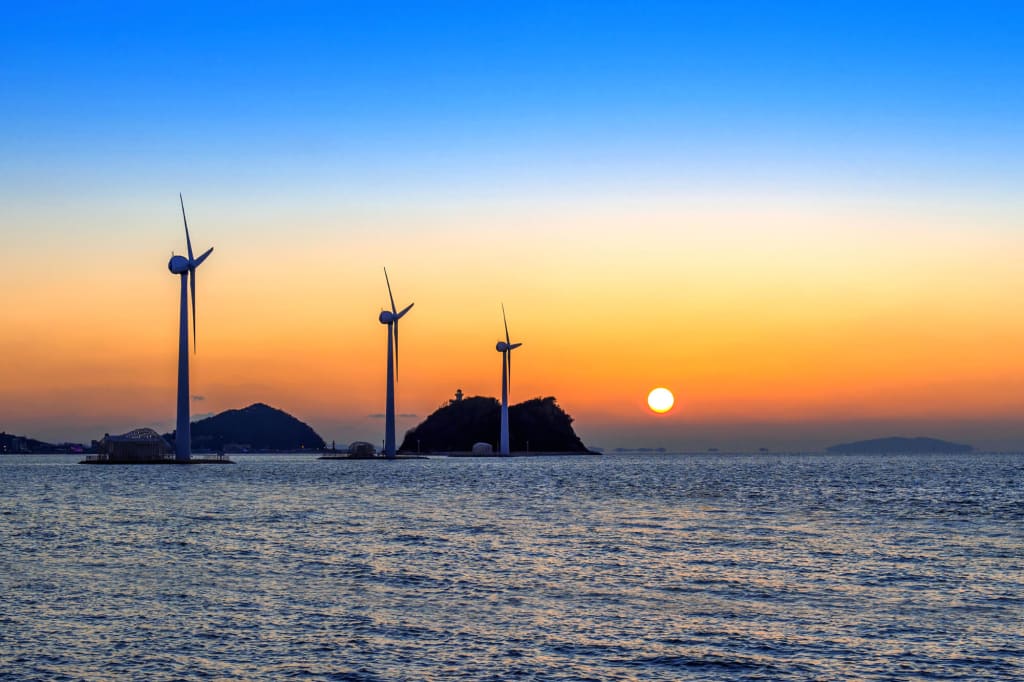
With floating wind energy bringing revolutionary development in renewable energy, it is gaining a lot of popularity as an innovative solution to combat climate change, as the global community strives to find solutions. This cutting-edge technology is about to revolutionize the way we think about wind power, introducing new possibilities for clean energy generation that couldn’t be anticipated before.
What Is Floating Wind Energy?
Floating wind energy is the use of offshore wind turbines, based on the power of offshore winds, floating on the sea surface. Unlike fixed-bottom systems, floating turbines rest on platforms that stay anchored to the seabed with strong cables. This ingenious design means that they have the ability to be placed in deeper, more consistent winds and therefore move higher and begin operating at a smaller scale. Floating wind energy uses these untapped resources to offer a compelling solution to the challenges posed by traditional wind power systems.
Why Floating Wind Energy Matters
Floating wind energy is important. The reason is here:
- Stronger and Steadier Winds: The winds are more constant and powerful at deep-sea locations than onshore or shallow offshore locations. In other words, your energy output and reliability for the power grid increase.
- Minimal Land Use: Floating offshore makes it possible to clear land for agriculture or housing, as well as other issues of land scarcity.
- Accessibility for Remote Areas: Continuing the offshore floating development could garner electricity for the remote islands and coastal places that suffer from a lack of good power.
- Reduced Environmental Impact: Floating wind turbines enable operation many miles away from the coast, reducing visual impact and disturbance of coastal ecosystems while providing an environmentally friendly alternative.
Global Leaders in Floating Wind Energy
Several nations are taking the lead in adopting and advancing floating wind energy technology:
- Norway: The location of the Hywind Tampen project, involving the integration of wind power into offshore oil platforms.
- Scotland: hosts Hywind Scotland, the first floating wind farm in the world to operate successfully.
- Japan: Being able to come up with turbine designs that can withstand such extreme weather as typhoons.
- United States: So far, we've invested heavily in research to get floating wind technology to the point where it could make money.
These countries are not only leading in technological progress but also setting the example of energy sustainability within the boundaries of their own countries.
Challenges in Floating Wind Energy
While the potential of floating wind energy is immense, it’s not without challenges:
- High Costs: However, the initial investment for a floating wind project is much higher than for a fixed-bottom turbine. Nevertheless, the cost of the technology is expected to decrease.
- Technical Complexity: Floating platforms, which are often utilized in harsh marine environments, have to be balanced carefully and precisely designed and constructed from the most advanced engineering technologies and materials.
- Grid Integration: Logistical and infrastructural challenges exist in delivering energy from remote offshore locations to onshore grids.
However, thanks to ongoing research and development, such barriers do not hinder more efficient, less costly solutions.
Environmental Benefits of Floating Wind Energy
Floating wind turbines play a huge part in the battle against climate change. They use renewable wind power to cut out reliance on fossil fuels and a big source of greenhouse gas emissions. In addition, being offshore allows them to also minimize their impact on terrestrial ecosystems and human activities.
Additionally, these projects are planned in a way that allows them to coexist in harmony with marine life. In fact, the turbine placements are rigged to avoid disrupting migration paths of sea creatures, and noise levels from construction are monitored to keep noise impact to a minimum on underwater habitats.
Future Prospects of Floating Wind Energy
Floating wind energy has a promising future. Here are some exciting prospects:
- Lower Costs: Reduced costs are expected to be achieved through advances in material, manufacturing technique, and installation.
- Wider Adoption: But, as costs come down and infrastructure improves, more countries are likely to adopt floating wind technology.
- Hybrid Solutions: Other renewable sources, such as solar panels or wave energy, could combine to increase efficiency and reliability.
- Energy Storage Integration: Better storage solutions will help to supply electricity at a reasonable rate when wind is not blowing (especially important as the wind industry becomes larger and larger).
Conclusion
With the potential to provide up to 20 percent of the world’s electricity, floating wind energy is one giant leap forward in the power quest for the sustainable solution. Deep-sea winds have a vast potential, which it taps into with a clean, reliable, environmentally friendly energy source. There’s still work to be done, but this far demonstrates the human ability to prevail in the face of adversity and to make progress towards a greener future.
A beacon of hope in the fight against climate change, as the world continues to innovate, floating wind energy is outshining. It’s time to invest in this promising technology, and it will have an impact for generations to come.
About the Creator
Mudassar saleem
I’m a passionate science blogger and educator at Learning Breeze. Learning Breeze simplifies complex science concepts, inspires curiosity and fosters a love of education. Join us to explore and learn together!
Keep reading
More stories from Mudassar saleem and writers in Education and other communities.
Future of Environmental DNA
Environmental DNA is changing the way we learn and conserve ecosystems. Researchers are discovering an abundance of biodiversity information by analyzing genetic material released by organisms into their environment. Environmental DNA applications hold significant promise for breakthroughs in conservation, ecology, and climate science, as well as a noninvasive, accurate, and cost-effective method for observing life on Earth.
By Mudassar saleemabout a year ago in Education
From Job to Prison: Revenge, Sacrifice, and Ending
The story begins by showing a bald and strong man named Bradley, who is a car mechanic by profession. As usual, Bradley reaches the garage with a broken car, but after arriving there, he sees that the garage owner is anxiously waiting only for him, which makes him a little surprised. Then the garage owner calls him into his office. Hearing this, Bradley understands that he is about to be fired from his job, and exactly that happens. The owner tells him that these days the garage is going through a financial crisis, and that is why he is being forced to fire some workers. But this is only an excuse, because Bradley is a hard-tempered man, and the owner wants to remove him and hire someone who flatters him. Now since Bradley is a tough man, he does not argue with the owner. He goes to the locker room, takes out his belongings, takes his car, and silently leaves for home. And yes, friends, this is where the downfall of Bradley’s life begins, which continues straight until the end of the story and ends there. Anyway, Bradley stops his car in front of his house, and at the same time he sees that his wife Lauren is sitting in her car, talking to someone on the phone. Bradley becomes suspicious of her. To know the truth, he keeps watching her carefully for some time. When he becomes sure, he immediately goes to Lauren and tells her to open the car door. His wife says, “You came back from work very early today.” At the same moment, Bradley notices marks of someone else’s lips on her neck and says to Lauren, “Give me your phone.” But Lauren refuses to give the phone, because of which Bradley forcefully snatches the phone from her, and his suspicion turns out to be correct. She is talking on the phone with another man. In anger, Bradley tells Lauren to go inside the house. Lauren says, “At least listen to me.” Bradley says, “I said go inside the house.” Then Lauren silently goes inside the house. Now, he had already been fired from his job a little while ago, and now his wife’s affair, because of which he had become even more disturbed, so he starts taking out all his anger on Lauren’s car. How? You can see that yourself. Yes, he is so angry that he does not even realize that his hands have been badly injured. After that, he calms himself down and goes inside the house and questions Lauren about how many days she has been with the other man. Lauren tells him everything, that for the past three months she had been having an affair with someone else. Actually, Bradley’s wife had an abortion a few days earlier, because of which she used to remain sad, and Bradley often stayed busy with his work. Because of this, Lauren felt lonely and very depressed at home, and to fill this emptiness, she had to take support from another man. Hearing these things, Bradley realizes that he should have given time to Lauren. He apologizes to Lauren for this and says that from today, from right now, they will both start a new life. Lauren agrees. After that, Bradley tells Lauren that he has been fired from his job and now he will work for a man named Gil, who is a drug lord. As soon as she hears Gil’s name, Lauren clearly refuses and says, “You yourself said that you would never work with Gil.” Bradley says, “Yes, but in such circumstances, we cannot live like a prosperous family. To run a family, money is needed, and at this time I have no other option.” He also assures Lauren that he will do this work very carefully.
By Filmon Ke Raaz | Movie Mysteries Explained5 days ago in Education
Punjab Orders Action Against Private Schools Pressurizing Parents to Buy From Selected Shops
In a bold move to protect parents and uphold fair practices in education, the Punjab government has ordered strict action against private schools that allegedly pressure parents to purchase supplies, uniforms, or books from selected vendors. The directive comes after multiple complaints surfaced regarding unfair practices that forced families to spend extra money or adhere to specific buying instructions, often leaving them with little choice.
By Muhammad Hassanabout 2 hours ago in Education




Comments
There are no comments for this story
Be the first to respond and start the conversation.