
Punjab Orders Action Against Private Schools Pressurizing Parents to Buy From Selected Shops
Education, Ethics, and the Fight Against Coercion in Private School Purchases


In a bold move to protect parents and uphold fair practices in education, the Punjab government has ordered strict action against private schools that allegedly pressure parents to purchase supplies, uniforms, or books from selected vendors. The directive comes after multiple complaints surfaced regarding unfair practices that forced families to spend extra money or adhere to specific buying instructions, often leaving them with little choice.
The decision highlights a growing concern: how private schools, while offering quality education, may sometimes exploit parents’ trust and financial commitment.
The Issue: Coercion in School Supply Purchases
Reports from various districts in Punjab revealed that some private schools were tying admissions and continued enrollment to purchases from particular shops. Parents claimed that they were instructed to buy uniforms, books, stationery, or other school-related materials only from pre-selected vendors, often at higher prices than in the open market.
In many cases, refusal to comply with these instructions could result in subtle threats: delayed admission confirmations, restricted access to school events, or even pressure on students in the classroom. This created financial and emotional stress for families already managing tight budgets.
Education experts argue that this kind of coercion violates the principles of fair trade and ethical practices, undermining trust between parents and educational institutions.
Government Response: Enforcement and Awareness
Punjab’s education authorities have responded decisively. Officials have ordered an immediate investigation into schools reported for pressuring parents. Measures include:
Inspections of private school practices to identify violations
Monitoring of procurement policies and supplier contracts
Issuing strict warnings or penalties to schools found guilty
Launching awareness campaigns for parents on their rights
The government’s action is a step toward ensuring that schools cannot exploit families for profit under the guise of education. By regulating these practices, authorities aim to create a fairer environment where parents can make their own purchasing decisions without fear of retaliation.
Why This Matters to Parents and Students
For parents, the issue is more than just money. Forced purchases often add unnecessary financial burden, particularly for middle-class and lower-income families. Some parents reported spending hundreds of extra rupees per child each year, simply because the school mandated buying from a particular vendor.
For students, the practice can be stressful. They may feel responsible for their parents’ compliance with school rules, or experience peer pressure to conform to uniform or book standards dictated by the school.
By addressing these coercive practices, the Punjab government is helping safeguard the educational experience, ensuring it remains about learning rather than financial manipulation.
Legal and Ethical Considerations
Education law experts highlight that forcing purchases from specific vendors may violate consumer protection laws. The practice can be considered a form of monopoly or unfair trade, which is illegal in many contexts.
Ethically, schools are expected to act in the best interests of students and families. Pressuring parents for financial gain breaches this trust and can damage the school’s reputation long-term.
Authorities in Punjab are now evaluating whether stricter regulations on school supply policies should be enacted, potentially setting a precedent for other states in India.
Reactions from the Community
Parents and advocacy groups have largely welcomed the government’s action. Social media platforms have seen an outpouring of support from families who previously felt powerless, praising the move as a “long overdue intervention” in private education.
Some schools, however, have expressed concern that these regulations could limit their ability to ensure uniformity and quality in supplies. They argue that using selected vendors guarantees product consistency and durability, particularly for uniforms and textbooks.
Education experts, however, counter that quality and choice can coexist. Schools can provide recommendations without making them mandatory, or allow multiple vendors for purchases to maintain standards while respecting parental choice.
Steps Schools Can Take to Avoid Violations
In light of the government’s directive, private schools are being encouraged to adopt transparent and fair practices, such as:
Allowing parents to choose vendors freely, with only suggested suppliers listed
Publishing price ranges and not fixed pricing for supplies
Providing options for bulk purchase discounts without coercion
Seeking parent feedback before setting mandatory supply sources
By implementing these measures, schools can maintain operational efficiency while respecting parental rights, avoiding fines, and building trust.
Wider Implications for Private Education
Punjab’s decision could have a broader impact on private education across India. If enforced successfully, it may encourage other states to regulate school-vendor relationships, ensuring that parents are protected nationwide.
It also highlights the importance of consumer rights in education, a sector often seen as separate from traditional market oversight. Protecting families from coercive practices helps strengthen the credibility and ethical standards of private schools, ensuring education remains focused on students’ learning and well-being.
Final Thoughts
The Punjab government’s action against private schools pressurizing parents is a welcome and necessary step. It addresses financial exploitation, protects family interests, and promotes ethical conduct in private education.
Parents now have a stronger legal backing to voice concerns, while schools are reminded that trust, transparency, and fairness are as important as academic quality.
This move may ultimately set a national example, reinforcing the principle that education should empower, not exploit, ensuring that every student’s learning experience is safe, fair, and focused on knowledge rather than unnecessary spending.
About the Creator
Muhammad Hassan
Muhammad Hassan | Content writer with 2 years of experience crafting engaging articles on world news, current affairs, and trending topics. I simplify complex stories to keep readers informed and connected.
Keep reading
More stories from Muhammad Hassan and writers in Education and other communities.
Delta Announces Las Vegas Sky Club, Plans to Revamp 2 Florida Lounges
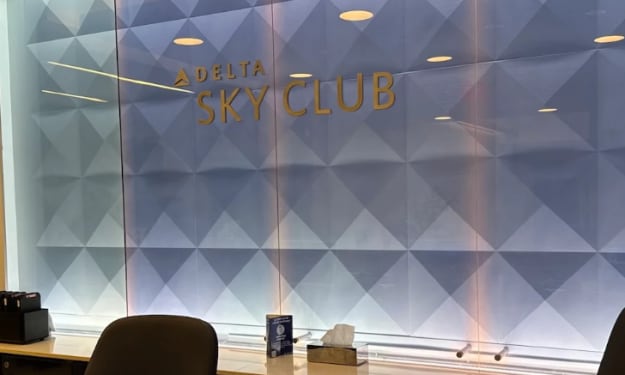
Delta Air Lines is continuing to redefine the airport lounge experience with the announcement of a new Sky Club in Las Vegas and plans to revamp two lounges in Florida. Known for providing premium services to frequent flyers, Sky Club lounges offer travelers a space to relax, work, and recharge before flights. This latest expansion reflects Delta’s commitment to enhancing comfort, convenience, and brand loyalty in the competitive airline industry. The Las Vegas Sky Club: A New Hub for Comfort Delta’s new Sky Club in Las Vegas will be located within McCarran International Airport’s Terminal 3, a major hub for domestic and international travelers. The Las Vegas lounge promises a blend of luxury and practicality, catering to the city’s diverse traveler base—from business professionals to leisure tourists heading for the entertainment capital of the world. Key features of the Las Vegas Sky Club are expected to include: Spacious seating areas designed for both relaxation and productivity High-speed Wi-Fi and business-friendly amenities for working travelers Gourmet dining options and curated beverage selections Modern design and aesthetics that reflect both Delta’s brand and Las Vegas flair The lounge is part of Delta’s broader strategy to enhance the traveler experience by providing spaces that go beyond traditional airport seating, creating an environment where passengers can arrive at their destinations refreshed and ready. Florida Lounge Renovations: Miami and Fort Lauderdale In addition to the Las Vegas announcement, Delta has revealed plans to revamp two Florida Sky Clubs, located in Miami International Airport and Fort Lauderdale-Hollywood International Airport. These renovations aim to modernize facilities, expand capacity, and introduce new amenities for travelers in these busy airports. Florida is a significant market for Delta due to high volumes of domestic flights and international connections to Latin America and the Caribbean. Upgraded lounges in Miami and Fort Lauderdale will focus on: Enhanced seating layouts for improved comfort Updated food and beverage offerings, including local flavors Technology upgrades for streaming, business workspaces, and charging stations Eco-friendly design elements as part of Delta’s sustainability initiatives By revamping these lounges, Delta is addressing the growing expectation among passengers for airport spaces that are both functional and luxurious. Why Sky Clubs Matter in Airline Strategy Sky Clubs are more than just lounges—they are a critical component of Delta’s customer experience strategy. Premium passengers, especially those in Delta One, First Class, or with SkyTeam elite status, value access to these spaces as part of their travel journey. Airline lounges: Enhance loyalty: Frequent flyers are more likely to stick with airlines that provide exceptional experiences. Generate revenue: Memberships and day passes contribute significantly to airline income. Support brand positioning: Lounges reflect an airline’s commitment to comfort, luxury, and service excellence. With these expansions, Delta positions itself as a leader in airport amenities, emphasizing that travel is not just about getting from point A to B—it’s about the overall journey. Traveler Reactions and Expectations Delta travelers have responded positively to the news. Many have expressed excitement over: The opportunity to experience a new lounge in Las Vegas, a city known for luxury and entertainment Upgraded facilities in Florida, which improve comfort on both business and leisure trips The focus on high-quality food and beverage options, which are increasingly important for travelers Social media chatter reflects a broader trend: passengers are willing to pay extra or adjust loyalty programs to enjoy elevated lounge experiences. How Delta Stays Competitive The airline industry is highly competitive, and premium lounges play a strategic role. Delta faces competition from other major carriers, including American Airlines, United, and JetBlue, each of which invests in lounge experiences. Delta differentiates itself through: Innovative lounge design tailored to specific cities High-quality dining and beverage selections Integrated technology for seamless work and leisure Focus on sustainability in new and renovated spaces By announcing both the new Las Vegas Sky Club and the Florida renovations, Delta signals its commitment to continuous improvement and innovation in passenger experience. A Look Ahead: What This Means for Travelers Travelers can expect the following benefits from these developments: More options for rest and work: Especially important for long layovers or business trips. Improved customer experience: Delta’s lounges combine comfort, technology, and service excellence. Enhanced loyalty benefits: Frequent flyers gain more value from memberships and elite status. Modern, sustainable designs: Reflecting trends in eco-conscious travel and airport architecture. For Las Vegas travelers, the lounge will also become a destination in itself—a place where passengers can unwind before enjoying the city’s attractions. Meanwhile, Florida travelers will experience upgraded amenities that make busy domestic or international airports feel more hospitable. Final Thoughts Delta Air Lines’ announcement of a Las Vegas Sky Club and the revamp of two Florida lounges highlights a growing trend in the airline industry: passengers increasingly demand more than just flights—they want comfort, convenience, and curated experiences from departure to arrival. By investing in lounges, Delta demonstrates that premium services are not just a perk—they are an essential part of brand loyalty, passenger satisfaction, and competitive strategy. Whether traveling for business or leisure, passengers can look forward to lounges that are modern, luxurious, and tailored to the city they’re flying from, making the airport experience an integral part of the journey.
By Muhammad Hassanabout 2 hours ago in The Swamp
From Job to Prison: Revenge, Sacrifice, and Ending
The story begins by showing a bald and strong man named Bradley, who is a car mechanic by profession. As usual, Bradley reaches the garage with a broken car, but after arriving there, he sees that the garage owner is anxiously waiting only for him, which makes him a little surprised. Then the garage owner calls him into his office. Hearing this, Bradley understands that he is about to be fired from his job, and exactly that happens. The owner tells him that these days the garage is going through a financial crisis, and that is why he is being forced to fire some workers. But this is only an excuse, because Bradley is a hard-tempered man, and the owner wants to remove him and hire someone who flatters him. Now since Bradley is a tough man, he does not argue with the owner. He goes to the locker room, takes out his belongings, takes his car, and silently leaves for home. And yes, friends, this is where the downfall of Bradley’s life begins, which continues straight until the end of the story and ends there. Anyway, Bradley stops his car in front of his house, and at the same time he sees that his wife Lauren is sitting in her car, talking to someone on the phone. Bradley becomes suspicious of her. To know the truth, he keeps watching her carefully for some time. When he becomes sure, he immediately goes to Lauren and tells her to open the car door. His wife says, “You came back from work very early today.” At the same moment, Bradley notices marks of someone else’s lips on her neck and says to Lauren, “Give me your phone.” But Lauren refuses to give the phone, because of which Bradley forcefully snatches the phone from her, and his suspicion turns out to be correct. She is talking on the phone with another man. In anger, Bradley tells Lauren to go inside the house. Lauren says, “At least listen to me.” Bradley says, “I said go inside the house.” Then Lauren silently goes inside the house. Now, he had already been fired from his job a little while ago, and now his wife’s affair, because of which he had become even more disturbed, so he starts taking out all his anger on Lauren’s car. How? You can see that yourself. Yes, he is so angry that he does not even realize that his hands have been badly injured. After that, he calms himself down and goes inside the house and questions Lauren about how many days she has been with the other man. Lauren tells him everything, that for the past three months she had been having an affair with someone else. Actually, Bradley’s wife had an abortion a few days earlier, because of which she used to remain sad, and Bradley often stayed busy with his work. Because of this, Lauren felt lonely and very depressed at home, and to fill this emptiness, she had to take support from another man. Hearing these things, Bradley realizes that he should have given time to Lauren. He apologizes to Lauren for this and says that from today, from right now, they will both start a new life. Lauren agrees. After that, Bradley tells Lauren that he has been fired from his job and now he will work for a man named Gil, who is a drug lord. As soon as she hears Gil’s name, Lauren clearly refuses and says, “You yourself said that you would never work with Gil.” Bradley says, “Yes, but in such circumstances, we cannot live like a prosperous family. To run a family, money is needed, and at this time I have no other option.” He also assures Lauren that he will do this work very carefully.
By Filmon Ke Raaz | Movie Mysteries Explained5 days ago in Education
Beyond Speed: How High-Performance Computing Is Shaping Tomorrow’s Discoveries
High-Performance Computing is changing how people explore ideas, test theories, and solve complex problems. It allows machines to work together at great speed. These systems can handle tasks that are far too large for standard computers. As a result, High-Performance Computing and the future of discovery are closely linked.
By Jason Pruet5 days ago in Education


Comments
There are no comments for this story
Be the first to respond and start the conversation.