
Five Mind-Blowing Facts About Black Holes
Five Mind-Blowing Facts About Black Holes

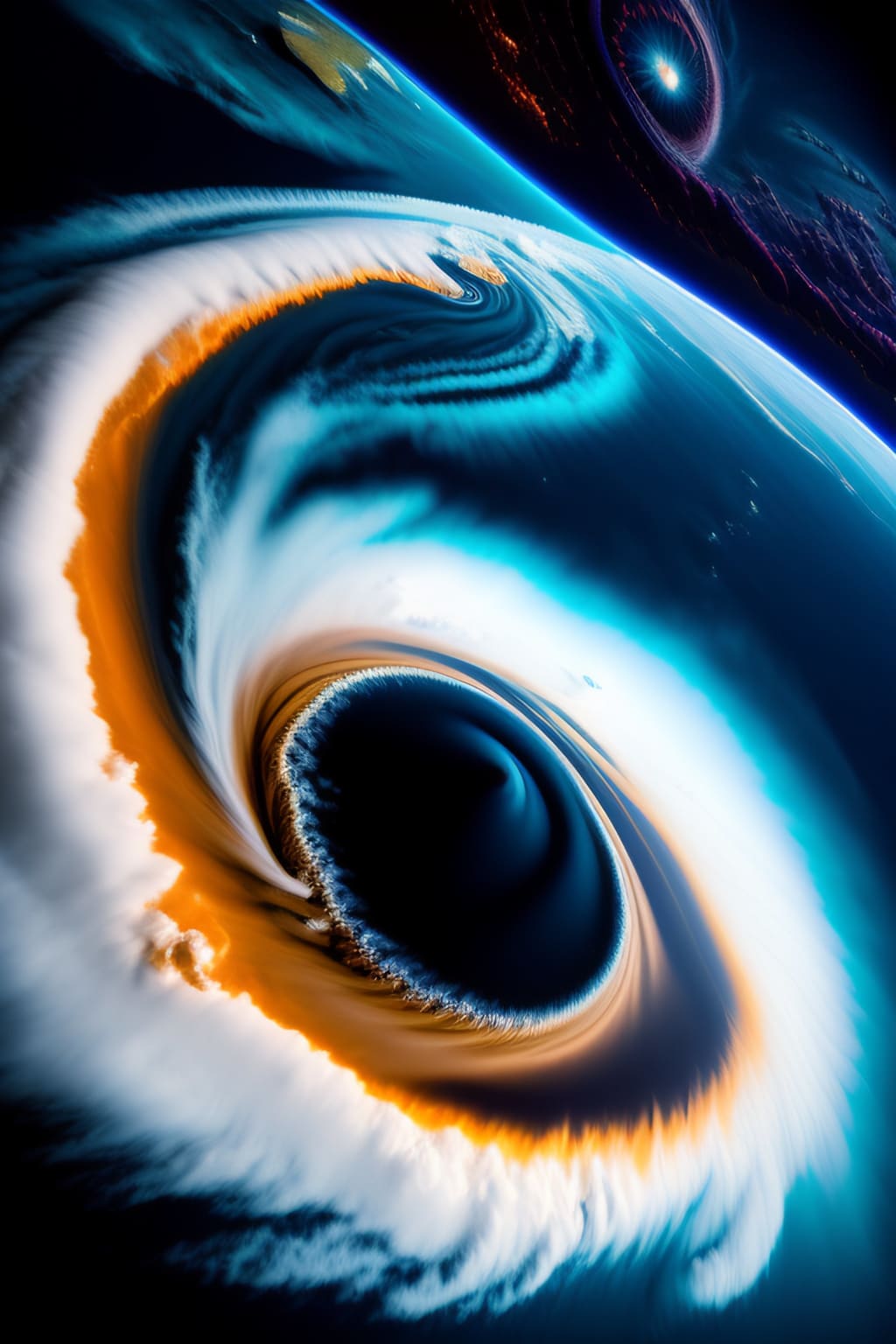
Five Mind-Blowing Facts About Black Holes
Introduction:
Black holes are among the most enigmatic and mysterious objects in the universe, shrouded in a veil of darkness and intrigue. These cosmic entities, formed from the remnants of massive stars, defy our conventional understanding of space, time, and gravity. In this article, we will delve into five mind-blowing facts about black holes that reveal their extraordinary nature and the profound impact they have on our understanding of the cosmos.
1. Gravity Beyond Imagination:
One of the most mind-boggling aspects of black holes is their incredible gravitational pull. When a massive star exhausts its nuclear fuel and undergoes a supernova explosion, the core collapses under its own gravity, forming a dense and infinitely small point called a singularity. Around this singularity lies the event horizon, a boundary beyond which nothing, not even light, can escape.
The gravitational pull of a black hole is so immense that it warps space-time to an extraordinary degree. Near the singularity, gravity becomes infinitely strong, creating a region where the laws of physics as we know them cease to apply. This concept is known as a gravitational singularity, and it challenges our understanding of the fundamental principles of the universe.
2. Time Dilation:
Black holes are known to cause a phenomenon called time dilation, a consequence of their intense gravitational fields. As an object approaches a black hole, the gravitational force it experiences increases dramatically. This leads to a curious effect where time appears to pass more slowly for an observer near the event horizon compared to someone far away from the black hole.
This means that if you were to hover near the event horizon of a black hole for a while and then return to Earth, you would find that significantly more time has passed on Earth than for you. This time dilation effect is a testament to the profound impact of gravity on the fabric of space-time near black holes.
3. The Information Paradox:
Black holes pose a significant challenge to the principles of quantum mechanics, leading to what is known as the "information paradox." According to quantum mechanics, information is never lost in the universe; it is always conserved. However, when matter and information fall into a black hole, it seemingly disappears, creating a conflict between quantum mechanics and general relativity.
This paradox has baffled physicists for decades and remains an unsolved puzzle in the field of theoretical physics. Researchers continue to explore possible solutions, such as the idea that information is somehow encoded on the event horizon or that black holes eventually release the information they have consumed in a process known as Hawking radiation.
4. Hawking Radiation:
In 1974, renowned physicist Stephen Hawking proposed a groundbreaking theory that black holes are not entirely black. He suggested that black holes emit a form of radiation, now known as "Hawking radiation," due to quantum effects near the event horizon. This radiation is composed of particles and antiparticles spontaneously created from the vacuum of space.
Hawking radiation is remarkable because it implies that black holes are not eternal, as they were once thought to be. Instead, they slowly lose mass and energy over time, eventually leading to their evaporation. This concept challenges the conventional notion of black holes as eternal cosmic vacuum cleaners, revealing a dynamic and evolving nature.
5. Supermassive Black Holes at Galactic Centers:
While the concept of black holes consuming everything in their vicinity is captivating, even more astonishing are supermassive black holes found at the centers of galaxies. These behemoths can have masses millions or even billions of times that of our sun. The existence of supermassive black holes raises questions about their formation and their role in shaping galaxies.
Current theories suggest that these massive black holes formed early in the universe's history and have played a significant role in the evolution of galaxies. They are thought to influence the movement of stars and gas within galaxies, affecting their structure and dynamics. Understanding the relationship between supermassive black holes and galaxies is a key area of research in modern astrophysics.
Conclusion:
Black holes continue to challenge our understanding of the cosmos, pushing the boundaries of our knowledge in profound ways. Their mind-blowing gravitational forces, time-bending effects, and enigmatic properties are a testament to the limitless wonders of the universe. While much remains to be discovered and understood about black holes, their existence inspires both awe and curiosity, driving scientists to explore the deepest mysteries of space, time, and gravity.
About the Creator
Product Services
To learn about the world in a new and exciting way. I research a wide range of topics to uncover the Five most mind-blowing facts, from the natural world to human history to current events.
Keep reading
More stories from Product Services and writers in Education and other communities.
Five Mind-Blowing Facts About Bears
Five Mind-Blowing Facts About Bears Bears are some of the most fascinating and awe-inspiring creatures on Earth. They are large, powerful, and intelligent animals that have captured the imagination of humans for centuries.
By Product Services2 years ago in Education
The Emotional and Human Impact Behind Major Medical Breakthroughs
Major medical breakthroughs often capture attention for their scientific achievement, yet their most profound significance lies in the emotional and human stories they shape. Although clinical data, research milestones, and technological advancements illustrate progress, the accurate measure of success lies in the lives transformed by these discoveries.
By Mark Bouzyk4 days ago in Education



Comments (1)
I wholeheartedly recommend their https://epiccarry.com to those who want to improve their gaming experience and get long-awaited achievements.