
First International Day of Education: Action for All
You are lucky to be able to read this article right now, but millions of people around the world are not so lucky.
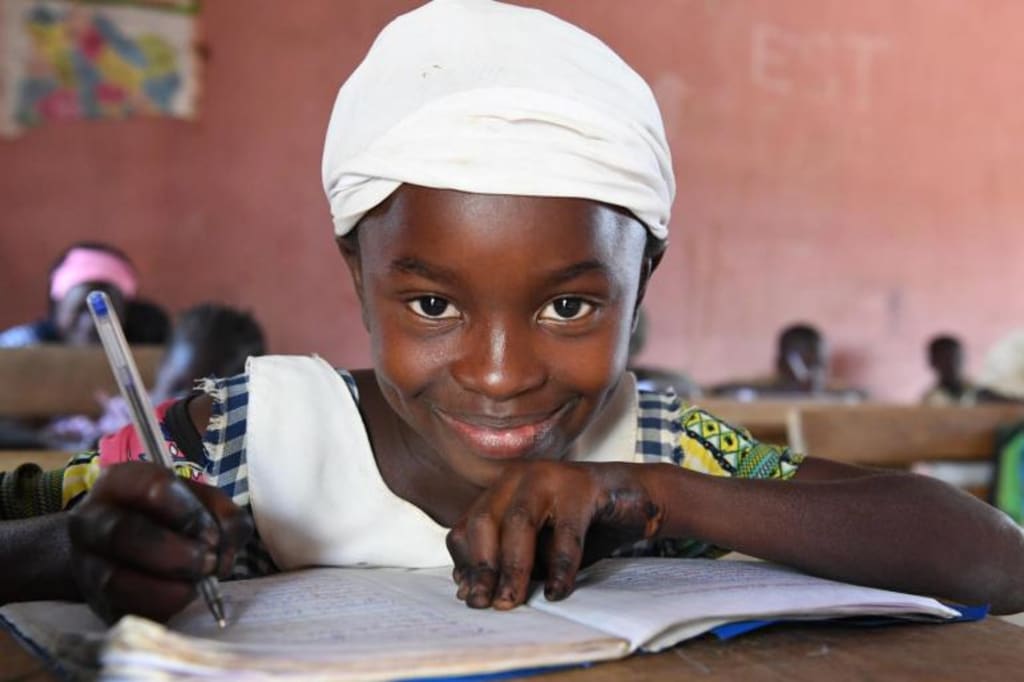
You are lucky to be able to read this article right now, but millions of people around the world are not so lucky. Let’s take a look at these shocking statistics: 262 million children and adolescents around the world are out of school; 617 million cannot read and do basic math even if they are in school; 750 million adults lack basic literacy skills, As a result, their ability to earn money is low, and it is difficult for them to integrate into the life of the 21st century.
Uneducated children remain mired in poverty, poor health and hardship. How will these children reach their full potential and contribute to the prosperity and stability of their families, communities and economies?
Our work is premised on the inalienable right of every child to quality education and learning opportunities, from early childhood to adolescence. But factors such as disability, economic circumstances, gender, geography, poor quality of education, conflict and disruption from other shocks prevent millions of children from learning.
Today, governments, the United Nations, the private sector, civil society and youth organizations are coming together to strengthen collective action to achieve the global education goals in line with the 2030 Agenda for Sustainable Development. For our commitment to be effective, we must target neglected children, adapt educational programs to meet their needs, and invest in programs we know are successful.
Early education is crucial
As work towards SDG 4 accelerates, UNICEF is working to scale up education systems to provide access to children most at risk of being out of school or dropping out.
One of our focus areas is early learning, which levels the playing field for marginalized children and gives them the motivation they need to succeed in school and reach their developmental potential. While pre-primary net enrollment ratios have increased across all regions and income groups, low-income countries still lag far behind, with 85% of children not attending pre-primary education. Children from poor households, remote rural areas, speaking minority languages, disabled and affected by emergencies often cannot afford preschool services and therefore miss out on opportunities.
Much of this is due to a lack of government and donor investment. Current spending on pre-primary education in low-income countries represents only 11% of the annual resources needed between now and 2030 to meet the pre-primary education goals, compared with 27% in low- and middle-income countries. Ensuring that children acquire the basics of literacy and numeracy at an early age is critical to reducing dropout rates and improving learning outcomes later in life. UNICEF will continue to prioritize the needs of the most disadvantaged young children, so they can enter school at the right age and be prepared to learn with the support of their parents and communities.
Promoting an inclusive education system
Inclusion of children with disabilities is critical to achieving international education goals and ensuring that no child is left behind. These children have long been neglected and forgotten. As many as 35% of all out-of-school children are children with disabilities. Furthermore, nearly 50 percent of children with disabilities are out of school, compared to only 13 percent of children without disabilities, showing that disability is one of the biggest barriers to education.
According to the UNESCO Institute for Statistics, “persons with disabilities are more likely to be out of school, less likely to complete primary or secondary education, and less likely to have basic literacy skills.” Due to lack of education and employment opportunities, children with disabilities are more likely to Living in poverty, and being poor for life.
Promoting inclusive education, where all children study in the same classrooms in the same schools, is the most effective way to provide education for all children, as stipulated in the Convention on the Rights of Persons with Disabilities. Adopting an inclusive approach to education is critical to achieving universal enrollment, and an inclusive education system benefits the learning of all children, not just those with disabilities.
How can we achieve SDG 4?
It is estimated that achieving SDG 4 will require an increase in annual spending on education from US$1.2 trillion today to US$3 trillion in 2030. To expand education systems and achieve SDG 4, governments should spend 20% of national budgets on education. In addition, governments must strengthen national education systems in terms of equity and efficiency, prioritizing early education and the most marginalized.
There is an urgent need for donors to invest more in education, starting at the pre-school level. This requires strong political commitment, solid partnerships, adequate funding and human resources, and the capitalization of new technologies and innovations. Let us use today's opportunity to accelerate our actions so that every child can benefit from a major revolution in education.
On this first-ever International Day of Education, we celebrate the fundamental role of education in promoting global peace and development, and reaffirm the global community's strong commitment to inclusive, equitable and quality education.
About the Creator
Keep reading
More stories from connor richard jones and writers in Education and other communities.
Please do not stand by: help your child stay away from the Internet bullying
Internet bullying has gradually become a global issue. In order to better understand the online experience of children and young people, the United Nations Children's Foundation invited more than 170,000 young people from more than 30 countries to share their hearts.
By connor richard jones3 years ago in Education
Beginner Investing Blueprint: A Simple Path Toward Wealth and Financial Freedom
Investing is one of the most powerful ways to build wealth and reach financial freedom. Yet many people delay investing because it feels complex or risky. The truth is that investing does not need to be complicated. A clear beginner investing blueprint can help anyone start building a strong financial future.
By Millicent Prince7 days ago in Education
Ferrara Enterprises Inc: A Trusted Manufacturer of NSN Components for Aviation and Industrial Systems
In the aerospace and defense supply chain, reliable component manufacturers play a crucial role in maintaining aircraft systems and industrial equipment. One such manufacturer is Ferrara Enterprises Inc, a company associated with producing components that appear in various National Stock Number (NSN) catalogs used across aviation, defense, and industrial sectors.
By Beckett Dowhan3 days ago in Education
A Transparent Look at Vocal Challenges and Top Stories
Almost three years ago, we shared a resource article that served as a place for people to suggest new challenge prompts. We thought it would be a good idea to refresh that thread, and take the opportunity to answer a few common questions about top stories, how challenges are judged and how submissions are reviewed.
By Vocal Curation Team3 days ago in Resources



Comments
There are no comments for this story
Be the first to respond and start the conversation.