
Famous Polymaths in History and Their Greatest Contributions
Famous Polymaths in History
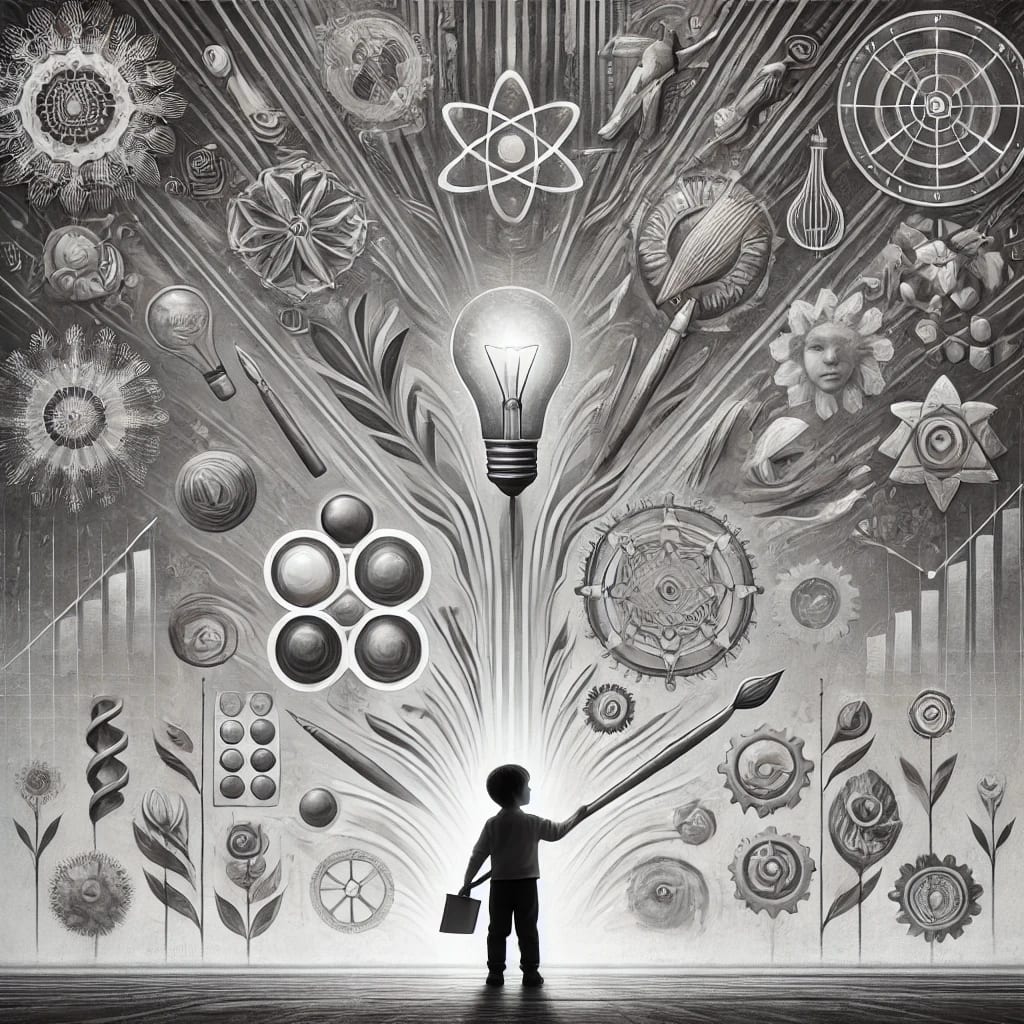
The term “polymath” evokes awe and inspiration, describing individuals who master diverse fields of knowledge and achieve remarkable feats across disciplines. Polymaths have shaped human history, breaking boundaries in science, art, literature, and innovation. Their contributions remind us of the limitless potential of the human mind. This article explores some of the most famous polymaths, their greatest achievements, and how their legacies influence the distinction between a polymath vs philomath, while inspiring others on how to be a polymath today.
Leonardo da Vinci: The Quintessential Polymath
Leonardo da Vinci epitomizes the concept of a polymath. Known for masterpieces like the Mona Lisa and The Last Supper, his contributions extended far beyond art. As an inventor, anatomist, and scientist, Leonardo explored topics ranging from engineering to botany.
One of his most notable inventions was the conceptualization of flying machines, centuries before aviation became a reality. His anatomical sketches remain a cornerstone of medical studies, demonstrating his dedication to understanding human and animal physiology. Leonardo's ability to connect artistic beauty with scientific precision exemplifies the essence of polymathy.
Hypatia of Alexandria: A Trailblazer in Ancient Times
Hypatia, a mathematician, philosopher, and astronomer of ancient Alexandria, stands out as one of history’s earliest polymaths. She made significant strides in mathematics by improving astrolabes and hydrometers, tools critical for navigation and water measurements.
Hypatia’s work as a philosopher fostered a deeper understanding of Neoplatonism, emphasizing the unity of science and spirituality. Despite the challenges she faced as a woman in a male-dominated society, Hypatia’s legacy continues to inspire those striving to master diverse disciplines.
Benjamin Franklin: Founding Father and Universal Thinker
Benjamin Franklin’s polymathic achievements left an indelible mark on American history and the world. Known as one of the Founding Fathers of the United States, Franklin was also a prolific inventor, writer, scientist, and diplomat.
He invented the lightning rod, bifocal glasses, and the Franklin stove, each showcasing his ingenuity. His scientific experiments on electricity revolutionized understanding in the field, earning him global recognition. Franklin’s ability to navigate diverse roles illustrates how curiosity and dedication can transform individuals into modern-day polymaths.
Marie Curie: Bridging Science and Humanity
Marie Curie’s groundbreaking work in physics and chemistry redefined scientific exploration. As the first person to win Nobel Prizes in two different scientific fields, Curie made remarkable strides in radioactivity research.
Her discovery of radium and polonium not only advanced science but also laid the foundation for medical advancements in cancer treatment. Curie’s dedication to multidisciplinary research underscores the value of curiosity and resilience in achieving polymathic success.
Nikola Tesla: The Visionary Polymath
Nikola Tesla’s contributions to science and engineering earned him a reputation as one of history’s most forward-thinking polymaths. Known for pioneering alternating current (AC) electricity, Tesla also envisioned wireless communication, remote control, and renewable energy systems long before they became practical.
His unique ability to conceptualize and innovate across fields demonstrates the true potential of polymathy. Tesla’s relentless pursuit of knowledge and his unyielding passion for innovation continue to inspire modern inventors and engineers.
The Difference Between Polymath vs Philomath
While a polymath is someone who masters multiple fields, a philomath is an individual who loves learning and acquiring knowledge. The distinction lies in application. Polymaths not only learn but also innovate and contribute significantly to diverse disciplines. Philomaths may excel in the acquisition of knowledge without necessarily achieving the depth of impact seen in polymaths.
The examples of polymaths like Leonardo da Vinci and Benjamin Franklin highlight their ability to connect seemingly unrelated fields to create something transformative. Aspiring polymaths can draw inspiration from these historical figures by striving to merge their knowledge with actionable creativity.
How to Be a Polymath in the Modern Age
Becoming a polymath today requires intentional effort and strategic learning. Here are some practical steps:
Cultivate Unquenchable Curiosity
Follow your natural interests and explore multiple subjects that fascinate you. Curiosity fuels the journey of a polymath.
Embrace Lifelong Learning
Dedicate time to continuous learning through books, online courses, and real-world experiences. Building expertise in various fields requires consistent effort.
Seek Cross-Disciplinary Connections
Look for opportunities to link knowledge across disciplines. This integration often leads to innovative ideas and solutions.
Master Time Management
Balancing interests across fields demands effective time management. Prioritize tasks and allocate time to developing each skill or area of knowledge.
Be Persistent and Resilient
The path to becoming a polymath is filled with challenges. Resilience and a growth mindset will keep you motivated as you progress.
By following these steps, individuals can embark on a fulfilling journey of polymathy, contributing meaningfully to various domains.
Why Polymaths Matter Today
In an era where specialization often dominates, polymaths offer a refreshing perspective. Their ability to draw from diverse knowledge pools allows them to approach problems creatively and holistically. Polymaths are particularly valuable in solving complex global challenges that require interdisciplinary expertise.
Moreover, the digital age has made information more accessible than ever, enabling aspiring polymaths to explore new fields with ease. Online learning platforms, virtual collaborations, and access to global knowledge hubs have opened doors for individuals passionate about mastering multiple disciplines.
Final Thoughts
The contributions of history’s most famous polymaths remind us of the boundless potential of human curiosity and creativity. Figures like Leonardo da Vinci, Hypatia, and Nikola Tesla serve as beacons of inspiration, illustrating the transformative power of cross-disciplinary expertise.
Understanding the distinction between polymath vs philomath helps clarify the importance of applying knowledge meaningfully. For those wondering how to be a polymath, the journey begins with curiosity, dedication, and the courage to explore uncharted territories.
The world continues to benefit from the legacy of polymaths, and their examples encourage future generations to embrace the richness of diverse knowledge and creativity.
For more information visit below articles
https://styloact.com/polymathic-thinking-and-its-role-in-artificial-intelligence/
https://internetforum.io/polymaths-vs-specialists-which-is-better-for-innovation/
https://ezunearticles.com/the-challenges-and-rewards-of-being-a-polymath/
https://moonlitempower.site/what-careers-are-best-suited-for-polymaths/
https://blogsact.com/the-role-of-curiosity-in-becoming-a-polymath/
https://aboutsoul.in/how%20to%20be%20a%20polymath
https://news.vppages.com/why-diversity-of-thought-is-the-key-to-polymathy/
https://icacedu.com/how-to-build-a-diverse-skillset-and-think-like-a-polymath/
https://roidapk.com/what-careers-are-best-suited-for-polymaths/
https://townofbusiness.com/how-polymathic-skills-improve-adaptability-and-resilience/
About the Creator
Keep reading
More stories from Wasim tariq and writers in Education and other communities.
How Do You Communicate Effectively with a Manager-Mentor?
Effective communication with a manager who also serves as your mentor is crucial for fostering growth, trust, and mutual understanding. The dual role of a manager-mentor requires a unique approach to ensure that professional boundaries are respected while the mentorship thrives. Below, we explore actionable strategies for effective communication with your manager-mentor.
By Wasim tariqabout a year ago in Education
The Insurrection Act
Introduction The Insurrection Act is a law in the United States of America. It allows the President of the United States to use the military to deal with serious problems inside the country. This law is very important because it can be used when there is a rebellion, violence, or lawlessness that cannot be controlled by normal police forces. The act has been in use for many years and is sometimes a topic of debate because it gives the President significant power.
By Farhan Sayedabout 15 hours ago in Education




Comments
There are no comments for this story
Be the first to respond and start the conversation.