
How Do You Communicate Effectively with a Manager-Mentor?
Can your manager be your mentor

Effective communication with a manager who also serves as your mentor is crucial for fostering growth, trust, and mutual understanding. The dual role of a manager-mentor requires a unique approach to ensure that professional boundaries are respected while the mentorship thrives. Below, we explore actionable strategies for effective communication with your manager-mentor.
Understand the Dynamics of a Manager-Mentor Relationship
The first step is to recognize the dual nature of the relationship. Your manager oversees your work performance, but as a mentor, they guide your career development. Clear communication helps to separate these roles.
Acknowledge Their Role
Reflect on whether they’re primarily offering career guidance or job-specific feedback. Understanding this can help you align your conversations with their intent.
Clarify Expectations
Ask your manager-mentor about their expectations from you, both as an employee and a mentee. This ensures alignment and prevents misunderstandings.
Discuss Goals
Set mutual goals for mentorship. For instance, if you're a software developer, outline how you can develop your skills further, leveraging your manager-mentor’s expertise.
Be Transparent
Share your aspirations and challenges openly. Transparency fosters a deeper bond and allows your manager-mentor to offer tailored advice.
Respect Boundaries
While mentorship can be friendly, maintain professionalism. Boundaries help preserve the balance between mentorship and management.
Ask the Right Questions
A manager-mentor relationship thrives on meaningful discussions. Asking insightful questions ensures you maximize the value of the mentorship.
Seek Feedback
Request constructive feedback about your work and how you can improve. For instance, ask, “How do you think I handled the recent project, and what could I do better?”
Explore Career Development
Dive into career-related conversations. Questions like, “What leadership qualities do you recommend I focus on developing?” can provide actionable insights.
Discuss Industry Trends
If you're part of a dynamic field like tech or programming, inquire about industry trends. Asking, “What skills should a programmer develop in the next five years?” reflects your eagerness to grow.
Clarify Priorities
Avoid assumptions. Confirm what your manager expects from you in your role. For instance, “What should be my top priorities for the upcoming quarter?”
Ask About Their Experiences
Learning from your manager-mentor’s journey can provide valuable lessons. Ask questions such as, “What challenges shaped your career, and how did you overcome them?”
Schedule Regular One-on-One Meetings
Consistency is key to effective communication. Regular one-on-one meetings create a space to discuss progress, challenges, and opportunities for growth.
Prepare an Agenda
Before each meeting, create a list of topics to discuss. This shows respect for their time and ensures productive conversations.
Review Previous Conversations
Recap what was discussed in the last meeting. This continuity demonstrates that you value their input.
Focus on Solutions
Bring challenges but also suggest potential solutions. For instance, if facing coding issues, outline your attempts before asking for guidance.
Celebrate Wins
Share your accomplishments, no matter how small. Acknowledging progress builds confidence and strengthens the bond.
Request Feedback on Communication
Seek their input on how you communicate. They may suggest improvements that can enhance your interactions.
Practice Active Listening
Effective communication isn’t just about expressing yourself; it’s about listening actively to your manager-mentor.
Show Engagement
Nod, make eye contact, and take notes to show that you value their insights.
Ask Clarifying Questions
If something is unclear, seek clarification. For example, “Can you elaborate on how this strategy applies to our current project?”
Summarize Their Points
Paraphrase what they’ve said to confirm your understanding. This reduces the risk of miscommunication.
Follow Up
After discussions, follow up on the agreed actions. This shows you take their guidance seriously.
Express Gratitude
Thank your manager-mentor for their time and advice. Gratitude strengthens the relationship and fosters goodwill.
Use Technology to Enhance Communication
Leveraging tools like emails, chat apps, and shared documents can streamline communication with your manager-mentor.
Email for Updates
Send concise emails summarizing your progress or seeking feedback.
Use Collaboration Tools
Platforms like Slack or Microsoft Teams facilitate quick updates and discussions.
Track Progress
Use tools like Trello or Asana to track the progress of projects and goals discussed with your mentor.
Set Calendar Reminders
Schedule reminders for one-on-one meetings to ensure consistency.
Document Learnings
Create a digital log of mentorship discussions to refer back to valuable insights.
Conclusion
Communicating effectively with a manager-mentor requires clarity, consistency, and active participation. By understanding their dual role, asking the right questions, and utilizing tools, you can build a productive relationship that benefits both your career and your current role. Whether pondering, "Can your manager be your mentor?" or looking to improve specific skills, fostering a strong communication strategy ensures growth and success in the workplace.
At Programmers IQ, we believe mentorship is key to professional development, whether you're a seasoned professional or a beginner in your field. Building strong connections with mentors, especially manager-mentors, empowers you to achieve your career goals.
About the Creator
Keep reading
More stories from Wasim tariq and writers in Education and other communities.
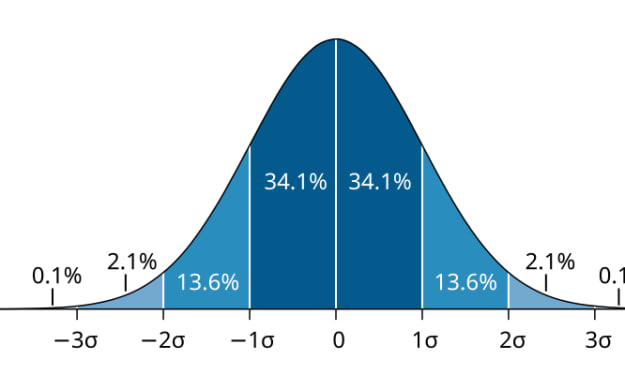
What Is Standard Deviation and Why Is It Important?
Standard deviation is one of the most essential concepts in statistics, providing a measure of how data points differ from the average or mean of a dataset. This concept may seem a bit abstract at first, but its applications are widespread, from quality control in manufacturing to investment analysis in finance. Understanding standard deviation can help us make sense of data variability and uncover insights that are otherwise hard to grasp. In this article, we'll dive into what standard deviation is, how it's calculated, and why it plays such a critical role in various fields.
By Wasim tariqabout a year ago in Education
Decoding the Rise and Fall of Global Commodity Markets
Commodity markets have always moved in waves, rising and falling in response to forces that stretch far beyond daily trading activity. These movements can appear chaotic on the surface, yet beneath the volatility lies a structure shaped by economics, human behavior, and long-term investment patterns. From energy and metals to agricultural products, commodities follow cycles that repeat over time, although never in the same way. Understanding these cycles offers clarity in markets often seen as unpredictable.
By Anthony Blumberg4 days ago in Education
Top 10 Essential Skills for Success in 2026
By 2026, the job market is no longer driven only by degrees or titles. Technology, especially Artificial Intelligence (AI), automation, and remote work, has changed how companies operate and how people work. Many routine tasks are now handled by machines, while humans are expected to do work that requires thinking, judgment, creativity, and emotional understanding. This shift means that skills — not just education — determine success. The following 10 skills are considered essential for 2026 because they combine technology awareness with human intelligence. Let’s understand them one by one, step by step.
By Talha khan3 days ago in Education


Comments
There are no comments for this story
Be the first to respond and start the conversation.