
Exploring the Possibility of Time Travel: Is It Really Possible?
The Future of Time Travel

Time travel has been a popular theme in science fiction for decades, with books and movies exploring the possibilities, benefits, and risks of such an ability. But is time travel possible in reality? If so, what do we need to be able to achieve it?

Classical physics sees time as an objective and universal concept that exists independently of anyone who perceives it. Time progresses at the same pace for everyone, and a cause is always followed by an effect. This understanding of time, however, does not hold true in all circumstances.
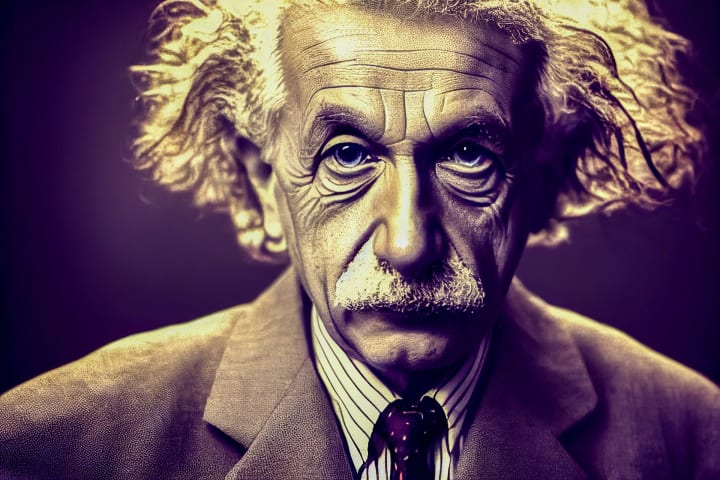
Albert Einstein's theory of relativity explains the changing nature of time by seeing it as one element of four-dimensional spacetime that can be influenced by other factors. For example, objects moving at high speeds experience time differently than those moving at a slower pace, and objects held within gravitational fields also experience time differently.
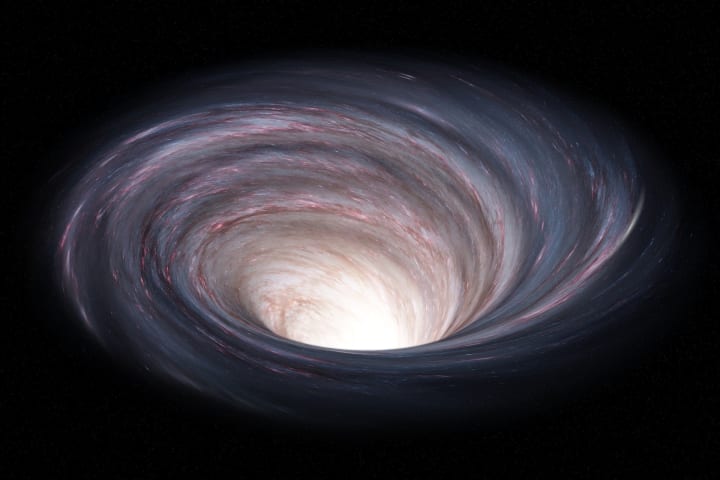
Black holes provide an example of how time can be influenced. They possess the greatest gravitational pull of any object in the universe, and their strength is so great that light itself cannot escape their gravitational force. They also cause time to slow down to an extreme level. If someone were to fall into a black hole, they would theoretically witness hundreds of millions of years worth of events before ultimately succumbing to their inevitable fate. It would be as if they were trapped behind some bookshelves or inside a time capsule.
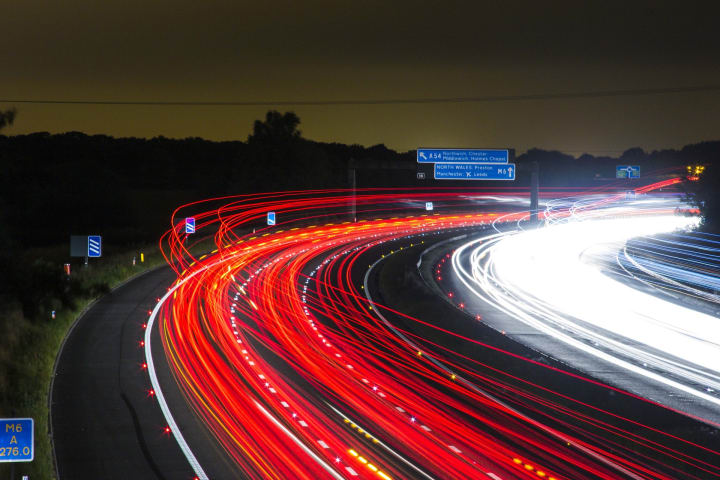
Another effect of time occurs with the speed of light. As an object gets faster and faster, time slows down for it until it reaches the theoretical maximum speed that anything can reach: the speed of light. At this speed, time slows down to such an extent that things seemingly happen instantaneously. A photon of light, for example, takes many millions of years to reach Earth from a star on the other side of the universe. However, for the photon itself, the journey is instantaneous. When traveling at the speed of light, time is neutral, traveling neither forward nor backward.

If the faster one goes, the slower time appears for them compared to everything else, then this is a potential route to traveling forward in time. One could speed away from Earth and return after many years have passed without getting much older. The difficult part, of course, is going backward in time.
Many researchers believe that if one could travel faster than the speed of light, time would work in reverse, making it possible to travel back in time. There is a theory that a subatomic particle known as a tachyon does exactly this. They're theoretical and have never been observed, partly because if the theory is true, you would never be able to see them coming towards you because the event would be occurring in the future. The ideas of cause and effect would work in reverse for tachyon, but harnessing them could be the best route to learning how to travel through time.
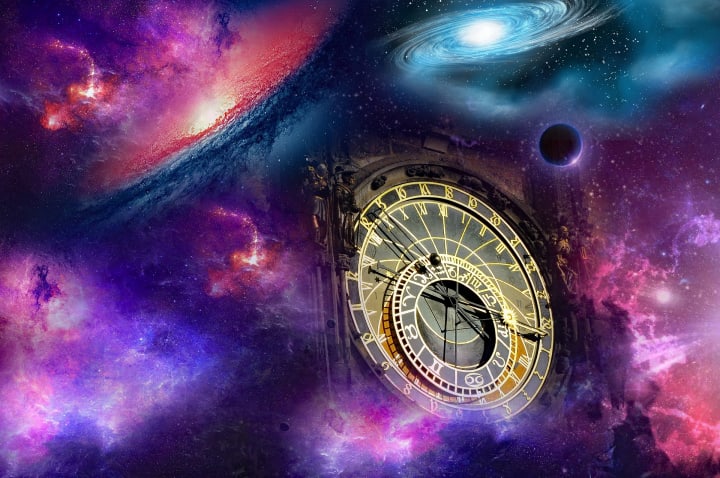
Another theory is that of wormholes. These act as tunnels through the fabric of spacetime and could create a path between any two places at any given time. The theory of relativity allows for wormholes to exist, but the energy levels required to create one would be astronomical and could result in the formation of a black hole. Stephen Hawking believed that radiation feedback, which works in a similar way to the feedback of sound, would make wormholes inherently unstable and unable to last long enough to be used as a time machine.
Other researchers have suggested several ways in which spacetime could be harnessed to allow time travel. For example, lasers could be used to create extreme levels of gravity, quantum physics may allow for the formation of a so-called quantum tunnel between universes, and string theory might lead to revelations of how cosmic strings and black holes could enter wine to warp spacetime enough to travel back through time.
In conclusion, time travel has been a subject of interest for.
About the Creator
Keep reading
More stories from writers in Education and other communities.
Market Impact Estimation and Slippage Control in Automated Stock Trading
Automated stock trading has changed the way people trade in today’s markets. With the help of algorithms and clear rules, traders can buy and sell stocks faster and with more discipline. Even so, every trading system faces two real challenges: market impact and slippage. Learning how these work and how automated systems handle them helps traders build smarter and more reliable strategies.
By james hall4 days ago in Education
Building Stronger Schools Through Student Mental Health Support
Schools across the United States face a growing responsibility to support students with anxiety and depression. Academic pressure, social media influence, family stress, and uncertainty about the future affect students at younger ages than ever before. Therefore, schools must recognize that mental health directly shapes learning outcomes, behavior, and long-term well-being. When students feel emotionally supported, they engage more fully in class and build stronger relationships. As a result, mental health care should stand alongside academic instruction as a core school priority.
By Martin Karp6 days ago in Education
10 Times Rotten Tomatoes and I Disagreed
***Disclaimer*** I will be ranking these movies in the following manner: The greater the divide between Rotten Tomatoes and I, the higher up on the list (and I am referring to the critic's score, not the audience score). I will also show Rotten Tomatoes' score on each one in addition to my score. I am curious to know what everyone thinks, please let me know in the comments below!
By Madison "Maddy" Newtona day ago in Geeks




Comments