
Enhancing Trade and Connectivity: The Persian Gulf-Black Sea Trade Corridor
Exploring the Economic Benefits and Regional Integration Opportunities for Participating Nations
Introduction:
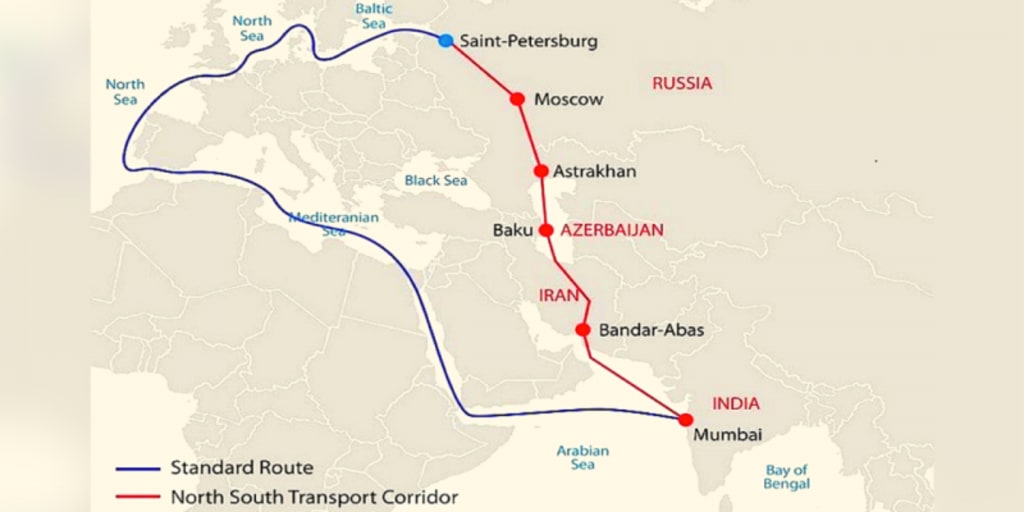
The Persian Gulf-Black Sea trade corridor is a crucial trade route that connects the Persian Gulf region to the Black Sea region. The corridor serves as a crucial transportation network for the movement of goods between Asia and Europe. It is part of the larger International North-South Transport Corridor (INSTC) initiative, which aims to enhance trade and connectivity between the participating countries. The development of the corridor offers significant opportunities for economic growth and regional integration in the participating countries.
Where is it built using statistical data?
The Persian Gulf-Black Sea trade corridor covers a vast geographical area, stretching from the Persian Gulf region in the south to the Black Sea region in the north. The corridor project begins in the Persian Gulf and southern Iran, travels north across the nation, and then continues to Armenia, where it connects to the Georgian Black Sea ports of Poti and Batumi. The corridor passes through several countries, including Iran, Azerbaijan, Russia, Kazakhstan, and Turkey.
According to statistical data, the total length of the corridor is estimated to be around 7,200 km, with Iran's portion of the corridor covering approximately 2,500 km. The corridor includes several transportation modes, including rail, road, and sea routes.
The corridor's development has been facilitated by several infrastructure projects, including the construction of new rail lines, the development of new ports, and the expansion of existing transportation networks. The development of the corridor is aimed at enhancing trade and connectivity between the participating countries and promoting regional integration.
What nations have profited from this corridor?
Several nations have benefited significantly from the development of the Persian Gulf-Black Sea trade corridor. The participating countries, including Iran, Azerbaijan, Russia, Kazakhstan, and Turkey, stand to gain significantly from the corridor's development.
For Iran, the development of the corridor provides an alternative and cost-effective transportation network for the movement of goods to and from Europe. The corridor provides Iran with access to new markets and enhances its strategic importance in the region.
For Azerbaijan, the corridor provides an alternative route for the transportation of goods and enhances its connectivity with the participating countries. The corridor also promotes regional integration and enhances Azerbaijan's economic prospects in the region.
For Russia, the corridor provides an alternative transportation network for the movement of goods between Europe and Asia. The corridor also enhances Russia's connectivity with the participating countries and promotes regional integration.
For Kazakhstan, the corridor provides access to new markets in Europe and enhances its connectivity with the participating countries. The corridor also promotes regional integration and enhances Kazakhstan's economic prospects in the region.
For Turkey, the corridor provides an alternative transportation network for the movement of goods to and from the participating countries. The corridor also enhances Turkey's connectivity with the participating countries and promotes regional integration.
INDIA'S BENEFITS
India is one of the nations that would greatly profit from the expansion of the Persian Gulf-Black Sea trade corridor. The corridor offers India with a low-cost transportation network for commodities moving between India, Central Asia, and Europe. Following are some of the specific benefits that India can receive from the development of the corridor:
Access to New Markets: The corridor's construction gives India access to new markets in Central Asia and Europe. The corridor provides an alternate transportation network for goods transit between India and these areas, potentially increasing India's export options and promoting trade diversification.
Reduced Transportation Costs: The construction of the corridor may also assist Indian exporters decrease transportation expenses. The corridor provides a more direct and cost-effective transit network, decreasing the time and expenses associated with existing transportation routes.
Improved Connectivity: The building of the corridor may also improve India's connection with the participating countries. The corridor contains different forms of transportation, including rail, road, and marine links, giving India numerous connectivity choices.
Political and Geographic Challenges:
The Persian Gulf-Black Sea commerce corridor confronts a number of political and geographical problems that must be addressed in order to improve its efficiency and effectiveness. For starters, the corridor crosses numerous nations with diverse political systems and economic interests, which may present impediments to cooperation and collaboration. Second, the corridor runs through various geopolitical hotspots, like the Caucasus and the Middle East, which might pose security challenges to the transportation network. Third, the corridor runs through several areas with harsh climates and difficult terrain, which may pose logistical difficulties for transportation and infrastructure development.
Conclusion:
In conclusion, the development of the Persian Gulf-Black Sea trade corridor is a crucial step towards enhancing trade and connectivity between the participating countries. The corridor provides an alternative and cost-effective transportation network for the movement of goods between Asia and Europe. The corridor's development is part of the larger INSTC initiative, which aims to promote regional integration and enhance economic growth in the participating countries.
The participating countries, including Iran, Azerbaijan, Russia, Kazakhstan, and Turkey, stand to gain significantly from the corridor's development. The corridor provides access to new markets, reduces transportation costs, enhances connectivity, and promotes regional integration.
Overall, the development of the Persian Gulf-Black Sea trade corridor is a significant step towards enhancing trade and connectivity between the participating countries, and it offers significant opportunities for economic growth and regional integration in the region.
About the Creator
Keep reading
More stories from Thangaraj Murugan and writers in Education and other communities.
"Empowering Women: Strategies for Achieving Gender Equality and Building a Better Society"
Introduction: Women's empowerment has become a critical issue in today's world, as women continue to face challenges in various aspects of their lives. Empowering women means giving them the necessary resources, tools, and opportunities to succeed and reach their full potential. It involves removing the barriers that prevent women from participating fully in social, economic, and political life. In this article, we will discuss what women empowerment is, why it is important, and how it can be achieved.
By Thangaraj Murugan3 years ago in Education
Twenty Years of Medical Experience: Knowledge That Will Redefine Future Healthcare
Medicine has changed profoundly over the last two decades. Scientific breakthroughs, digital innovation, and evolving healthcare policies have reshaped how medical professionals diagnose illnesses, treat patients, and manage healthcare systems. Conditions that were once difficult to detect or treat now benefit from advanced imaging, improved medications, and minimally invasive procedures. These developments have significantly improved survival rates and overall patient outcomes.
By Yousuf A. Gaffar, M.D6 days ago in Education


Comments
There are no comments for this story
Be the first to respond and start the conversation.