
Embracing the Synergy of Military and Civilian Medicine
By Dr. Jay Johannigman
Some moments stay with us forever. A single image can carry the weight of years of experience, sacrifice, and hope. That’s why I keep a certain photograph in my office. It’s more than just a picture. It’s a reminder of why we do what we do.
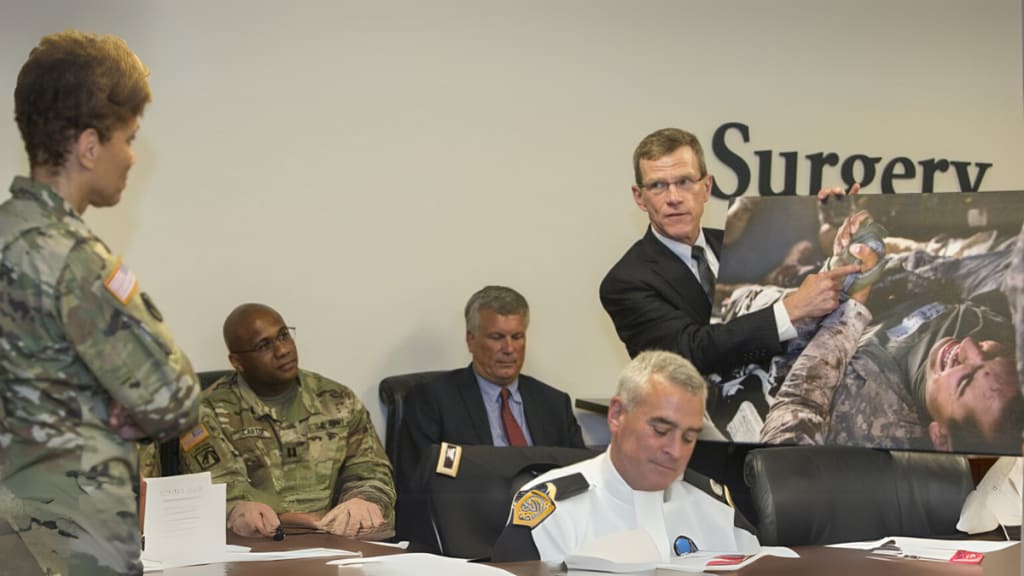
The image shows a wounded Marine in Afghanistan. His left hand is tightly grasped by a U.S. Army medic. There’s no hesitation in that grip. No fear. Just an unspoken promise—"I’m here. You’re not alone."
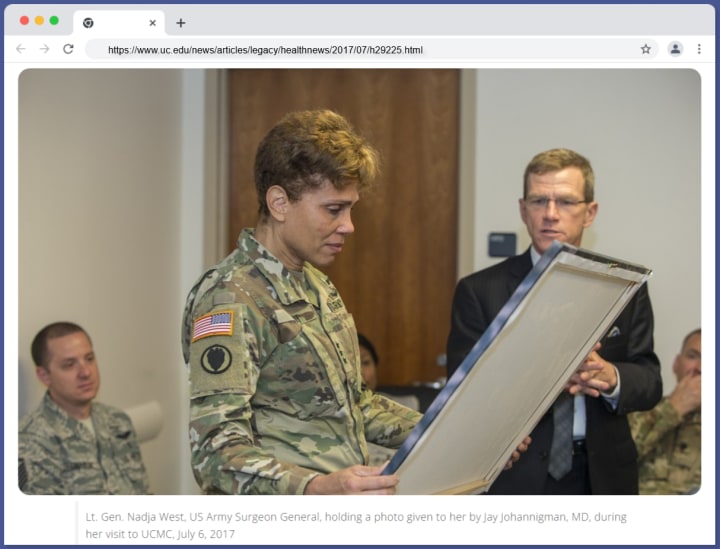
I shared this photo with Lt. Gen. Nadja West when she visited the University of Cincinnati Medical Center. I wanted her to see what I see every day. She understood immediately. The emotion in her eyes said it all. She knew this wasn’t just a picture. It was a story.
Medicine is more than science. It’s about people. The connection between a caregiver and a patient is everything. Machines can monitor vital signs. Medications can relieve pain. But nothing replaces the human touch. That’s what this photo represents.
In combat medicine, decisions happen in seconds. There is no room for doubt. Training takes over. But even in the middle of chaos, compassion remains. Holding a patient’s hand, looking them in the eye, telling them they will be okay—these things matter.
This philosophy doesn’t just apply to battlefield medicine. It applies everywhere. Whether in a trauma bay in Cincinnati or a field hospital overseas, patients need more than treatment. They need reassurance. They need to know that someone cares.
The military taught me this lesson. Over years of deployments, I saw the best and worst of humanity. I witnessed injuries that should have been fatal. I saw courage in places you wouldn’t expect. But through it all, I learned that healing isn’t just physical. It’s emotional. It’s psychological. Sometimes, just knowing someone is there makes all the difference.
This is why I believe in training civilian doctors in military medicine. The techniques we develop on the battlefield save lives at home. Quick decision-making. Resourcefulness under pressure. The ability to adapt in unpredictable situations. These skills don’t just belong in war zones. They belong in trauma centers across the country.
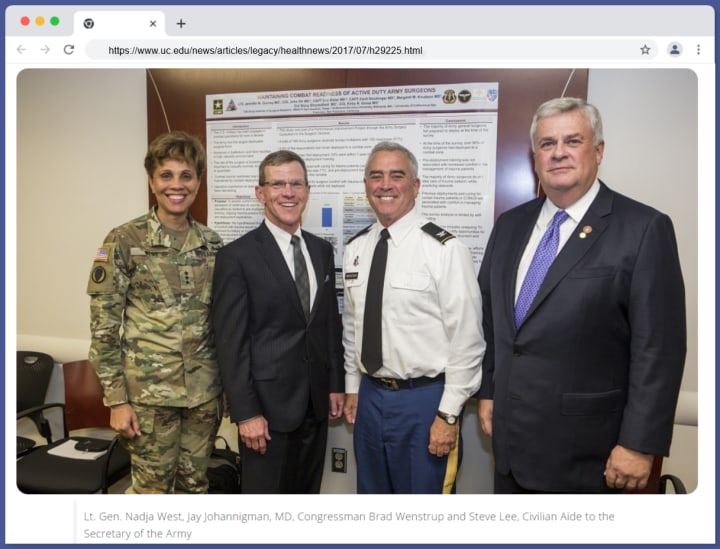
In July 2017, Lieutenant General Nadja West, the U.S. Army Surgeon General, visited the University of Cincinnati Medical Center (UCMC). This visit was more than ceremonial; it highlighted the vital collaboration between military and civilian medical practices. As a trauma surgeon and director of the UC Institute for Military Medicine, I had the honor of presenting our work to Lt. Gen. West.
Our Center for Sustainment of Trauma and Readiness Skills (C-STARS) is a joint venture between UCMC and the U.S. Air Force. It offers hands-on training for military medical personnel in trauma and critical care. This partnership ensures that our military doctors and nurses are prepared for the realities of the battlefield.
During the visit, we showcased our simulation lab. This facility replicates real-world scenarios, allowing trainees to practice life-saving techniques in a controlled environment. It’s a bridge between classroom learning and field application.
One might wonder: why integrate military and civilian medical training? The answer lies in the diversity of experience. Civilian trauma centers encounter a wide range of injuries daily. By immersing military personnel in this setting, they gain exposure to cases they might not see until deployed. This experience is invaluable.
Moreover, this collaboration fosters innovation. Civilian hospitals often adopt new technologies and procedures rapidly. Military medicine can benefit from these advancements, leading to improved care for our soldiers. Conversely, techniques developed in combat zones can enhance civilian emergency care. It’s a two-way street of knowledge and improvement.
Some may argue that military and civilian medicine should remain separate due to differing objectives and protocols. However, I believe that blending these practices enriches both fields. The challenges faced in civilian trauma centers mirror many battlefield scenarios. By training together, we create a versatile medical force capable of handling any situation.
The future of this collaboration is promising. As conflicts evolve, so do the injuries sustained by soldiers. Integrating civilian medical advancements ensures our military is equipped with the latest tools and knowledge. Additionally, the camaraderie built between civilian and military medical professionals fosters a unified approach to patient care.
Beyond the technical training, C-STARS builds confidence. When military medics step into a combat zone, they do so knowing they have already handled critical cases. They don’t hesitate. They act. That kind of preparation is priceless.
This collaboration is also shaping the way we view trauma care at home. Lessons learned from battlefield medicine are being used in emergency rooms across the country. Tourniquets, once discouraged in civilian care, are now saving lives in mass casualty incidents. Whole blood transfusions, a standard in military medicine, are becoming more common in trauma centers. These changes prove that the exchange of knowledge benefits everyone.
What excites me most is where this partnership can go. As technology advances, we have opportunities to refine our methods further. Telemedicine, for example, allows real-time consultation between combat medics and specialists. Artificial intelligence is improving diagnostic capabilities. By working together, military and civilian medicine will continue to push boundaries.
Lt. Gen. West’s visit was a reminder of what’s possible when institutions collaborate. It’s not about one field being superior to the other. It’s about combining strengths to improve care for everyone. The C-STARS program is proof that when we break down silos, we all advance. And in medicine, progress means more lives saved.
About the Creator
Dr. Jay Johannigman
Dr. Jay Johannigman has served in the military medical corps for over 40 years and is a Colonel in the US Army Reserve. He has received several awards, including the Legion of Merit, the Bronze Star, and the Meritorious Service Medal.
Keep reading
More stories from Dr. Jay Johannigman and writers in Education and other communities.
The One Lesson Adversity Taught Me About True Leadership
Resilience is the cornerstone of leadership. It’s the ability to bend without breaking. In my career, both military and civilian, I’ve seen how vital this trait is. Resilience transforms obstacles into opportunities. It’s not just about survival; it’s about thriving under pressure.
By Dr. Jay Johannigmanabout a year ago in Confessions
Reel Cap Components in Aerospace Electronics: History, Function, and Aviation Applications
Introduction: My Experience Exploring Reel Cap Components When I started researching aerospace electronic components, I discovered that even the smallest hardware pieces play a crucial role in aircraft systems. One such component that caught my attention was the Reel Cap, an often overlooked but essential element in electronic component packaging, aviation circuitry, and aerospace manufacturing systems.
By Beckett Dowhan8 days ago in Education
Client Confidence First: Building Trust Through Open Communication in Finance
Client confidence represents the foundation of every successful financial relationship. When clients trust their advisors, institutions, or service providers, they feel secure making important decisions about their money. Because financial choices often involve long-term planning and significant risk, clients need clarity and reassurance. Therefore, professionals who prioritize confidence build stronger, more stable partnerships.
By Michael Christopher Venturinoabout 12 hours ago in Education



Comments
There are no comments for this story
Be the first to respond and start the conversation.