
Embedded System
Unlock the Power of Embedded Systems: Transform Your Business!

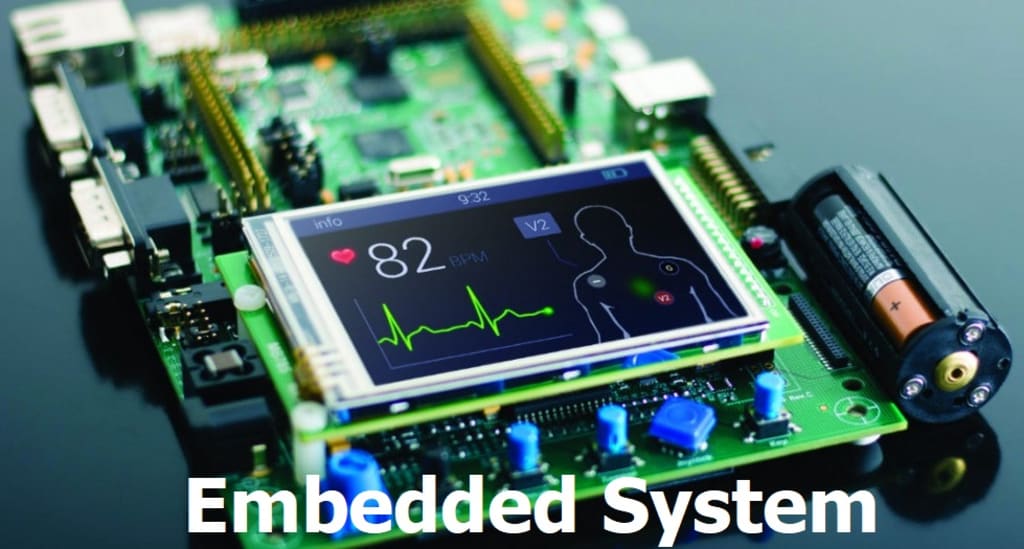
Are you looking to revolutionize your business? Are you looking for ways to increase efficiency and reduce costs? Then look no further than embedded systems! Embedded systems are small electronic devices that can be used to control and monitor other equipment. They offer a variety of advantages, from improved reliability and accuracy to cost savings and more. In this blog post, I'll discuss what embedded systems are, the benefits of using them, the different types of embedded systems, and how embedded systems can transform your business.
What are embedded systems?
- An embedded system is a combination of hardware and software that is used to control and monitor other equipment. It is used to perform specific tasks and is usually designed to be reliable and efficient. Embedded systems are usually found in everyday items such as cell phones, cars, home appliances, and more. They can also be found in industrial and scientific applications, such as medical equipment, industrial robotics, and space exploration.
- At its core, an embedded system is a computer system that is designed for a specific purpose. It is usually composed of a processor, memory, input/output ports, and other components. These components are combined to form a system that can be used to control and monitor other equipment. Embedded systems can be programmed to perform a variety of tasks, from simple tasks such as controlling a motor to more complex tasks such as collecting data from sensors.
- Embedded systems can offer a variety of advantages, from cost savings to improved reliability and accuracy. Let's take a look at some of these advantages.
Benefits of using embedded systems
- The most obvious benefit of using embedded systems is cost savings. Embedded systems can be used to replace more expensive traditional systems, such as industrial machines or laboratory equipment. This can be especially advantageous for small businesses or startups that are looking to reduce costs.
- Embedded systems are also much more reliable than traditional systems. They are designed to be highly reliable and can be used in harsh environments. This makes them ideal for applications that require a high degree of reliability, such as medical equipment or industrial robotics.
- Embedded systems are also much more accurate than traditional systems. They are designed to be precise and can be used in applications where accuracy is essential, such as scientific experiments or industrial processes. This can help reduce errors and improve the efficiency of your business.
- Embedded systems are also much easier to use than traditional systems. They are designed to be user-friendly and can be used with minimal training. This makes them ideal for applications where ease of use is important, such as consumer electronics or entertainment systems.
- Finally, embedded systems are much more energy efficient than traditional systems. They are designed to be energy efficient and can help reduce your energy costs. This can be especially beneficial in applications such as lighting systems or HVAC systems, where energy efficiency can make a big difference.
Types of embedded systems
- There are several different types of embedded systems. The most common type is the microcontroller-based system, which is a small computer system that is designed to control other equipment. Other types of embedded systems include digital signal processors (DSPs), which are used for signal processing, and application-specific integrated circuits (ASICs), which are used for specific applications.
- Microcontroller-based systems are the most common type of embedded system. They are used in a variety of applications, from consumer electronics to industrial robotics. Microcontroller-based systems are usually programmed in a high-level programming language, such as C or C++. They are usually designed to be reliable and efficient, and can be used in harsh environments.
- Digital signal processors (DSPs) are used for signal processing applications. They are designed to process signals quickly and accurately, and can be used in applications such as audio processing or video processing. DSPs are usually programmed in assembly language, which is a low-level programming language.
- Application-specific integrated circuits (ASICs) are used for specific applications. They are designed to be highly efficient and can be used in applications where performance is crucial, such as scientific experiments or industrial processes. ASICs are usually programmed in hardware description languages, such as Verilog or VHDL.
Embedded systems in the real world
- Embedded systems can be found in a variety of real-world applications. They are used in consumer electronics, such as cell phones, to control and monitor the devices. They are also used in industrial applications, such as factory automation, to control and monitor equipment.
- Embedded systems can also be found in medical applications, such as pacemakers and other medical devices. They can also be found in scientific applications, such as space exploration and laboratory experiments. Finally, embedded systems can be found in entertainment applications, such as video games and other interactive media.
Embedded systems in the workplace
- Embedded systems can be used in the workplace to improve efficiency and reduce costs. They can be used to automate tasks, such as manufacturing processes or inventory management. They can also be used to monitor and control equipment, such as HVAC systems or lighting systems.
- Embedded systems can also be used in safety applications, such as fire detection or access control. They can also be used in security applications, such as surveillance cameras or alarm systems. Finally, embedded systems can be used in communication applications, such as radio systems or voice recognition systems.
How embedded systems can transform businesses ?
- Embedded systems can be used to transform businesses in a variety of ways. They can be used to automate tasks, such as manufacturing processes or inventory management. This can help improve efficiency and reduce costs.
- Embedded systems can also be used to monitor and control equipment, such as HVAC systems or lighting systems. This can help improve reliability and accuracy. Embedded systems can also be used to improve safety and security, such as fire detection or access control.
Finally, embedded systems can be used to improve communication, such as radio systems or voice recognition systems. This can help improve customer service and customer satisfaction.
Challenges and risks of embedded systems
- As with any technology, there are some challenges and risks associated with embedded systems. One of the biggest challenges is the complexity of the systems. Embedded systems are usually composed of a variety of components, and can be difficult to design and implement.
- Another challenge is the cost of the systems. Embedded systems can be expensive, and may require significant investments in hardware and software. Finally, embedded systems can be vulnerable to security risks, such as data breaches or malicious attacks.
Tips for implementation
- Here are some tips for implementing embedded systems in your business:
- Start small - Start with a simple system to get familiar with the technology.
- Plan ahead - Make sure to plan out the system before implementation. This will help ensure that the system is designed correctly.
- Test thoroughly - Make sure to thoroughly test the system before implementation. This will help ensure that the system is reliable and accurate.
- Monitor closely - Make sure to monitor the system after implementation. This will help identify any potential issues or problems.
- Invest in security - Make sure to invest in security measures to protect the system from malicious attacks or data breaches.
Tools and resources
- There are a variety of tools and resources available for implementing embedded systems. Here are some of the most popular tools and resources:
- Software development kits (SDKs) - SDKs are a collection of tools and libraries that can be used to develop embedded systems.
- Integrated development environments (IDEs) - IDEs are software applications that can be used to develop embedded systems.
- Simulation software - Simulation software can be used to simulate the behavior of an embedded system before implementation.
- Hardware development kits (HDKs) - HDKs is a collection of hardware components that can be used to develop embedded systems.
- Online tutorials - There are a variety of online tutorials available for learning how to develop embedded systems.
Conclusion
Embedded systems can be used to revolutionize your business. They can be used to automate tasks, improve reliability and accuracy, reduce costs, and improve security. They can also be used to improve communication and customer service.
However, there are some challenges and risks associated with embedded systems. It is important to plan ahead and invest in the necessary tools and resources to ensure the success of the system.
If you are looking for ways to transform your business, then look no further than embedded systems! Unlock the power of embedded systems and transform your business today!
About the Creator
Keep reading
More stories from R MANOJ HARIHARAN and writers in Education and other communities.
Cyber Security
Today, cyber security is a critical and necessary investment for any business. With an ever-growing number of cyber threats, it's more important than ever to make sure your business is protected. In this blog post, we'll discuss the benefits of investing in cyber security, as well as how to go about doing so. Read on to learn more!
By R MANOJ HARIHARAN3 years ago in Education
How Intentional Listening Transforms Leadership and Team Excellence
Leadership has long been associated with decisiveness, direction, and the ability to articulate vision. While these qualities remain essential, the most effective leaders today are distinguished by a different capability: their ability to listen with intention. As workplaces become more collaborative and knowledge-driven, leadership success increasingly depends on understanding people rather than simply directing them. Intentional listening allows leaders to grasp not only what is being said, but also what remains unspoken. This deeper understanding strengthens relationships, improves decision-making, and fosters trust. In high-performing teams, listening is not passive but strategic, shaping how leaders connect with individuals and guide collective effort.
By Thomas Kuriakose, MD5 days ago in Education


Comments
There are no comments for this story
Be the first to respond and start the conversation.