
Education Reform
Does Indonesia Have the Guts to Follow Cuba’s Lead?

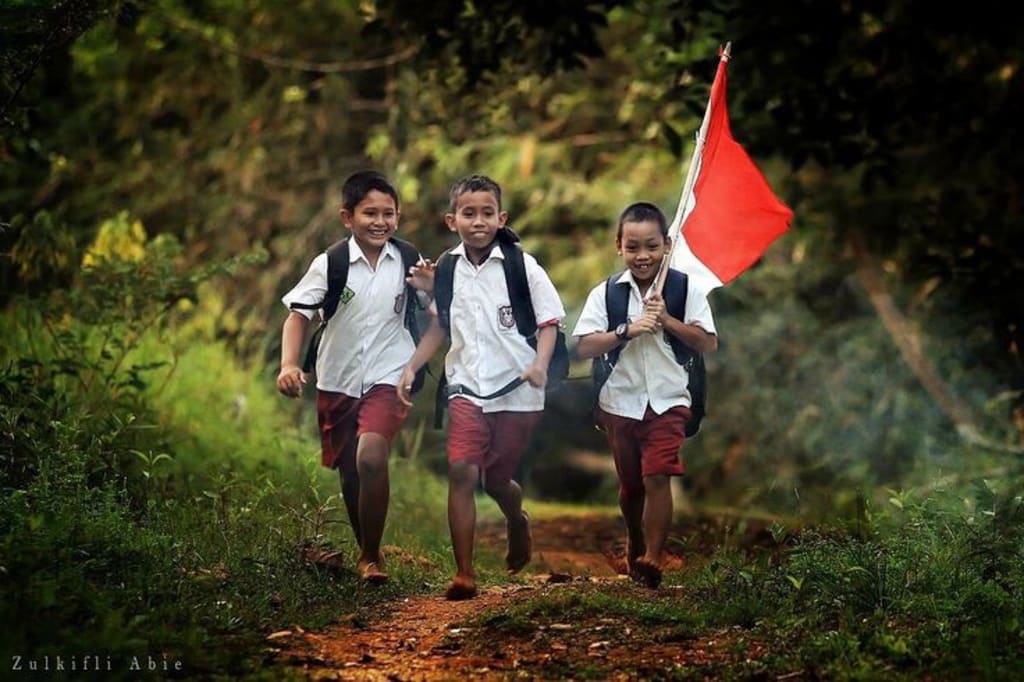
One of Indonesia’s fundamental national goals is to enhance the intellectual life of its people. Since the country’s founding, education has been a key focus in nation-building efforts. During President Sukarno’s leadership, education was largely advanced through scholarships for students, particularly those in the field of technology, to study abroad. Many Indonesian students were sent to the Soviet Union and Eastern Europe due to Sukarno’s close political ties with communist leaders. This decision was understandable, as the first Indonesian president was highly ambitious in strengthening national defense and sought to catch up in military technology. However, opportunities were limited, and not all Indonesians had equal access to education at that time.
Under President Suharto’s rule, similar policies were implemented, but with a shift in the destination countries for Indonesian students. The regime’s strong anti-communist stance resulted in the elimination of students previously sent to communist nations during the Old Order. However, President Suharto’s approach to substituting these policies was strategic. He introduced the nine-year compulsory education program to combat illiteracy in Indonesia. Instead of relying on foreign-educated scholars, he focused on building domestic education systems. This initiative was evidenced by the establishment of “Inpres Schools” (Presidential Instruction Schools), which aimed to provide equal education access for rural and low-income urban communities. The government also worked to ensure adequate educational infrastructure.
During the Reformation Era, education took a backseat as the government prioritized stabilizing the economy following the collapse of Suharto’s regime. The nation fell further behind in education, school fees soared, and rising living costs made education an unattainable dream for low-income families. Dropout rates surged, and systemic issues persisted. Instead of receiving quality education, students were entangled in corrupt practices such as the forced purchase of overpriced school materials through school cooperatives. Even local content subjects became a channel for corruption, with students being required to pay additional fees for teachers’ meals in exchange for better grades.
Today, Indonesia’s education system still struggles with inequality in access and corrupt practices. Public schools exhibit stark differences in facilities, and many children in remote areas are still forced to drop out due to financial constraints. Can this be considered progress when economic hardships still determine a child's access to education? Some may argue that programs like the Program Keluarga Harapan (PKH) have helped disadvantaged children receive free education. However, what about the middle-class families? They often bear the financial burden of subsidizing lower-income students through tiered tuition fees In the end, middle-class students also face difficulties in accessing higher education due to an illogical fee categorization system. Every new education policy seems to create new problems rather than solving existing ones.
While Indonesia continues to grapple with recurring educational challenges, Cuba took decisive action to resolve such issues back in the 1960s. Despite being a poor country, Cuba implemented bold educational reforms and maintained them even during economic crises.
This small Caribbean nation has made remarkable progress in education, earning global recognition, including from the World Bank and UNESCO. According to the World Bank, Cuba’s education system is the best in Latin America and the Caribbean. In the Education Index, published alongside the Human Development Index (HDI) by the United Nations, Cuba ranks among the top 50 countries.
Under Fidel Castro’s leadership, the government declared 1961 as the “Year of Education”. Teachers were militantly deployed to rural areas to eradicate illiteracy. Gradually but steadily, Castro nationalized all schools, ensuring free education for all Cuban citizens. No tuition fees were imposed, and even school uniforms and textbooks were provided at no cost. Education became as accessible as the air people breathe.
Beyond tuition-free education, Cuba prioritized student nutrition. Every child received breakfast before classes and lunch before the school day ended. To maintain high-quality education, the government capped class sizes at 20 students per classroom. The Cuban curriculum also emphasized practical, nature-based learning, ensuring that education was directly applicable to daily life. For example, English was not a mandatory subject but an elective, reflecting a focus on real-world relevance.
Additionally, Cuba introduced a “mobile teaching” system, where educators visited students' homes if they were unable to attend school due to illness or disabilities. Another milestone was the establishment of the Latin American School of Medicine (ELAM) in 1999, which has trained over 24,000 students from Africa, Latin America, Asia, and Oceania, including some from the United States—all at zero tuition cost, fully funded by the Cuban government.
Even in times of economic hardship, Cuba has never cut its education budget, understanding that education is a long-term investment with profound national benefits. Looking at Cuba’s educational success, one must ask: Does Indonesia have the courage to take similar steps to fulfill its national education goals?
About the Creator
Defrida
Writing is how I create my own universe of thought. Without it, I'd vanish into the swirling depths of a black hole.
A More Human Vocal
When we launched Vocal nearly a decade ago, the world was a very different place. LLMs did not exist, and stories were created one at a time by people sitting down to write, revise, and share something personal. Many of our assumptions about publishing, trust, and participation were built for a world where effort and output were inseparable.
By Justin @ Vocalabout 10 hours ago in Resources



Comments
There are no comments for this story
Be the first to respond and start the conversation.