
Reevaluating Papua's Place in Indonesia
A Reflection on Education, History, and National Identity

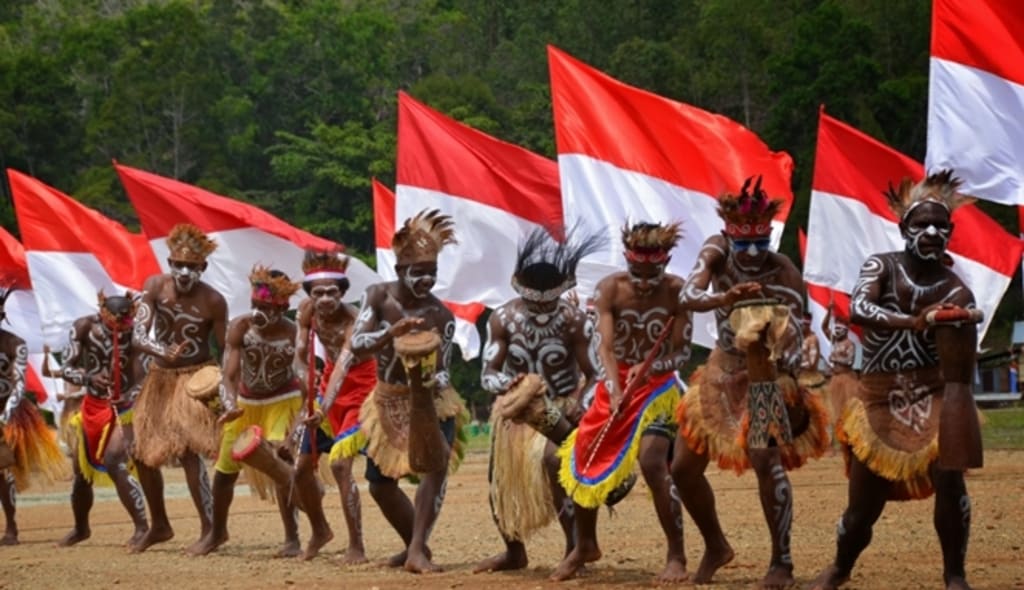
Understanding Papua’s Development Through an Educational Lens
Yesterday, during a learning session I attended, we discussed the state of development in Eastern Indonesia, particularly Papua. One key takeaway was the ongoing struggle of the Indonesian education system to truly understand and integrate Papua’s socio-cultural context. I fully support an education system that aligns with local socio-cultural values, as Indonesia is an ethnically and culturally diverse nation. Education should serve as an accessible bridge for all learners. However, there is a lingering question in my mind regarding Papua—and, more broadly, Eastern Indonesia.
During the Dutch East Indies era, many students from Eastern Indonesia achieved remarkable academic success, with some even pioneering historical movements. Yet, after Indonesia’s independence, such achievements faded, and Eastern Indonesia has since been labeled an underdeveloped region in terms of education. This raises an unsettling question: Did the Dutch colonial government have a better understanding of Eastern Indonesian culture than the Indonesian government itself? Could this also explain Mohammad Hatta’s initial hesitation when Papua became part of the Republic of Indonesia?
Hatta’s Concerns: The Cultural Divide Between Papua and Indonesia
Compared to Celebes (Sulawesi) and the Lesser Sunda Islands (Nusa Tenggara), Mohammad Hatta was more concerned about Papua. His apprehension may have stemmed from his personal experience when he was exiled to Boven Digoel. Even during the Round Table Conference (RTC) in the Netherlands, Hatta did not engage in intense discussions regarding Papua with Dutch representatives. This is particularly interesting because before the RTC, Soekarno had explicitly emphasized that Papua should be Indonesia’s next priority after gaining sovereignty recognition.
According to historical records, Hatta’s reasoning was the vast cultural gap between Papua and the rest of Indonesia. One example he cited was the ethnic difference: most Indonesians belong to the Malay race, while Papuans are of Melanesian descent. However, this argument seems inconsistent to me—if Melanesian identity were the core issue, then NTT (East Nusa Tenggara) and Maluku should have also been a concern. To this day, I have yet to find a truly satisfying answer to Hatta’s doubts about Papua, despite claims that the 1969 Act of Free Choice (Pepera) had resolved the matter. Notably, just four years after Pepera, Freeport began mining operations in Papua.
Education, Military Strategy, and the Papua Question
A journal article by Muhamad Febrian, titled "The Causes of OPM Separatist Movements Persisting to This Day," highlights how education played a strategic role in the Dutch government's cadre-building efforts in the 1950s, which led to the emergence of the Free Papua Movement (Organisasi Papua Merdeka, OPM). In contrast, Indonesia’s approach to handling OPM in 1966 was primarily military-driven. This strategy contradicts how the Indonesian military countered communist ideology from the 1950s to 1965. At that time, the military effectively formed a special bureau filled with intellectuals to counteract the Communist Party of Indonesia (PKI) and its cadres. Given this precedent, Indonesia should have adopted a similar strategy to counter Dutch influence in Papua.
Unfortunately, a counter-cadre program for Papua was only initiated three decades after Pepera 1969. Although long overdue, it still offers a glimmer of hope for Papua’s future within the Republic of Indonesia. The government is currently addressing the long-neglected "homework" in Papua—issues that have persisted since 1969. However, this is not a gesture of goodwill; it is a belated acknowledgment of Papua’s sacrifices for Indonesia’s development. Whether we like it or not, the fact remains that Papua’s gold resources have sustained Indonesia for decades, even as Papua’s own development was left behind.
Fostering Love for Indonesia Through Education
Education is the foundation for a deeper appreciation of Papua and a means to prove Indonesia’s commitment to Papua, despite cultural differences. Some of us may have seen historical footage of Indonesians choosing to migrate to the Netherlands after the Dutch colonial administration ended. Did they leave because of ethnic or racial ties to the Dutch? Of course not. They chose the Netherlands because they felt valued there.
If Indonesia truly wishes to nurture Papua’s love for the nation, the government must learn from history—genuine love is not imposed but cultivated through respect, inclusion, and meaningful investment in the region’s future.
About the Creator
Defrida
Writing is how I create my own universe of thought. Without it, I'd vanish into the swirling depths of a black hole.
Justice Begins With Character
Conscience, Character, and Justice While laws and institutions are necessary to maintain order, they alone cannot create a truly just society. The foundation of justice is built within the hearts and minds of people, long before legal decisions are made or courtroom debates occur.
By A.Petrovskiabout 15 hours ago in Education
Worth the Wait: Puerto Viejo, Costa Rica
Beach bumming in a small Caribbean beach town sounded like a perfect way to end our 6-month trip through Mexico and Central America. Or so we thought. The foul, fishy stench of rotten seaweed hit our nostrils as we stepped from the cramped bus and looked out at a rather depressing, empty, and underwhelming black sand beach. It was pouring with rain, and we had to quickly fish out our ponchos. We thought, this couldn’t be it, could it?
By Sh*t Happens - Lost Girl Travel3 days ago in Wander


Comments
There are no comments for this story
Be the first to respond and start the conversation.