
Economics
"How a small town learned to take control of its resources and build a sustainable economy"

Once upon a time, there was a small town called Oakville. The town was situated near a river and was known for its abundant natural resources such as timber and fish. The people of Oakville were hardworking and lived a simple life. They used the resources available to them to sustain their daily needs.
One day, a group of businessmen arrived in Oakville. They were interested in exploiting the resources of the town for profit. They offered the people of Oakville a deal - they would buy the timber and fish at a low price and sell it in the neighboring towns at a higher price. The people of Oakville were thrilled at the prospect of earning more money and readily agreed to the deal.
Initially, things went well. The businessmen paid the people of Oakville for their resources, and the town's economy started to grow. However, the businessmen soon realized that they could make even more money if they paid the people of Oakville even less for their resources. They started to offer lower and lower prices, taking advantage of the fact that the people of Oakville had become dependent on their business.
Soon, the people of Oakville found themselves struggling to make ends meet. They were no longer able to sustain their daily needs with the low prices they were receiving from the businessmen. The businessmen had a monopoly on the resources of the town, and the people had no other choice but to sell to them.
The people of Oakville realized that they had made a mistake by relying on the businessmen for their livelihood. They realized that they needed to take control of their resources and sell them at a fair price. They formed a cooperative and started to sell their resources directly to the neighboring towns. The cooperative was able to sell the resources at a fair price, and the people of Oakville were able to earn a decent living.
In the end, the people of Oakville learned an important lesson about economics. They realized that they needed to take control of their resources and sell them at a fair price to sustain their economy. They also learned that they needed to be careful when making deals with outsiders who may not have their best interests at heart. By working together and taking control of their resources, the people of Oakville were able to build a strong and sustainable economy that benefited everyone in the town.As the cooperative grew, it attracted the attention of other towns and cities who were interested in purchasing their resources. The people of Oakville were thrilled to see their economy grow and decided to invest in infrastructure and technology to improve their efficiency and productivity.
The cooperative also allowed the people of Oakville to have more control over their resources and to make decisions collectively. They worked together to ensure that their resources were used sustainably and that they were able to continue to provide for future generations.
Over time, the people of Oakville became known for their high-quality resources and fair pricing, and their cooperative became a model for other towns and cities. The success of the cooperative not only benefited the people of Oakville but also created jobs and opportunities for people in neighboring towns and cities.
As the years went by, the people of Oakville continued to work together and invest in their community, making it a thriving and prosperous town. They had learned that economics was not just about making a profit, but also about creating a sustainable and equitable economy that benefited everyone.
The story of Oakville is a reminder that economics is not just about money and profit, but about people and their well-being. It teaches us that by working together and investing in our community, we can create a better future for ourselves and our children.
About the Creator
Abdul Rehman
M.Phil(Hons) Agri Economics
Keep reading
More stories from Abdul Rehman and writers in Education and other communities.
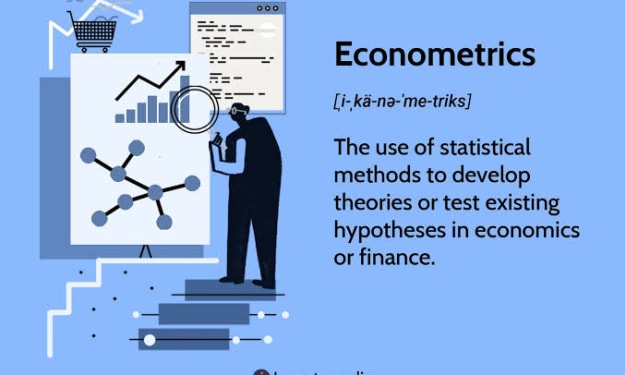
Econometrics
Econometrics is a fascinating field that applies statistical and mathematical techniques to analyze economic data. It is often said that econometrics is both an art and a science, as it requires a combination of technical skills and creativity to make sense of the complex relationships that exist in the economy. One particular story that highlights the importance of econometrics comes from the world of sports.
By Abdul Rehman 3 years ago in Education
Navigating Business Consulting Challenges to Build Stronger Companies
The modern business world moves fast and puts pressure on businesses from all sides. Leaders often know something is wrong but cannot see the whole picture. This is where strategic consulting pain points become precise and vital. Consultants help companies slow down, gain clarity, and solve problems that block growth. Their role is not to take control but to guide teams toward better decisions and steady progress.
By Nicole Metz5 days ago in Education
Why Every Volunteer Should Play a Team Sport to Serve Better and Last Longer
Volunteering takes heart, time, and steady effort. Many volunteers give their energy freely, but they can also feel tired or overwhelmed over time. One strong way to stay balanced and effective is to play a team sport. When people ask why every volunteer should play a team sport, the answer is simple. Team sports build skills, habits, and strength that directly support meaningful volunteer work.
By Paul Wiedmaier7 days ago in Education
Time to change your life.
Is it even possible for you to change your life? A lot of people, more than there should be, are unhappy with their lives. But what are they doing about it? Usually nothing. People talk about how shitty their lives are and want change, but are they not taking the actions to change?
By Jen Phillipsabout 11 hours ago in Humans


Comments
There are no comments for this story
Be the first to respond and start the conversation.