
Difference between Software Engineering and System Engineering
Exploring the Distinctions: Software Engineering vs. System Engineering

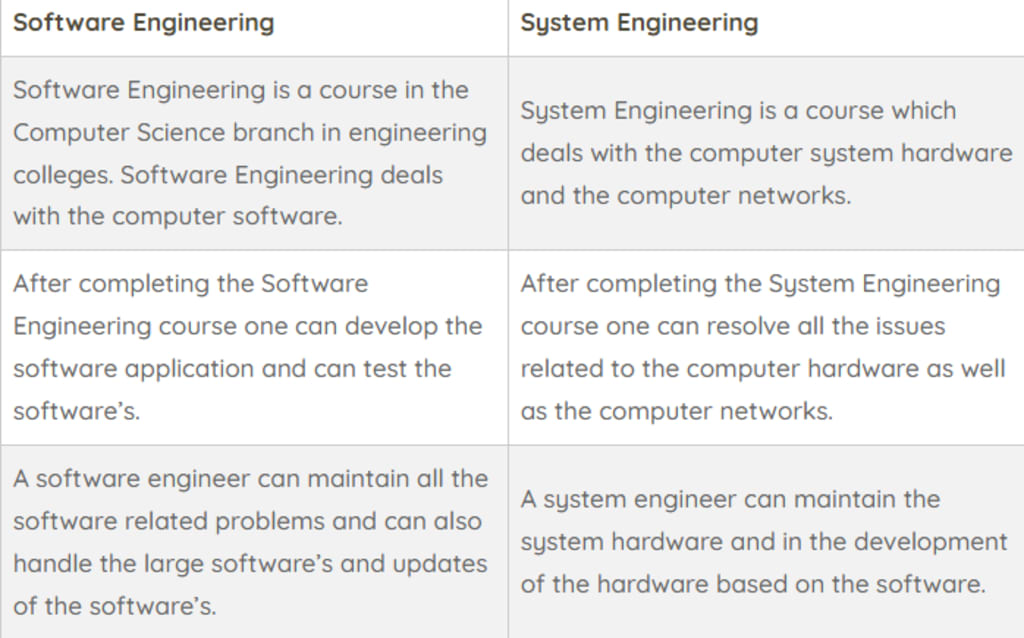
Introduction
In the rapidly evolving world of technology, two pivotal fields stand out: Software Engineering and System Engineering. Both are essential to the creation and maintenance of technological solutions, but they differ significantly in scope, focus, and methodologies. Understanding these differences is crucial for professionals and organizations aiming to maximize efficiency and effectiveness in their tech projects.
Software Engineering
- Definition:
Software Engineering is a discipline that applies engineering principles to the design, development, maintenance, testing, and evaluation of software and systems that make software work.
- Scope:
Software Engineering primarily deals with the creation of software applications. This includes everything from writing code to designing the architecture of software systems. The scope of Software Engineering includes:
- Requirement Analysis: Understanding and documenting what is required from the software.
- Software Design: Planning the software structure, including architecture, components, interfaces, and data.
- Implementation: Writing the actual code using programming languages.
- Testing: Ensuring that the software functions correctly and meets requirements through various testing methods.
- Maintenance: Updating and fixing software post-deployment to correct issues or improve performance.
- Methodologies:
Software Engineering employs various methodologies to streamline the development process. These include:
- Agile: An iterative approach that emphasizes flexibility and customer feedback.
- Scrum: A framework within Agile that breaks down tasks into manageable chunks called sprints.
- DevOps: Combines software development and IT operations to shorten the development lifecycle and deliver high-quality software continuously.
- Tools:
Software Engineers use a range of tools to facilitate their work, such as:
- Integrated Development Environments (IDEs): Tools like Visual Studio or Eclipse that provide comprehensive facilities for software development.
- Version Control Systems: Tools like Git and Subversion that help manage changes to the source code over time.
- Testing Tools: Software like JUnit or Selenium for automated testing.
- Outcome:
The primary deliverable of Software Engineering is the software product itself, which could be a web application, mobile app, desktop software, or embedded system.
System Engineering
- Definition:
System Engineering is an interdisciplinary field that focuses on designing, integrating, and managing complex systems over their life cycles. It ensures that all aspects of a system are considered and integrated into a whole.
- Scope:
System Engineering encompasses a wider scope than Software Engineering, covering the entire system which includes hardware, software, processes, and users. The scope comprises:
- Requirement Analysis: Understanding and documenting the needs and constraints of the entire system.
- System Design: Planning the system architecture, including all components and their interactions.
- Integration: Ensuring that all components of the system work together seamlessly.
- Validation and Verification: Ensuring the system meets all requirements and performs its intended functions.
- Maintenance: Managing the system throughout its life cycle, including upgrades and decommissioning.
- Methodologies:
System Engineering employs methodologies that are often more holistic and interdisciplinary compared to Software Engineering, such as:
- Systems Thinking: A holistic approach that focuses on how system components interact and work together.
- Model-Based Systems Engineering (MBSE): Uses models to support system requirements, design, analysis, verification, and validation.
- V-Model: A process model that emphasizes verification and validation.
- Tools:
System Engineers use tools that help them model, analyze, and manage systems, including:
- SysML (Systems Modeling Language): A graphical modeling language used to specify, analyze, design, and verify complex systems.
- Simulation Software: Tools like MATLAB or Simulink for simulating and analyzing system behavior.
- Project Management Tools: Software like Microsoft Project or Jira for managing system development processes.
- Outcome:
The outcome of Systems Engineering is a fully integrated system that satisfies the specified requirements. This system may encompass a range of software and hardware components, all designed to operate seamlessly as a unified entity.
Key Differences
1. Scope of Work:
- Software Engineering: Focuses on software creation and maintenance.
- System Engineering: Encompasses the design and integration of entire systems, including both hardware and software components.
2. Focus Areas:
- Software Engineering: Concentrates on software development processes.
- System Engineering: Focuses on the broader system, ensuring all parts work together effectively.
3. Interdisciplinary Nature:
- Software Engineering: Primarily rooted in computer science.
- System Engineering: Involves multiple engineering disciplines, including mechanical, electrical, and software engineering.
4. Outcome and Deliverables:
- Software Engineering: Produces standalone software applications.
- System Engineering: Delivers complex systems that include software, hardware, and processes.
Conclusion
Software Engineering and Systems Engineering, though interconnected, fulfill separate roles in the technology realm. Software Engineering is dedicated to the development and maintenance of software applications, utilizing particular methodologies and tools designed for software production. Conversely, Systems Engineering deals with the wider scope of system integration and administration, guaranteeing that all elements, including hardware and software, operate in unison. Recognizing these distinctions is crucial for choosing the appropriate strategy for particular projects, thus improving the effectiveness and achievement of technological initiatives.
About the Creator
Pushpendra Sharma
I am currently working as Digital Marketing Executive in Tutorials and Examples.
Keep reading
More stories from Pushpendra Sharma and writers in Education and other communities.
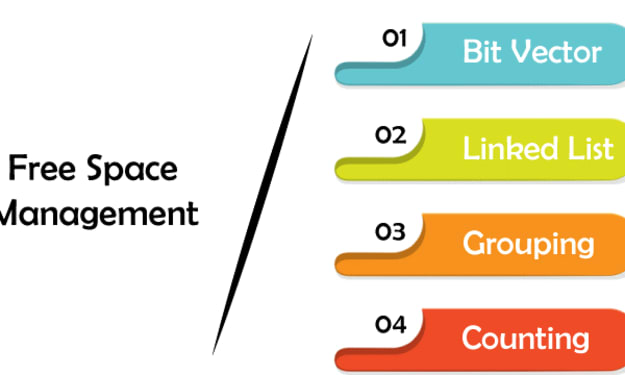
Free Space Management in Operating Systems
Effective free space management is crucial in operating systems (OS) for optimizing storage utilization, improving performance, and ensuring smooth system operation. This article delves into the concepts, methods, and importance of free space management in operating systems.
By Pushpendra Sharma2 years ago in Education
The Emotional and Human Impact Behind Major Medical Breakthroughs
Major medical breakthroughs often capture attention for their scientific achievement, yet their most profound significance lies in the emotional and human stories they shape. Although clinical data, research milestones, and technological advancements illustrate progress, the accurate measure of success lies in the lives transformed by these discoveries.
By Mark Bouzyka day ago in Education
The "Free" Lead Trap: Why New Real Estate Agents Are Paying a Hidden Price
In the early stages of a real estate career, an agent’s most precious asset isn't their luxury car, their high-end camera gear, or a downtown office lease. It is their time. Yet, for many new professionals, time is the one resource they are most willing to squander in exchange for the "dopamine hit" of a smartphone notification.
By SiftlyLeads8 days ago in Education


Comments
There are no comments for this story
Be the first to respond and start the conversation.