
Die Rolle der Polizei in der Ordnung: Zwischen Sicherheit, Kontrolle und Bürgerrechten
Exploring how the German police maintain Ordnung (public order) while balancing security, authority, and individual freedoms.
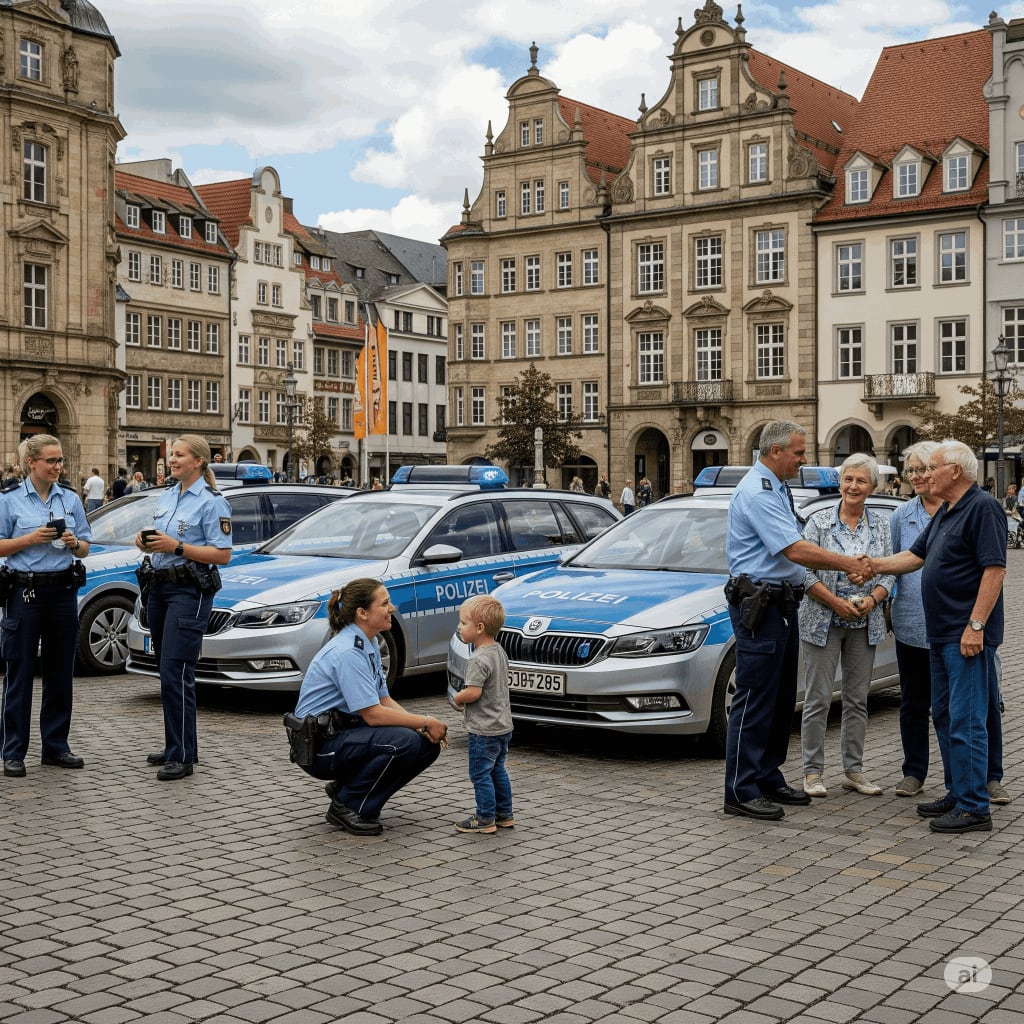
This blog analyzes the role of the German police in maintaining Ordnung. It looks at the history, daily duties, legal framework, and challenges of balancing security with civil liberties. From traffic checks to criminal investigations, the blog highlights both public expectations and criticisms of police authority.
The police in Germany are central to public safety and ordnung polizei (order enforcement). Their responsibilities go beyond crime control to include preventive measures, education, and maintaining trust in democratic institutions. This article explores the fine balance between control and freedom, examining both the legal framework and the human side of policing.
Einleitung: Polizei und Gesellschaft
In Germany, the term Polizei carries both authority and responsibility. For some, the police symbolize safety, fairness, and justice; for others, they represent surveillance, control, or unwanted interference. This ambivalence reflects the central role police play in balancing Ordnung and Freiheit (order and freedom).
The German police operate under democratic principles, but their powers are extensive. Understanding their role requires exploring history, legal frameworks, and the daily realities of policing.
Historischer Hintergrund: Von Kontrolle zu Demokratie
The German police system has undergone significant transformation. During authoritarian periods in history, police were seen primarily as instruments of state power. After World War II, especially in West Germany, reforms focused on establishing a bürgernahe Polizei (citizen-oriented police).
Today, the German police are designed to protect Grundrechte (fundamental rights) while ensuring safety. This balance is enshrined in constitutional law.
Ordnung und Sicherheit – Kernaufgaben
The core duties of police can be grouped into three main areas:
1. Gefahrenabwehr (Prevention of Danger)
Preventing crimes and accidents before they happen. Example: traffic checks, identity controls, crowd management at events.
2. Strafverfolgung (Law Enforcement)
Investigating crimes, collecting evidence, and presenting cases for prosecution.
3. Aufrechterhaltung der öffentlichen Ordnung
Ensuring daily life runs smoothly, from regulating protests to supporting administrative authorities.
Polizei im Straßenverkehr
A significant part of police activity relates to verkehrsrecht. Daily road checks, accident investigations, and monitoring of alcohol or drug use are standard.
Examples:
- Random traffic controls to detect alkoholisiert (drunk) or drogenbeeinflusst (drug-influenced) drivers.
- Cooperation with driving license authorities in cases requiring mpu.
- Enforcement of speed limits and emission regulations.
Through this, the police directly influence who stays on the road and under what conditions.
Rechtliche Grundlage: Ordnungsrecht
The legal foundation for police work lies in Ordnungsrecht. This area of law empowers authorities to act in order to prevent danger to public safety.
Examples of ordnungsrecht-based actions:
- Breaking up unauthorized demonstrations.
- Confiscating dangerous objects.
- Issuing administrative orders to protect health and safety.
The challenge lies in ensuring that such measures do not disproportionately restrict Bürgerrechte (civil rights).
Vertrauen und Kritik
Public trust in the police is generally high in Germany compared to many countries. Surveys regularly show that most citizens feel protected by police presence.
However, criticism arises in several areas:
- Racial Profiling: Concerns about discriminatory identity checks.
- Überwachung: Debates over increasing video surveillance.
- Polizeigewalt: Allegations of excessive force in demonstrations.
The balance between maintaining order and respecting freedoms remains a constant debate.
Moderne Herausforderungen
The police face new and complex challenges in the 21st century:
- Digitalisierung: Cybercrime requires new expertise and resources.
- Globalisierung: International criminal networks demand cross-border cooperation.
- Gesellschaftliche Spannungen: From climate protests to extremist movements, police often stand between opposing groups.
- Drogenproblematik: With cannabis legalization, questions about enforcement and ordnung polizei become more pressing.
These challenges require ongoing adaptation in both training and strategy.
Polizei und Bürgerrechte
A democratic police system must always act in accordance with Verhältnismäßigkeit (proportionality). That means police action must be suitable, necessary, and appropriate in relation to the situation.
For example, breaking up a peaceful protest with force would be disproportionate, while preventing violence in a dangerous situation would be justified.
This principle ensures that polizeiliche Ordnung does not become authoritarian control.
Internationale Vergleiche
Compared to other countries, German police enjoy strong public trust and relatively high levels of accountability. Independent oversight committees and strict training emphasize Rechtsstaatlichkeit (rule of law).
Still, like everywhere, the effectiveness of police depends on constant dialogue with society.
Fazit: Polizei zwischen Kontrolle und Vertrauen
The German police carry the heavy responsibility of being both protectors and regulators. Their role in ensuring Ordnung is essential, but their legitimacy depends on respecting freedom and dignity.
A well-functioning democracy requires police who are both strong in authority and close to citizens. This ongoing balance makes the Polizei one of the most visible reflections of society’s values.
About the Creator
From Despair to Hope: How Animal Rescue Efforts Rebuild Broken Lives
Animal rescue efforts stand as a powerful response to suffering that often goes unseen. Across towns, cities, and rural areas, animals face neglect, abandonment, injury, and fear every day. Many are left without food, shelter, or medical care. Others are harmed by abuse or natural disasters. Without help, their future is uncertain. Through patience, care, and action, animal rescue efforts transform despair into hope and give animals the chance to heal and live safely.
By Brenda McGrane6 days ago in Education
How to Gain Real Work Experience in Wealth Management
Breaking into wealth management can feel confusing at first. Many roles ask for experience, but it is not always clear how to get it. The good news is that real wealth management work experience comes from action, not just titles. With the right approach, you can build skills, credibility, and confidence before landing a full-time role.
By John Lennox Cummings5 days ago in Education
So You Decided To Become a Nurse Practitioner:
So you decided to become an "Advanced Practice" nurse. Congratulations!... is what I would say if this was a good idea. Grad school? In this economy? What were you thinking? Likely it was something along the lines of either 1) “I've seen these other chucklefucks do it— Why can't I?” or even 2) “I've got a nice career, I should shake it up. I miss feeling like I have no clue what I'm doing.”
By Sandor Szabo3 days ago in Fiction


Comments
There are no comments for this story
Be the first to respond and start the conversation.