
Developed in Conjunction with NASA
"Innovative Technologies Shaping the Future of Space Exploration"
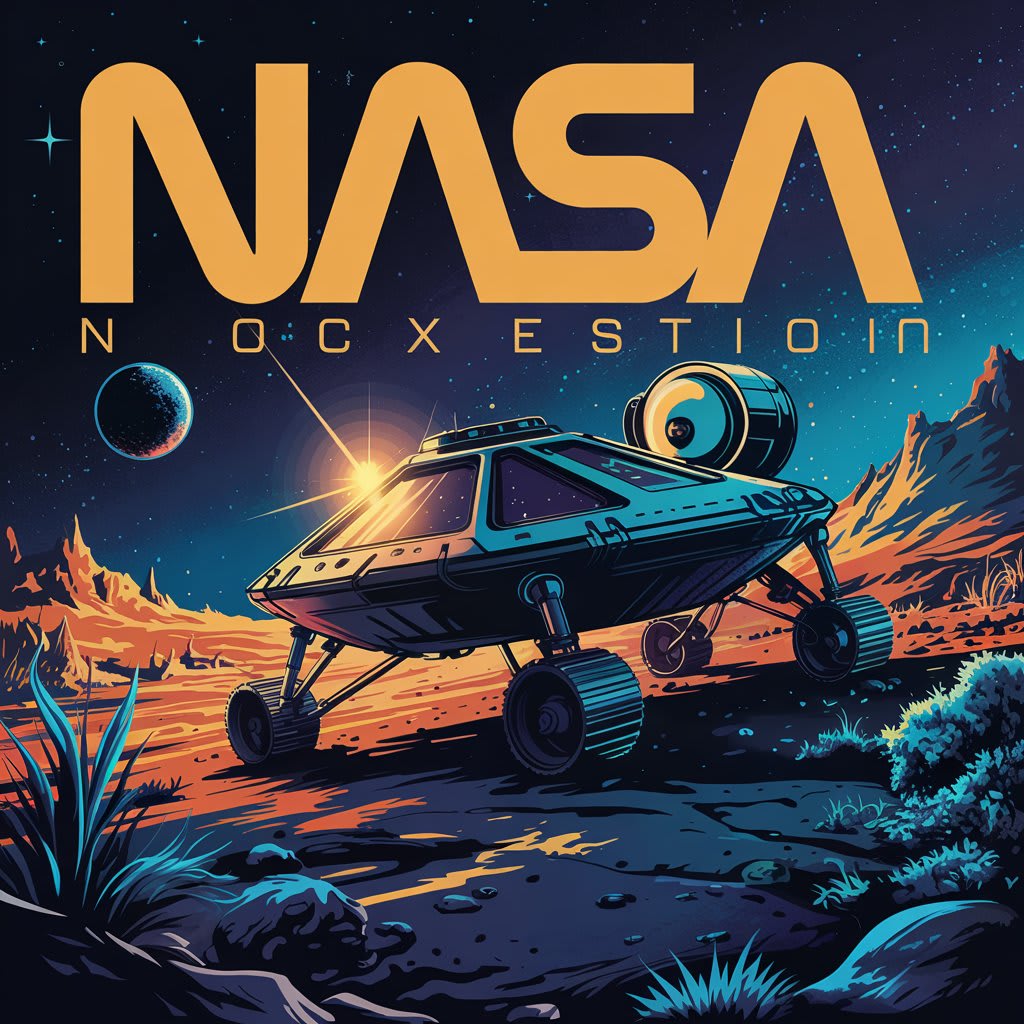
In the near future, the line between space exploration and technological innovation had become nearly indistinguishable. Advancements that once seemed impossible—fast-travel spacecraft, AI-driven satellites, and augmented reality tools—were now commonplace, thanks to a series of groundbreaking collaborations between NASA and the brightest minds from Earth’s tech industry. But none of this would have happened if not for one ambitious project that aimed to push humanity’s limits further than ever before.
It all began with the Prometheus Initiative, a secretive program initiated by NASA to develop a new spacecraft capable of reaching the farthest reaches of space. This spacecraft, dubbed Artemis, was meant to carry astronauts to distant exoplanets that could harbor life—a journey that would take several years, perhaps even decades. What made Artemis special wasn’t just its powerful engines or state-of-the-art navigation system, but the underlying technology—an artificial intelligence system capable of learning, adapting, and evolving to ensure the safety of its crew and the success of its mission.
NASA knew that creating such an advanced spacecraft would require more than their internal resources. It needed cutting-edge artificial intelligence and robotics—the kind of technology that tech giants and start-ups on Earth were experimenting with daily. NASA reached out to Aurora Technologies, a small, but rapidly growing company founded by a young and brilliant engineer named Dr. Mia Hawthorne. Mia had always been fascinated by the intersection of technology and human survival. Her company had been working on AI-powered drones and self-repairing robots, technologies that seemed worlds apart from NASA's space exploration goals. But Mia saw an opportunity—a chance to push the limits of AI in a way that could fundamentally change space exploration forever.
The initial meetings were tense. NASA’s top scientists were skeptical, questioning how a private company, albeit innovative, could help build a spacecraft that would venture far beyond the solar system. But Mia was undeterred. She presented her groundbreaking work in adaptive learning algorithms—artificial intelligence that not only followed commands but could also anticipate problems before they occurred, making real-time decisions based on constantly changing environments. She proposed that the AI would control Artemis’ life-support systems, ensure the spacecraft could navigate through space autonomously, and provide the crew with real-time support during long-term missions.
“We have a chance to redefine space exploration,” Mia said, her eyes gleaming with excitement. “But it’ll only work if we trust each other and push the boundaries of what we think is possible.”
After several months of negotiation, NASA and Aurora Technologies signed a historic partnership. This marked the beginning of a new era in space travel—one where technology, imagination, and science fiction merged seamlessly.
The development process wasn’t easy. Artemis needed to be more than just a ship—it had to be a self-sustaining, autonomous entity. The spacecraft had to navigate unpredictable space storms, avoid hazards like asteroid belts, and manage resources without a single moment of failure. The AI—named Orion after the constellation—was the core of Artemis. It was capable of learning not only from Earth-based systems but also from the challenges of deep space itself. Each time Artemis traveled farther into the unknown, Orion became more intelligent, learning from the universe’s anomalies and adjusting the spacecraft's systems accordingly.
Over the next few years, Artemis was built in conjunction with NASA engineers and Aurora’s cutting-edge AI development teams. The project became a symbol of human ingenuity—every aspect of the spacecraft was meticulously designed to ensure its success. The Artemis’ hull was constructed using advanced composites that could withstand extreme space temperatures, while its propulsion system was powered by a new form of ion drive technology, capable of interplanetary travel at speeds never before achieved.
One of the most difficult challenges, however, was the integration of the AI into the spacecraft’s systems. The AI had to not only control the mechanics of Artemis but also manage the health and wellbeing of its crew. The astronauts on board would need to be completely reliant on Orion for guidance and survival. This required Mia’s AI team to create a system of empathy within Orion—a unique feature that allowed the AI to understand the psychological and emotional states of the crew and respond accordingly.
The first test flight of Artemis was set for a mission to Mars, a proving ground for both the spacecraft and the AI. NASA had carefully selected a team of astronauts, including Commander Elijah Hayes, a seasoned astronaut with several space missions under his belt, and Dr. Clara Williams, a biologist who specialized in extraterrestrial ecosystems. They were joined by Dr. Mia Hawthorne herself, who had been granted a seat on the mission to observe her technology in action.
The launch was flawless. Artemis soared into space, leaving behind the blue planet that had been humanity’s cradle for millennia. Orion was fully integrated into the ship, and the crew quickly became accustomed to relying on its assistance for everything—from monitoring vital signs to recommending rest cycles. The AI was more than just a tool; it was their companion, learning with them, helping them, anticipating their needs before they even spoke.
But space, as always, is unpredictable. As the Artemis approached Mars, a massive solar flare erupted, sending a wave of radiation toward the spacecraft. The crew knew that they would have to alter course to avoid a potentially fatal collision with the radiation storm. But with the guidance of Orion, the crew was able to navigate around the storm, changing course with precision and avoiding disaster. The AI not only corrected the trajectory but also adjusted the life-support systems to ensure that the crew was protected from the radiation.
As Artemis finally reached Mars, the crew marveled at the success of their mission—and the power of collaboration. The integration of artificial intelligence with human space exploration had proven to be a game-changer. NASA had not only successfully launched a mission to Mars but had done so with a technology that had evolved from pure human ingenuity and a thirst for knowledge.
The Prometheus Initiative was just the beginning. With the success of Artemis, NASA and Aurora Technologies embarked on the next stage: sending a crewed mission to an exoplanet in the nearby Alpha Centauri system. The future of space exploration had shifted from an ambition to a reality—one where human and machine worked in perfect harmony, reaching further into the cosmos than ever before.
As Mia stood on the Martian surface, watching the first human footprints settle into the red dust, she realized that this collaboration—this blending of human vision and artificial intelligence—was just the start of something even greater. The future of space exploration was no longer bound by the limitations of Earth; it was powered by the boundless potential of technology and human imagination, developed in conjunction with NASA, to explore the stars.
About the Creator
Alex irfan
"Dreamer. Storyteller. Time-traveler at heart. I write about futures unseen, emotions untold, and moments that linger long after the last word. Join me on a journey through fiction, mystery, and the magic of imagination."
Keep reading
More stories from Alex irfan and writers in Education and other communities.
My Mother-in-Law’s Last Words Unlocked a Secret That Changed My Marriage Forever
If someone had told me that my marriage would be saved by my mother-in-law’s final words, I wouldn’t have believed them. Our relationship had always been polite, distant, and carefully measured. I respected her as the woman who raised my husband, but we were never close. There was a wall between us—an invisible one made of differences, unspoken judgments, and quiet misunderstandings.
By Alex irfan9 months ago in Education
Beyond Speed: How High-Performance Computing Is Shaping Tomorrow’s Discoveries
High-Performance Computing is changing how people explore ideas, test theories, and solve complex problems. It allows machines to work together at great speed. These systems can handle tasks that are far too large for standard computers. As a result, High-Performance Computing and the future of discovery are closely linked.
By Jason Pruetabout 9 hours ago in Education
Python vs Rust Performance: Speed, Memory Usage, and Scalability Explained
When developers compare programming languages, performance is often one of the most debated factors. Two languages that frequently come up in these discussions are Python and Rust. While both are powerful in their own ways, they approach performance, memory management, and scalability very differently. This makes the Python vs Rust comparison especially relevant for teams choosing the right technology for their next project.
By Lennox Gray3 days ago in Education
Miss Persephone's Manual to a Seemingly Ordinary Life
Miss Persephone was found at the dining table, her blue eyes swollen, her tears arriving and retreating like the tides of the ocean. Earlier that day, her family had visited her in the retirement home where she had lived for eight years. It was her eightieth birthday.
By Imola Tóth4 days ago in Fiction



Comments
There are no comments for this story
Be the first to respond and start the conversation.