
Details on Digital health technologies
We will explore some of the potential benefits and challenges of using digital health technologies in healthcare.
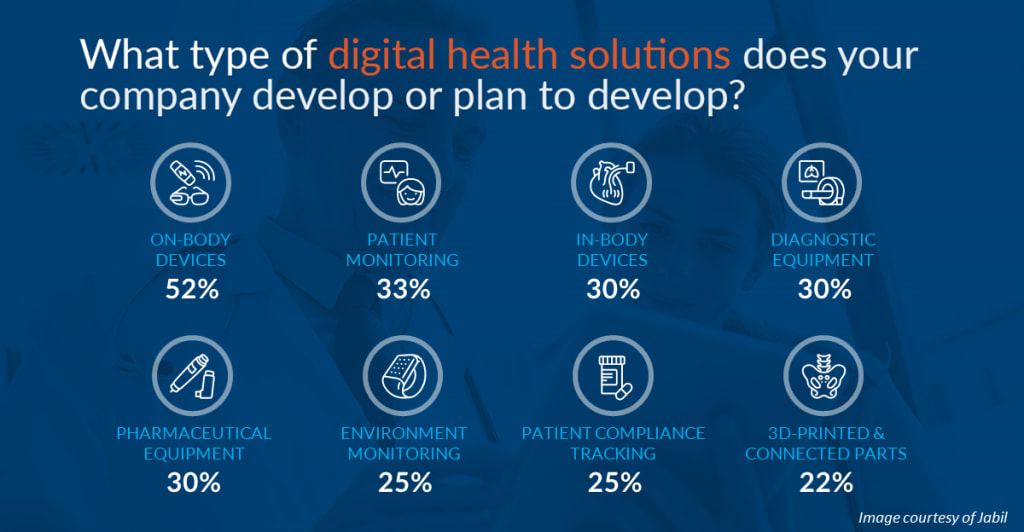
Digital health technologies, such as wearable devices, mobile apps, and telehealth services, are rapidly transforming the way that healthcare is delivered and managed. These technologies have the potential to improve the efficiency and effectiveness of healthcare delivery, as well as enhance patient outcomes and satisfaction. However, there are also significant challenges and risks associated with the adoption and use of these technologies. In this article, we will explore some of the potential benefits and challenges of using digital health technologies in healthcare on of the learning opportunity in Clinical Research Training Institute.
Benefits of Digital Health Technologies
- Enhanced Patient Engagement and Empowerment
Digital health technologies can provide patients with greater control over their own health and wellness, as well as facilitate more active engagement in their own care. For example, patients can use mobile apps to track their symptoms, medications, and other health-related data, and receive personalized feedback and guidance based on this information. This can help patients to better understand their health status, identify potential health risks or issues, and take proactive steps to improve their health outcomes.
- Improved Access to Care
Digital health technologies can help to overcome traditional barriers to accessing healthcare, such as geography, time, and mobility. For example, telehealth services allow patients to consult with healthcare providers remotely, reducing the need for in-person visits and enabling patients to receive care from the comfort of their own homes. This can be especially beneficial for patients living in rural or remote areas, or for those with mobility or transportation challenges.
- Enhanced Quality of Care
Digital health technologies can improve the quality of care that patients receive by enabling more accurate and timely diagnosis, treatment, and monitoring of health conditions. For example, wearable devices can collect and transmit data on vital signs, such as heart rate, blood pressure, and blood glucose levels, to healthcare providers in real-time, allowing for more precise and personalized treatment plans. Additionally, digital health technologies can help to reduce medical errors and improve patient safety by providing healthcare providers with access to up-to-date patient information and clinical guidelines.
Challenges of Digital Health Technologies
- Data Security and Privacy Concerns
Digital health technologies collect and transmit sensitive health-related data, which can be vulnerable to security breaches and data privacy violations. For example, mobile apps may collect and share user data with third-party companies without proper consent or encryption, potentially exposing sensitive information to unauthorized access. To address these concerns, healthcare providers and technology companies must prioritize the security and privacy of patient data, through measures such as secure data storage, encryption, and informed consent procedures.
- Limited Digital Literacy and Access
Digital health technologies may not be accessible or usable for all patients, particularly those who lack access to the necessary devices, internet connectivity, or digital literacy skills. This can exacerbate existing health disparities and contribute to inequitable healthcare outcomes. To ensure that digital health technologies are accessible and effective for all patients, healthcare providers must consider the unique needs and preferences of diverse patient populations, and provide appropriate training and support for technology use.
- Regulatory and Reimbursement Challenges
Digital health technologies are subject to complex regulatory frameworks and reimbursement policies, which can create barriers to adoption and use. For example, healthcare providers may face challenges in obtaining reimbursement for telehealth services, or in complying with data privacy regulations when using mobile health apps. To overcome these challenges, healthcare providers and technology companies must stay up-to-date with regulatory requirements and reimbursement policies, and work collaboratively to develop sustainable business models that align with these policies.
Conclusion
Digital health technologies have the potential to transform the way that healthcare is delivered and managed, providing patients with greater access, empowerment, and quality of care. However, to realize these benefits, healthcare providers and technology companies must address the significant challenges and risks associated with digital health adoption and use you can learn through clinical research course. By prioritizing patient data security and privacy, promoting digital literacy and access, and navigating complex regulatory
About the Creator
Keep reading
More stories from Bhagyashri gole and writers in Education and other communities.
Impact of Virtual Reality (VR) and Augmented Reality (AR) on Web Development
In today's rapidly advancing digital landscape, technology continues to push the boundaries of what is possible. One such innovative frontier is the realm of Virtual Reality (VR) and Augmented Reality (AR), which have revolutionized various industries. But what role do VR and AR play in web development? In this article, we'll explore how VR and AR are reshaping the web development company landscape, offering immersive experiences, enhancing user engagement, and opening up new possibilities for businesses.
By Bhagyashri gole3 years ago in Education
Will Your Medical Billing and Coding School Actually Prepare You for the CPC or CBCS Exam?
Many students enroll in a medical billing and coding schools with one clear goal “to become eligible for and pass the CPC or CBCS certification exam”. But does every program actually prepare you for those exams, or will you need separate, costly exam prep later? Not all schools structure their curriculum around these exam blueprints. Some heavily focus on general theory instead of in-depth training on critical areas.
By Meaghan Howe8 days ago in Education
When Is Ramadan 2026, and How Is the Moon Sighted?
Ramadan, the holiest month in Islam, is observed by more than a billion Muslims worldwide through fasting, prayer, and reflection. Each year, its start date shifts because it follows the Islamic lunar calendar rather than the Gregorian calendar. This often leads to questions about when Ramadan will begin and how its arrival is determined. In 2026, Ramadan is expected to begin in the evening of Tuesday, February 17, and end at sunset on Wednesday, March 18, depending on the sighting of the moon. As with every Islamic month, the precise start date will be confirmed only after the new crescent moon is observed. Why Ramadan’s Date Changes Every Year The Islamic calendar is based on lunar cycles, with each month beginning when the new crescent moon (hilal) is sighted. A lunar year is about 354 days long — roughly 11 days shorter than the solar year used in the Gregorian calendar. As a result, Ramadan moves earlier each year, cycling through all seasons over a 33-year period. This shifting calendar means Muslims sometimes fast during long summer days and, in other years, during shorter winter days. The movement of Ramadan across the seasons is seen as a reminder of the spiritual nature of fasting rather than its physical difficulty. How the Moon Is Sighted Moon sighting is a deeply rooted religious and cultural practice. Traditionally, Muslim scholars and local committees attempt to observe the new crescent moon shortly after sunset on the 29th day of the preceding month, Sha’ban. If the moon is seen, Ramadan begins the following day. If it is not seen, Sha’ban completes 30 days and Ramadan starts one day later. In many countries, official moon sighting committees gather at specific observation points, often using telescopes and modern optical equipment alongside traditional naked-eye observation. Witnesses who claim to see the crescent must meet certain conditions, including reliability and clarity of vision, before their testimony is accepted. Weather plays a major role in moon sighting. Cloud cover, pollution, or haze can make it impossible to see the crescent even if it is astronomically present. This is why different countries sometimes begin Ramadan on different days. Astronomy vs. Physical Sighting There is an ongoing discussion in the Muslim world about whether Ramadan should be determined solely by astronomical calculations or by physical moon sighting. Some countries and Islamic organizations use scientific data to predict when the moon can be seen, while others insist on direct visual confirmation in accordance with traditional teachings. Supporters of astronomical calculation argue that modern science allows highly accurate predictions and promotes unity by avoiding confusion. Others believe that physically seeing the moon is a religious requirement and part of the spiritual significance of Ramadan’s arrival. As a result, Muslims in different regions — and sometimes even within the same country — may start fasting on different days depending on which method they follow. Global Differences in Moon Sighting Countries in the Middle East, South Asia, and Africa often rely on national moon sighting authorities. In contrast, Muslim communities in Europe and North America may follow local councils or the announcements of major Islamic institutions abroad. For example, some communities wait for sightings from Saudi Arabia or their country of origin, while others rely on local sightings or scientific visibility charts. This diversity reflects the global nature of Islam and the different legal and cultural traditions within it. Spiritual Meaning of Ramadan Beyond its calendar mechanics, Ramadan is a time of intense spiritual focus. Muslims fast from dawn until sunset, refraining from food, drink, and other physical needs. The fast is meant to promote self-discipline, empathy for the poor, and closeness to God. Daily prayers increase, charity is emphasized, and families gather for the evening meal known as iftar. The month also includes Laylat al-Qadr, the “Night of Power,” believed to be the night when the first verses of the Quran were revealed. Preparing for Ramadan 2026 As Ramadan 2026 approaches in February, Muslim families and communities will begin preparations well in advance. Mosques plan prayer schedules, charities organize food drives, and individuals adjust their routines for fasting and worship. Because the start date depends on moon sighting, official announcements are typically made the night before Ramadan begins. Until then, the expected date remains provisional. Conclusion Ramadan 2026 is expected to begin around February 17, but its true start will be confirmed by the sighting of the new moon. This centuries-old practice continues to unite faith, tradition, and astronomy in a unique way. Whether determined by telescopes or by the naked eye, the arrival of Ramadan marks a sacred time of reflection, discipline, and spiritual renewal for Muslims around the world.
By Fiaz Ahmed 3 days ago in Education
📢 Raise Your Voice Thread: 02/19/2026
Our “Raise Your Voice Threads” are hosted most alternating Thursdays at 12PM ET to offer creators more avenues to uncover exceptional stories on Vocal. As we are continuously searching for fresh creators and inspiring stories, this thread provides an opportunity to exchange and discuss the stories that have moved and motivated us on Vocal.
By Raise Your Voice by Vocalabout 5 hours ago in Resources



Comments
There are no comments for this story
Be the first to respond and start the conversation.