
When Is Ramadan 2026, and How Is the Moon Sighted?
Formal / News Style The Islamic holy month is expected to begin in mid-February, guided by centuries-old lunar traditions Moon sighting practices will determine the exact start of Ramadan for Muslims worldwide 🔹 Neutral & Informative Astronomy and tradition combine to set the calendar for Islam’s most sacred month Why the start of Ramadan depends on the crescent moon and local observation 🔹 Impactful From telescopes to tradition, Muslims prepare for Ramadan as the moon is watched closely

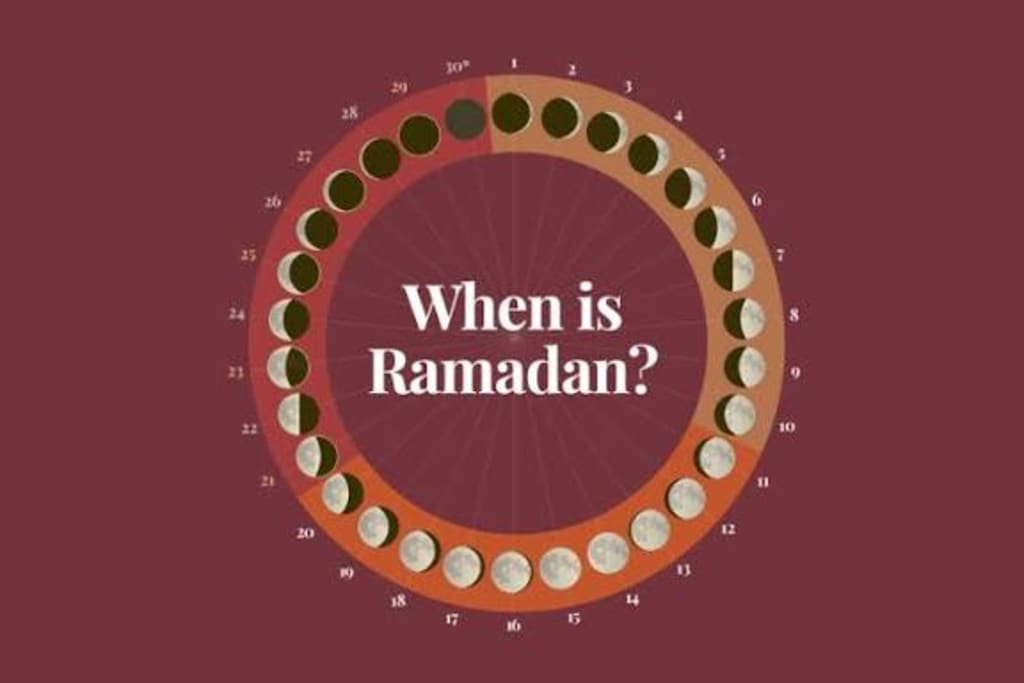
Ramadan, the holiest month in Islam, is observed by more than a billion Muslims worldwide through fasting, prayer, and reflection. Each year, its start date shifts because it follows the Islamic lunar calendar rather than the Gregorian calendar. This often leads to questions about when Ramadan will begin and how its arrival is determined.
In 2026, Ramadan is expected to begin in the evening of Tuesday, February 17, and end at sunset on Wednesday, March 18, depending on the sighting of the moon. As with every Islamic month, the precise start date will be confirmed only after the new crescent moon is observed.
Why Ramadan’s Date Changes Every Year
The Islamic calendar is based on lunar cycles, with each month beginning when the new crescent moon (hilal) is sighted. A lunar year is about 354 days long — roughly 11 days shorter than the solar year used in the Gregorian calendar. As a result, Ramadan moves earlier each year, cycling through all seasons over a 33-year period.
This shifting calendar means Muslims sometimes fast during long summer days and, in other years, during shorter winter days. The movement of Ramadan across the seasons is seen as a reminder of the spiritual nature of fasting rather than its physical difficulty.
How the Moon Is Sighted
Moon sighting is a deeply rooted religious and cultural practice. Traditionally, Muslim scholars and local committees attempt to observe the new crescent moon shortly after sunset on the 29th day of the preceding month, Sha’ban. If the moon is seen, Ramadan begins the following day. If it is not seen, Sha’ban completes 30 days and Ramadan starts one day later.
In many countries, official moon sighting committees gather at specific observation points, often using telescopes and modern optical equipment alongside traditional naked-eye observation. Witnesses who claim to see the crescent must meet certain conditions, including reliability and clarity of vision, before their testimony is accepted.
Weather plays a major role in moon sighting. Cloud cover, pollution, or haze can make it impossible to see the crescent even if it is astronomically present. This is why different countries sometimes begin Ramadan on different days.
Astronomy vs. Physical Sighting
There is an ongoing discussion in the Muslim world about whether Ramadan should be determined solely by astronomical calculations or by physical moon sighting. Some countries and Islamic organizations use scientific data to predict when the moon can be seen, while others insist on direct visual confirmation in accordance with traditional teachings.
Supporters of astronomical calculation argue that modern science allows highly accurate predictions and promotes unity by avoiding confusion. Others believe that physically seeing the moon is a religious requirement and part of the spiritual significance of Ramadan’s arrival.
As a result, Muslims in different regions — and sometimes even within the same country — may start fasting on different days depending on which method they follow.
Global Differences in Moon Sighting
Countries in the Middle East, South Asia, and Africa often rely on national moon sighting authorities. In contrast, Muslim communities in Europe and North America may follow local councils or the announcements of major Islamic institutions abroad.
For example, some communities wait for sightings from Saudi Arabia or their country of origin, while others rely on local sightings or scientific visibility charts. This diversity reflects the global nature of Islam and the different legal and cultural traditions within it.
Spiritual Meaning of Ramadan
Beyond its calendar mechanics, Ramadan is a time of intense spiritual focus. Muslims fast from dawn until sunset, refraining from food, drink, and other physical needs. The fast is meant to promote self-discipline, empathy for the poor, and closeness to God.
Daily prayers increase, charity is emphasized, and families gather for the evening meal known as iftar. The month also includes Laylat al-Qadr, the “Night of Power,” believed to be the night when the first verses of the Quran were revealed.
Preparing for Ramadan 2026
As Ramadan 2026 approaches in February, Muslim families and communities will begin preparations well in advance. Mosques plan prayer schedules, charities organize food drives, and individuals adjust their routines for fasting and worship.
Because the start date depends on moon sighting, official announcements are typically made the night before Ramadan begins. Until then, the expected date remains provisional.
Conclusion
Ramadan 2026 is expected to begin around February 17, but its true start will be confirmed by the sighting of the new moon. This centuries-old practice continues to unite faith, tradition, and astronomy in a unique way. Whether determined by telescopes or by the naked eye, the arrival of Ramadan marks a sacred time of reflection, discipline, and spiritual renewal for Muslims around the world.
About the Creator
Fiaz Ahmed
I am Fiaz Ahmed. I am a passionate writer. I love covering trending topics and breaking news. With a sharp eye for what’s happening around the world, and crafts timely and engaging stories that keep readers informed and updated.
Keep reading
More stories from Fiaz Ahmed and writers in Education and other communities.
The Victorian Aristocrat Who Became First British Muslim Lord
In a remarkable chapter of British history, a Victorian-era aristocrat emerged as the first British Muslim to take a seat in the House of Lords, bridging the worlds of tradition, religion, and politics. Lord Rowland Hill, born into an elite family with deep roots in the British peerage, converted to Islam during a period of personal exploration, leaving a lasting legacy on the cultural and political landscape of the United Kingdom. A Life of Privilege and Curiosity Lord Rowland Hill grew up in the late 19th century surrounded by wealth, influence, and the privileges of the British aristocracy. Educated at prestigious institutions, he was expected to follow a conventional path of military service, estate management, and parliamentary involvement. However, Hill’s curiosity about world cultures and religions set him apart from his peers. During his travels across the Middle East and South Asia, Hill became fascinated by Islamic philosophy, ethics, and scholarship. His exposure to Muslim societies, combined with personal study, led him to embrace Islam, a decision that shocked many in Victorian high society, where religious conformity and social convention were strictly observed. Conversion and Social Reaction Hill’s conversion to Islam was a highly unusual step for a member of the British aristocracy. In Victorian society, where Christianity dominated public life and social identity, religious conversion—particularly to a minority faith—was met with skepticism and, at times, outright hostility. Despite this, Hill remained committed to his faith while maintaining his public duties, demonstrating that spiritual conviction could coexist with civic responsibility. Contemporary newspapers documented Hill’s conversion with a mixture of curiosity and critique, often framing it as an eccentric but intriguing development in the aristocratic world. Scholars note that Hill’s embrace of Islam coincided with broader Victorian interests in Orientalism and cross-cultural exchange, although few of his contemporaries made such a profound personal commitment. Political and Cultural Impact Hill’s ascension to the House of Lords as a Muslim represented a groundbreaking moment in British history. While the role of the peerage was traditionally linked to inherited privilege and Christian identity, Hill’s presence signaled a shift toward inclusivity and the recognition of religious diversity. He participated in debates on education, foreign policy, and social welfare, often drawing on his understanding of Islamic principles to inform his contributions. Hill became a bridge between British institutions and the growing interest in Muslim cultures within Europe. His writings and speeches emphasized tolerance, ethical governance, and the importance of understanding other societies, laying a foundation for future engagement between British lawmakers and Muslim communities. Legacy and Recognition The legacy of Lord Rowland Hill extends beyond his parliamentary contributions. As the first British Muslim lord, he challenged stereotypes about aristocracy, religion, and governance, showing that faith and civic duty could intersect in meaningful ways. Modern historians cite his example when discussing the early presence of Islam within British political structures and the gradual recognition of religious diversity in public life. Hill’s life also inspired literary and cultural accounts, portraying him as a visionary figure who navigated complex social hierarchies while adhering to personal convictions. Exhibitions, academic studies, and museum collections occasionally highlight his life as an emblem of cross-cultural dialogue in Victorian Britain. Lessons from a Pioneering Life Hill’s story illustrates the power of individual agency in shaping societal norms. At a time when conformity was expected, he pursued both personal faith and public service, demonstrating courage, integrity, and intellectual openness. His journey offers insights into the ways minority religions could find a voice in British governance, paving the way for future generations of lawmakers from diverse backgrounds. As Britain continues to engage with questions of religious pluralism and multiculturalism, Lord Rowland Hill’s pioneering path serves as a reminder of the enduring potential for individuals to transform institutions from within, balancing tradition with innovation, and personal conviction with public responsibility.
By Fiaz Ahmed 2 days ago in Education
Why the Explosion Proof Equipment Market Is Critical to Industrial Safety?
Flammable gases, vapors, dusts, and intrinsically hazardous materials are commonly present in industrial processes such as oil and gas, petrochemical, chemical, mining, and manufacturing, making safe workplace design, construction, and operation a legal requirement and a business necessity. In this context, the explosion proof equipment market has been witnessing growth due to solutions designed to prevent ignition and contain exposure.
By Akshay Kumarabout 11 hours ago in Education


Comments
There are no comments for this story
Be the first to respond and start the conversation.