
Designing for Comfort: The Role of Anthropometry & Ergonomics
How Human-Centered Principles Shape the Interiors Around Us

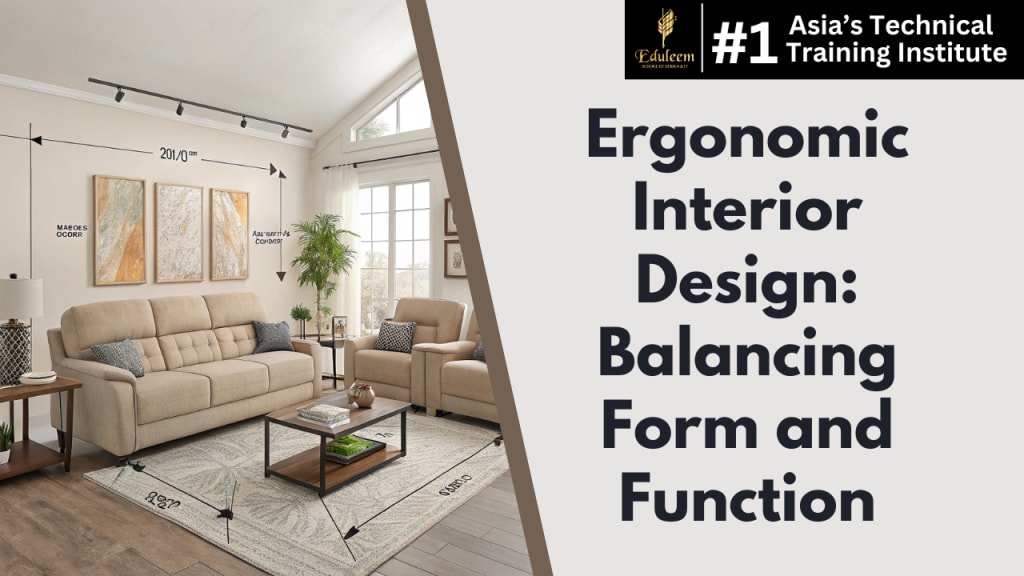
Maya’s Discovery: When Design Meets Daily Life
Maya, a spirited 21-year-old from Bangalore, always had an eye for beautiful spaces. Her childhood was filled with sketchbooks and mood boards. But it wasn’t until she enrolled in a 1-year interior design course in Bangalore that she truly grasped how interior design was more than just colors and aesthetics.
One day, during a class on design principles and applications, the instructor asked, “Can you define comfort?”
Most students answered with things like "soft cushions" or "natural lighting." But Maya soon realized that real comfort is grounded in science, measurements, and empathy—it’s about anthropometry and ergonomics.
What Is Anthropometry in Interior Design?
Anthropometry is the scientific study of human body dimensions. In interior design, it helps designers understand how spaces and furniture should be tailored to real human proportions.
For Maya, this concept unlocked a new way of seeing space. Suddenly, the height of a chair wasn’t just a stylistic choice—it was about reducing knee strain. A countertop wasn't just modern—it needed to be accessible and usable for people of different heights.
- Applications of Anthropometry in Interiors:
- Designing seating furniture to support posture
- Planning kitchen layouts so counters match comfortable working heights
- Creating storage solutions within reach zones
- Ensuring doors and corridors accommodate different body sizes
In her class at the best interior design institute in Bangalore, Maya studied how Indian anthropometric data differed from Western standards. For example, the average elbow height, shoulder width, and seated eye level varied drastically—and this impacted everything from lighting positions to desk designs.
Ergonomics: The Psychology and Physiology of Design
Where anthropometry looks at numbers, ergonomics looks at comfort. It explores how a human interacts with their environment—physically, mentally, and emotionally.
Through her interior design course, Maya learned that ergonomics wasn’t just for offices or workspaces. Every room—from a bathroom to a living room—needed to support human well-being.
Principles of Ergonomics in Interior Design:
- Reduce physical strain with the right furniture proportions
- Improve posture by aligning seating and workspaces
- Facilitate ease of movement across zones
- Support mental clarity with intuitive layouts and less visual clutter
- For one of her assignments, Maya redesigned a cramped studio apartment. She combined anthropometric data and ergonomic principles to:
- Raise the work desk to 73 cm—the ideal for seated comfort
- Use task lighting that aligned with the seated eye level
- Install a modular bed with a backrest angle of 105° for lounging comfort
- Place shelves 150 cm above ground level—within the average shoulder height for reach
The transformation didn’t just make the space look better—it made it live better.
Learning by Doing: The Eduleem Advantage
Maya’s hands-on project was part of her curriculum at Eduleem School of Design – Interior and Fashion. The institute emphasized the integration of human-centric principles into real-life design problems.
Whether you’re opting for a 6 Months Interior Design Course in Bangalore or a full 1-year interior design course, Eduleem ensures that students walk away with more than just technical skills—they understand the human experience behind every design decision.
Why These Principles Matter in Real Life
Here’s what Maya learned about using anthropometry and ergonomics in design:
✨ Better usability: Furniture and spaces made for people’s real dimensions
✨ Healthier living: Designs that reduce physical strain and stress
✨ Inclusive design: Creating environments suitable for children, seniors, and people with disabilities
✨ Improved well-being: Environments that promote comfort and productivity
Today, Maya sees design differently. For her, interiors are no longer just visual—they’re deeply personal experiences. When we understand the people who inhabit a space, we can create rooms that breathe, support, and serve.
Whether you're just starting or looking to upgrade your skills, learning the interior design principles of anthropometry and ergonomics can truly elevate your craft.
Ready to Start Your Journey?
Want to design spaces that feel as good as they look? Explore interior designing courses in Bangalore that go beyond theory. Choose a curriculum that combines aesthetics with usability.
💡 Have you ever noticed how certain spaces just “feel right”? What do you think makes them so? Let us know in the comments!
Eduleem School of Design – Interior and Fashion is recognized among the top interior design institutes in India, offering the most practical, skill-based interior design courses in Bangalore.
About the Creator
Designz_Amaze
Aspiring software engineer with internship experience in development and problem-solving. Passionate about learning new technologies and creating innovative solutions through collaboration and coding.
Keep reading
More stories from Designz_Amaze and writers in Education and other communities.
How Eduleem Interior Design Institute in Bangalore Shapes Careers
Sketching Dreams Into Reality Through Interior Graphics When Maya stepped into the world of interiors, she had no idea how powerful a pencil and a design concept could be. Born and raised in Bangalore, her dreams were vivid — she imagined cozy nooks, vibrant living rooms, and calming workspaces. But before she could bring these visions to life, she needed the skills to communicate them. That’s where her journey with interior graphics began.
By Designz_Amaze9 months ago in Education




Comments
There are no comments for this story
Be the first to respond and start the conversation.