
Decode Excellence Full Stack Developer Roadmap Insight
Full Stack Developer Roadmap

A full stack web developer is an incredibly valuable professional, no matter the era or technological advancements. Even with the rise of AI, their core skills remain irreplaceable.
If you're curious about this field, exploring the Full Stack Developer Roadmap can give you a solid understanding of what full stack development is all about.
In this guide, we’ll break down the key factors you should keep in mind as you prepare to become a full stack web developer. We’ll also share essential insights to help you thrive in this fast-paced and ever-evolving industry.
What is Full Stack Development?
Full Stack Development involves creating both the front-end and back-end of a website or software application. A Full Stack Developer is a skilled professional who can effectively handle both the client-side (what users see) and server-side (behind-the-scenes functionality) of an application.
Their responsibilities span the entire web development process, from designing the user interface to integrating databases. If you're looking to build these skills, a Full Stack Development certification can be a great way to gain the necessary knowledge and expertise.
The role of a Full Stack Developer is quite comprehensive. They take care of everything from planning the user interface to managing databases and servers. Essentially, they ensure the complete development of web platforms, from the initial idea to the final deployment.
However, Full Stack Development isn’t just about technical skills—it also requires certain personality traits. To learn more about what makes a great Full Stack Developer, check out our previous blog on 7 Personality Traits of a Full Stack Developer.
Want to get more insight about on Full Stack Web Developement visit the blog Full Stack Web Developers roadmap and get more information
Key Responsibilities of Full Stack Web Developer:
Collaborate with the design team for the development of a website or application.
Regularly optimizing the software via debugging and testing.
Generating the back end databases and servers.
To generate, test and maintain the responsive application designs.
Optimize the software through advanced technology.
Communicate with clients regarding their requirements and taking regular insights.
1. Choosing a Tech Stack
The tech stack is solely based on what you want to gain from the product, what kind of performance you expect from the web application and what the client wants among other factors. For Full Stack Development, there are some tech stacks for both front end and back end development. Once you go for full stack development certification you will understand what technical practices and knowledge you must have.
2. Backend Technology Roadmap
In the back end development client deals with the server side of the web application. Which elaborates everything that users don’t see from managing the databases and services to testing and debugging, back to end development includes the creating components and structures on the back side of the web application. Here are some of the communal back-end frameworks:
3. Front-end Technology Roadmap
Front end development deals with the overall look and designs of the website. They should need to be familiar with the key front end technologies and framework like following front end languages.
4. Databases
Database is the place where all the data of a project is stored and managed for applications. An in-depth understanding of databases is important for any Full Stack Developer as it is one of the main aspects of web applications development.
For this you must know the working method with databases such as SQL, MySQL and Cassandra. While database management systems like MySQL are best for storing and managing the business related data.
5. Version Control
For application development it’s important to track and manage all the needed changes to the product’s code if you want to become a skilled Full Stack Developer. Every application undergoes multiple revisions before its official launch. In such instances, it is crucial to monitor and record all the modifications made during the revision process. This task is facilitated through the use of version control, a tool that enables precise and timely management of project changes.
Programming can be intricate, and if you find yourself perplexed by your code, employing tools like Git becomes invaluable in tracking code modifications. To excel as a proficient Full Stack developer, mastering Git or other Version Control Systems (VCS) such as GitLab, Bitbucket, etc., is essential.
Detailed Full Stack Developer Roadmap
The high demand for Full Stack Web Developers, evidenced by salary trends and job market growth, reinforces the need for proper education and certification. Embarking on a full-stack development program becomes a strategic step towards success in this dynamic field.
About the Creator
Keep reading
More stories from Robert Hum and writers in Education and other communities.
How to Start Your Career as an Instructional Designer in 2025
In 2025, Starting a career as an Instructional Designer is an exciting journey for anyone passionate about creating engaging learning experiences. This guide outlines the essential steps, from understanding the role of an Instructional Designer to gaining the skills required and navigating the job market. You’ll learn about the importance of instructional design in education, practical tips for getting started, and the value you can bring to learners and organizations.
By Robert Humabout a year ago in Education
5 AI Tools That Can Help You Make Money Online in 2026
5 AI Tools That Can Help You Make Money Online in 2026 Artificial Intelligence is no longer just a futuristic concept. It has quickly become one of the most powerful technologies shaping the modern digital economy. Businesses, creators, and freelancers are now using AI tools to save time, increase productivity, and generate new income streams. Just a few years ago, creating content, designing images, or editing videos required advanced technical skills and expensive software. Today, AI tools allow almost anyone with an internet connection to do these tasks faster and more efficiently. For people looking to earn money online, learning how to use AI tools can be a major advantage. Instead of spending hours on repetitive work, these tools can help you produce professional-level results in minutes. Here are five AI tools that are helping people around the world build online income opportunities. 1. ChatGPT – AI Writing and Content Creation One of the most powerful AI tools available today is ChatGPT. It helps users generate high-quality written content quickly and efficiently. People use ChatGPT for many different online tasks, including writing blog posts, creating social media content, generating marketing copy, and even producing scripts for videos. Freelancers are using it to complete writing projects faster, while bloggers use it to brainstorm ideas and structure their articles. Content creators can also use it to write YouTube scripts, product descriptions, and email newsletters. While AI can assist with writing, successful creators still add their own creativity and editing to make the content unique and engaging. Because online businesses constantly need fresh content, this tool has become extremely valuable for writers and marketers. 2. Midjourney – AI Image Generation Visual content plays a huge role in the digital world. Social media posts, website designs, advertisements, and digital products all rely heavily on high-quality images. Midjourney is an AI image generator that can turn simple text prompts into stunning digital artwork. Designers and entrepreneurs use it to create: Book covers Social media graphics Website images Digital art prints Many creators even sell AI-generated artwork online through digital marketplaces. With the right prompts and creativity, people can build entire design portfolios using AI-generated images. 3. Runway ML – AI Video Creation and Editing Video content continues to dominate the internet. Platforms like YouTube, social media apps, and online courses all rely heavily on video. Runway ML is an AI-powered tool that helps creators generate and edit videos quickly. It allows users to create visual effects, remove backgrounds, and even generate video clips using artificial intelligence. Video editors and content creators use this tool to speed up their workflow and produce high-quality videos without expensive equipment. As the demand for video continues to grow, people who understand AI video tools will have a strong advantage in the online content industry. 4. Canva – AI Design for Everyone Canva has become one of the most popular design tools on the internet, especially for beginners. With its AI-powered features, users can create professional graphics, presentations, posters, and marketing materials with very little design experience. Freelancers often use Canva to provide design services for clients, including social media posts, brand kits, and promotional graphics. Small businesses also rely on Canva to maintain a consistent online presence without hiring expensive designers. Because of its simplicity and versatility, Canva remains one of the easiest tools for beginners who want to start offering digital design services. 5. Pictory – AI Video From Text Pictory is a powerful AI tool that can transform written content into engaging videos. Creators can simply paste an article or script into the platform, and Pictory automatically generates a video using stock footage, captions, and background music. This tool is especially useful for content creators who want to produce videos for YouTube or social media without filming themselves. Many people use Pictory to turn blog posts into videos, create educational content, or produce short clips for social platforms. Because video consumption continues to increase worldwide, tools like Pictory are becoming essential for digital creators. Final Thoughts Artificial Intelligence is changing the way people work online. Instead of replacing human creativity, AI tools are helping people work faster and more efficiently. For beginners who want to earn money online, learning how to use AI tools can open the door to many new opportunities. Writing, designing, video editing, and digital marketing are all becoming easier with the help of technology. The most important step is to start experimenting and learning. Even mastering just one of these tools can create new income possibilities. The future of online work is increasingly connected to AI. Those who learn to use these tools today will likely have a strong advantage in the digital economy of tomorrow.
By Baseer Shaheen 4 days ago in Education
Early March 2026: 4 Goals Accomplished
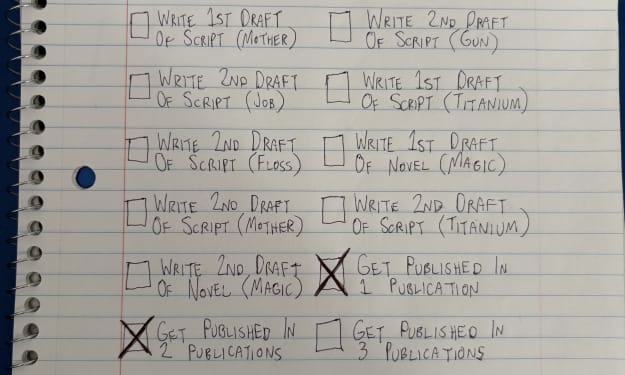
It's early March and I've now accomplished my 4th writing goal for the year of 2026. Before diving into the behind-the-scenes of it... why not tell you up front what that accomplishment was? I was published in a 2nd publication for this year. Published in Helix Literary Magazine out of Central Connecticut State University. You can read it for free right now!
By Stephen Kramer Avitabile4 days ago in Writers



Comments
There are no comments for this story
Be the first to respond and start the conversation.