
Debunking Common Myths About Science: Separating Fact from Fiction
Exploring the Limitations and Misconceptions of the Scientific Method

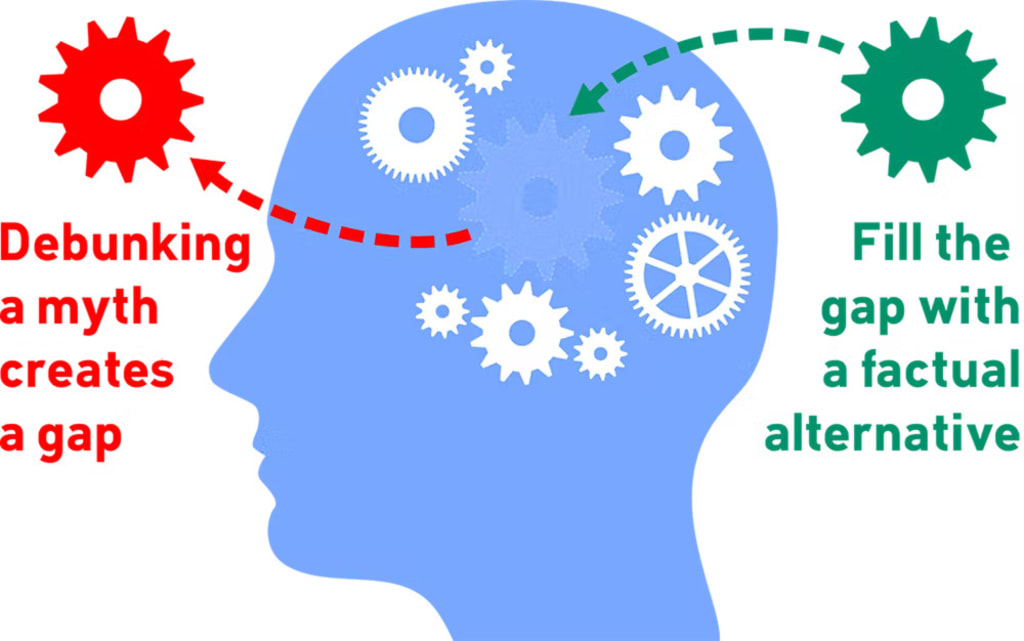
Debunking Common Myths About Science
Myth 1: Science can answer every question
One of the most widespread myths about science is that it can answer every question. Science is a method of understanding the natural world, but it is limited to explaining phenomena that can be observed and tested. Science cannot answer questions about the meaning of life, the existence of a higher power, or subjective experiences.
Myth 2: The scientific method is a rigid, step-by-step process
Another popular myth about science is that it follows a rigid, step-by-step process known as the scientific method. In reality, the scientific method is a flexible framework that scientists use to guide their research. The process can vary from study to study, and scientists may jump back and forth between different steps as they work.
Myth 3: Science is neutral and unbiased
Many people believe that science is neutral and unbiased, but this is simply not true. Scientists, like all people, have personal biases and beliefs that can affect their work. Additionally, scientific research is often funded by corporations or governments with their own interests and agendas, which can influence the results.
Myth 4: Scientific theories are absolute truths
Science is always in a state of flux and theories are constantly being refined and revised. No scientific theory is considered an absolute truth, and all scientific theories are open to revision in light of new evidence. For example, the theory of evolution has evolved and changed over time in response to new discoveries.
Myth 5: Science and religion are incompatible
Another common myth is that science and religion are incompatible and cannot coexist. However, many people find that their scientific and religious beliefs can complement each other. Science can provide explanations for natural phenomena, while religion offers a framework for understanding the meaning and purpose of life.
Myth 6: Scientists are solitary, eccentric geniuses
Another popular stereotype of scientists is that they are solitary, eccentric geniuses who work in isolation. While there have been scientists throughout history who fit this mold, the vast majority of scientists today work in teams, collaborating with colleagues from diverse backgrounds and disciplines.
Myth 7: Science and magic are completely separate
Finally, many people believe that science and magic are completely separate and incompatible realms. However, this is not the case. Science can explain how magic tricks work, but it can also be used to create new forms of magic, such as virtual reality experiences.
Myth 8: Science only deals with hard facts
While science is based on empirical evidence, it is not limited to hard facts. Scientists also study subjective experiences and social phenomena that cannot be directly observed or measured.
Myth 9: Scientific research is always precise and accurate
Science strives for accuracy, but it is not always precise. Results can be influenced by many factors, including measurement errors, random fluctuations, and the limitations of the equipment being used. In addition, scientific models are often simplifications of complex systems, and may not always accurately represent the real world.
Myth 10: Science only deals with natural phenomena
Science is often associated with natural phenomena, but it also plays an important role in understanding human-made systems, such as technology and the economy.
Myth 11: Scientific discoveries are made by individuals working in isolation
Many scientific discoveries are made by individuals working in isolation, but more often, scientific advancements are made through collaboration and the exchange of ideas. Teams of scientists from diverse backgrounds and disciplines often work together to achieve a common goal.
Myth 12: Science only deals with the present and the past
Science is not limited to understanding the present and the past. It also has the potential to shape the future by developing new technologies and helping to solve global problems.
In conclusion, while science is an incredibly powerful tool for understanding the natural world, it is not without its limitations and misconceptions. By being aware of these myths, we can better understand the strengths and limitations of science and appreciate its impact on our lives.
About the Creator
Vignesh S
I am Vignesh from India. My writing style is versatile, ranging from fiction to non-fiction, and from poetry to prose. My goal as a writer is to touch the hearts of my readers and leave a lasting impact through my words.
Designing a Meaningful Future: Strategic Planning for Mission-Focused Entrepreneurs
In today’s evolving business landscape, entrepreneurs are increasingly motivated by more than financial success. Many are building companies around a mission to create social, environmental, or community-driven impact. While passion and vision ignite these ventures, strategic planning transforms purpose into a lasting, scalable business. For mission-focused entrepreneurs, planning is not about restriction but about clarity, alignment, and sustainable growth.
By Mario Payne2 days ago in Education
Why Did Einstein Dislike Quantum Mechanics? The Greatest Scientific Disagreement Ever
Einstein Helped Create Quantum Mechanics It is often forgotten that Einstein was a pioneer of quantum physics. In 1905, Einstein proposed that light comes in discrete packets called photons. This explained the photoelectric effect and earned him the Nobel Prize. His work was one of the pillars of quantum theory.
By shahkar jalal6 days ago in Education


Comments
There are no comments for this story
Be the first to respond and start the conversation.