
Coordinating Conjunctions
Mastering Coordinating Conjunctions: Enhance Your Writing
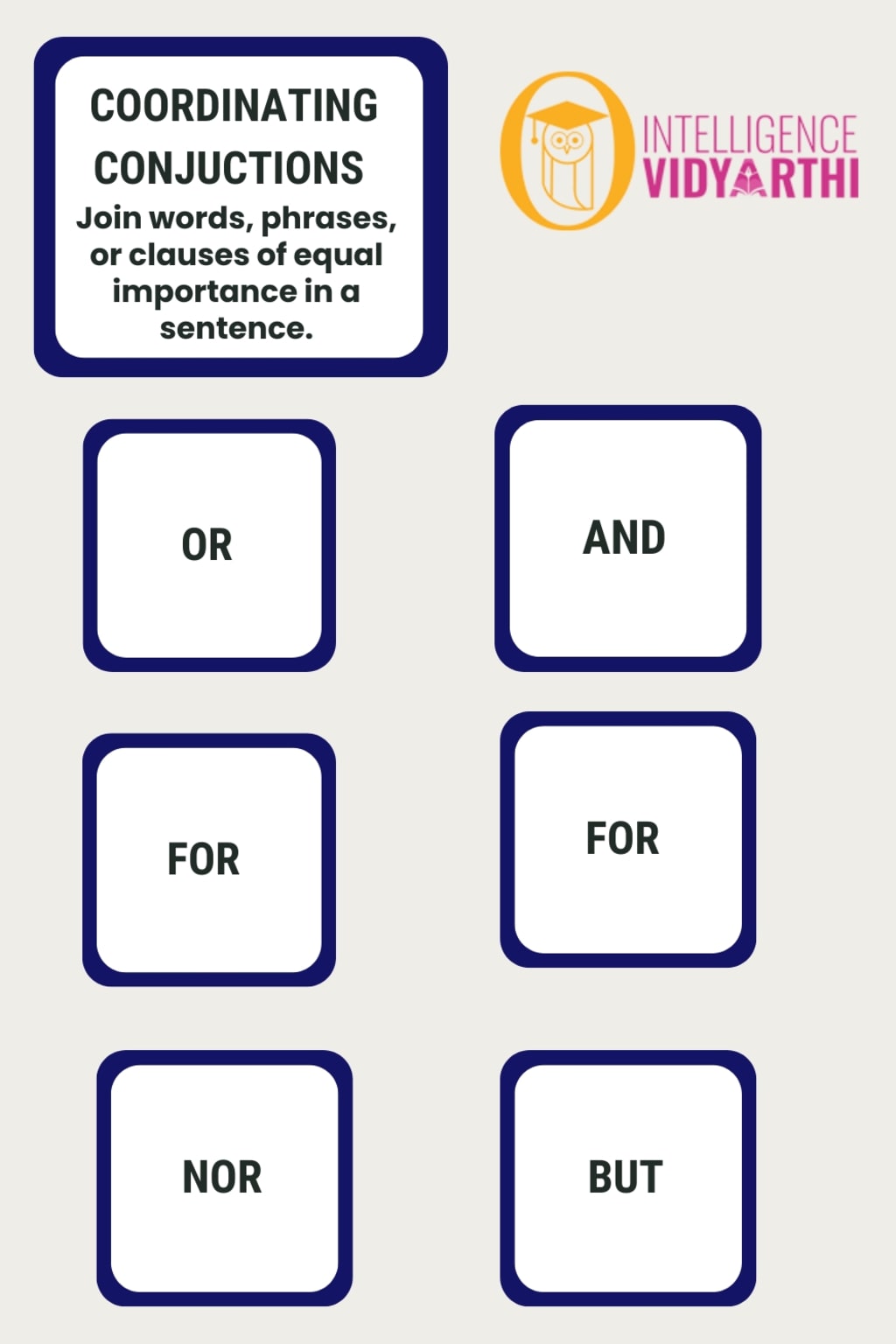
Coordinating conjunctions are the glue that holds sentences together, allowing writers to express ideas clearly and cohesively. Understanding how to use these conjunctions effectively can elevate your writing from ordinary to exceptional. In this blog post, we will explore the various coordinating conjunctions, their functions, and provide tips on how to use them correctly.
What are Coordinating Conjunctions?
Coordinating conjunctions, often remembered by the acronym FANBOYS (for, and, nor, but, or, yet, so), are words used to connect words, phrases, or clauses of equal importance in a sentence. Each conjunction has a specific role in linking elements and shaping the relationships between ideas.
The conjunction "for" is used to explain reasons or purposes. For example: "She studied hard, for she wanted to pass the exam."
"And" is used to add one thought to another or to connect items in a list. For instance: "He likes to swim and to surf."
"Nor" is used to introduce a negative alternative. Example: "He neither sang nor danced."
"But" contrasts ideas or shows exceptions. Example: "She wanted to go for a walk, but it started to rain."
"Or" presents options or alternatives. Example: "Would you like tea or coffee?"
"Yet" contrasts ideas or indicates a surprising result. Example: "She was tired, yet she continued working."
"So" shows a consequence or result. Example: "It was late, so I decided to go to bed."
Using Coordinating Conjunctions Correctly
To effectively use coordinating conjunctions:
Connecting Equal Sentence Elements: Use coordinating conjunctions to join independent clauses (complete sentences) with a comma before the conjunction.
Example: "She likes to read books, and she enjoys writing stories."
Linking Items in a Series: Use coordinating conjunctions to connect items in a list.
Example: "I need to buy bread, milk, and eggs from the store."
Creating Compound Sentences: Combine sentences to create compound sentences for variety and clarity.
Example: "He wanted to go to the concert, but he couldn’t get tickets."
Expressing Contrast or Consequence: Use coordinating conjunctions to show relationships between ideas, whether contrasting or showing a cause-effect relationship.
Example: "She studied hard, yet she didn’t pass the exam."
Common Errors to Avoid
Comma Splices: Incorrectly joining two independent clauses with just a comma and no coordinating conjunction.
Incorrect: "He wanted to go for a walk, it started to rain."
Run-On Sentences: Joining independent clauses without proper punctuation or conjunctions.
Incorrect: "She wanted to go out she couldn’t find her keys."
Final Thoughts
Mastering coordinating conjunctions is essential for clear and effective writing. By understanding their roles and practicing their use, you can enhance the flow and coherence of your sentences. Remember to use them to join equal sentence elements, create compound sentences, and express relationships between ideas. With practice, you’ll be able to wield these simple yet powerful tools to elevate the quality of your writing significantly.
In conclusion, coordinating conjunctions are invaluable for any writer aiming to craft compelling narratives or articulate complex ideas with clarity. Embrace their versatility and watch your writing flourish!
About the Creator
SAKSHEE SHUKLA
https://intelligencevidyarthi.in/course_details?table_manners_&_etiquettes&cm=MTc=
Keep reading
More stories from SAKSHEE SHUKLA and writers in Education and other communities.
Adjectives : Tell us about nouns
Adjectives are the colorful palette of language, enriching our descriptions and painting vivid pictures in our minds. They are the embellishments that transform mundane nouns into vibrant characters, landscapes, and experiences. Whether it's the blazing sun, a serene lake, or a mischievous child, adjectives infuse these nouns with personality, emotion, and context.
By SAKSHEE SHUKLA2 years ago in Education
Mastering X-Bar Theory in Grammar in 10 Minutes
Grammar can often feel like a maze of confusing rules, especially when we dive into syntax — the study of sentence structure. One of the foundational tools in modern linguistics is X-Bar Theory, a framework that helps explain how words and phrases combine to form sentences. While it might sound intimidating, understanding X-Bar Theory can become straightforward if approached step by step.
By Games Mode Ona day ago in Education

Comments
There are no comments for this story
Be the first to respond and start the conversation.