
Constantino Giuseppe Beschi
Exploring the life, contributions, and legacy of Constantino Giuseppe Beschi, also known as Veeramamunivar, who was an Italian Jesuit missionary and Tamil literary figure in India during the 18th century.

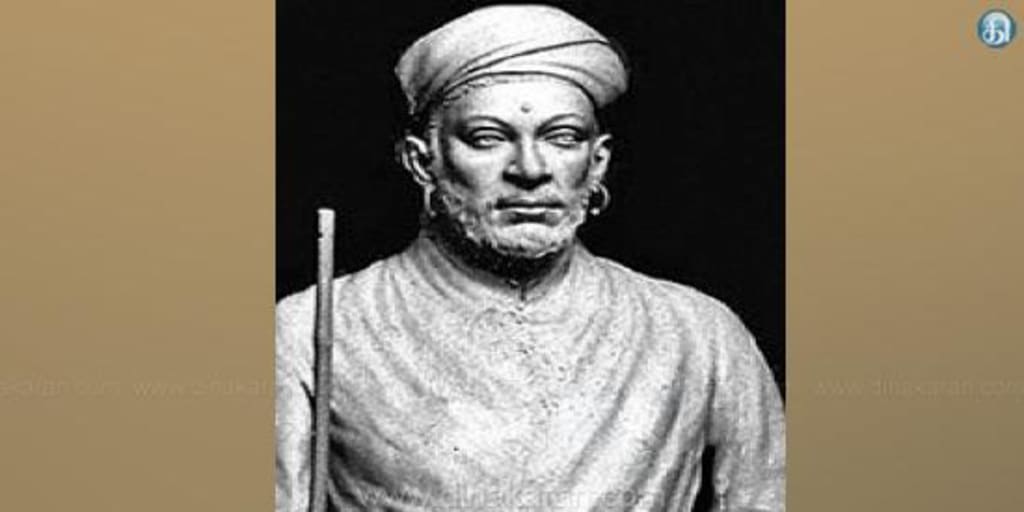
Constantino Giuseppe Beschi (1680-1742), also known as Veeramamunivar, was an Italian Jesuit missionary who lived and worked in India. He is best known for his contributions to Tamil literature and for his efforts to bridge the cultural gap between European missionaries and the Tamil people.
Beschi arrived in India in 1710 and was initially stationed in Madurai, a city in the southern Indian state of Tamil Nadu. He began studying the Tamil language and literature, and eventually became a master of the language. He also immersed himself in Tamil culture, and wrote several books in Tamil that are still revered today for their literary and cultural significance.
Beschi's most famous work is the Tamil epic poem "Tembavani", which he wrote under the pseudonym "Veeramamunivar". The poem is an adaptation of the Sanskrit epic Ramayana, but with significant changes to the plot and characters to reflect Tamil culture and values. "Tembavani" is considered a masterpiece of Tamil literature and is still read and recited today.
Beschi also wrote several other works in Tamil, including religious texts, grammars, and dictionaries. He was instrumental in introducing European concepts and ideas to Tamil speakers, and in making Tamil literature accessible to European scholars.
Beschi's legacy in India is complex, as he was both revered for his contributions to Tamil literature and criticized for his role as a European missionary. However, his impact on Tamil culture and literature is undeniable, and he remains an important figure in the history of Tamil Nadu.
In addition to his literary contributions, Beschi was also involved in various social and cultural initiatives in Tamil Nadu. He established schools and orphanages, and worked to improve the lives of the marginalized communities in the region.
Beschi's approach to missionary work was unique for his time. Rather than imposing European culture and values on the Tamil people, he sought to understand and appreciate their culture, and to adapt his message to their context. He believed that Christianity could be expressed in a way that was compatible with Tamil culture, and that this would lead to a more successful and meaningful evangelization.
Beschi's ideas were controversial among some of his fellow missionaries, who believed in a more rigid and dogmatic approach to conversion. Nevertheless, Beschi's approach proved to be effective, and he was able to win the respect and admiration of many Tamil people.
Beschi's contributions to Tamil culture and literature were recognized even during his lifetime. He was honored by the Tamil king Vijaya Ranga Chokkanatha, who granted him the title "Veeramamunivar" in recognition of his literary achievements. Today, Beschi is remembered as one of the most important figures in the history of Tamil Nadu, and his works continue to be read and studied by scholars and enthusiasts around the world.
Beschi's influence on Tamil literature extended beyond his own writings. He also inspired and mentored a new generation of Tamil writers, who were encouraged by his example to express their own ideas and perspectives in the Tamil language. Some of these writers went on to become influential figures in their own right, and helped to shape the direction of Tamil literature in the centuries that followed.
Beschi's approach to missionary work also had a lasting impact on the way that Christianity was received and practiced in Tamil Nadu. His emphasis on contextualization and adaptation helped to make Christianity more accessible and relevant to the Tamil people, and paved the way for a more indigenous expression of the faith. Today, Christianity is an important part of Tamil Nadu's religious landscape, and many Tamil Christians continue to draw inspiration from Beschi's ideas and example.
Despite his many achievements, Beschi's life was not without its challenges. He faced opposition and criticism from some quarters, both for his literary innovations and for his unconventional approach to missionary work. He also struggled with health issues throughout his life, and was forced to leave India for a time in order to seek medical treatment in Europe.
Nevertheless, Beschi persevered, and his legacy remains an important part of the cultural and literary heritage of Tamil Nadu. His contributions to Tamil literature, as well as his pioneering approach to missionary work, continue to inspire and inform scholars, writers, and religious leaders around the world.
About the Creator
The Human Guide Behind Technical Excellence
Mentorship of skilled technicians plays a decisive role in shaping strong careers and reliable work standards. Technical skill alone does not make a technician capable. Real growth comes from shared experience, steady guidance, and trust built over time. In many industries, mentorship fills the gap between classroom learning and real job demands. It helps technicians move from basic ability to confident performance. This article explores how mentorship supports learning, builds skills, and strengthens the future workforce.
By Michael Gastinel5 days ago in Education
Pioneering Therapies for Untreated Diseases
Medical science has made incredible progress in treating many illnesses. Yet, some diseases remain resistant to conventional therapy. These untreated diseases affect millions of people worldwide, causing long-term disability or shortened lifespans. Pioneering therapies for untreated diseases aim to fill this gap, offering hope where traditional treatments have failed. Scientists, clinicians, and biotech companies are working together to create therapies that are both innovative and effective.
By Dr. Janet Chollet6 days ago in Education
Smart phones, Humans and Aliens.
WARNING. I will be tapping into one of your favorite creative tensions: The absurdity of humans worshipping their glowing rectangles as if they were tiny oracles. There’s something deliciously poetic about that contradiction, and it lends itself beautifully to an instructive proviso.
By Novel Allen4 days ago in Poets


Comments
There are no comments for this story
Be the first to respond and start the conversation.