

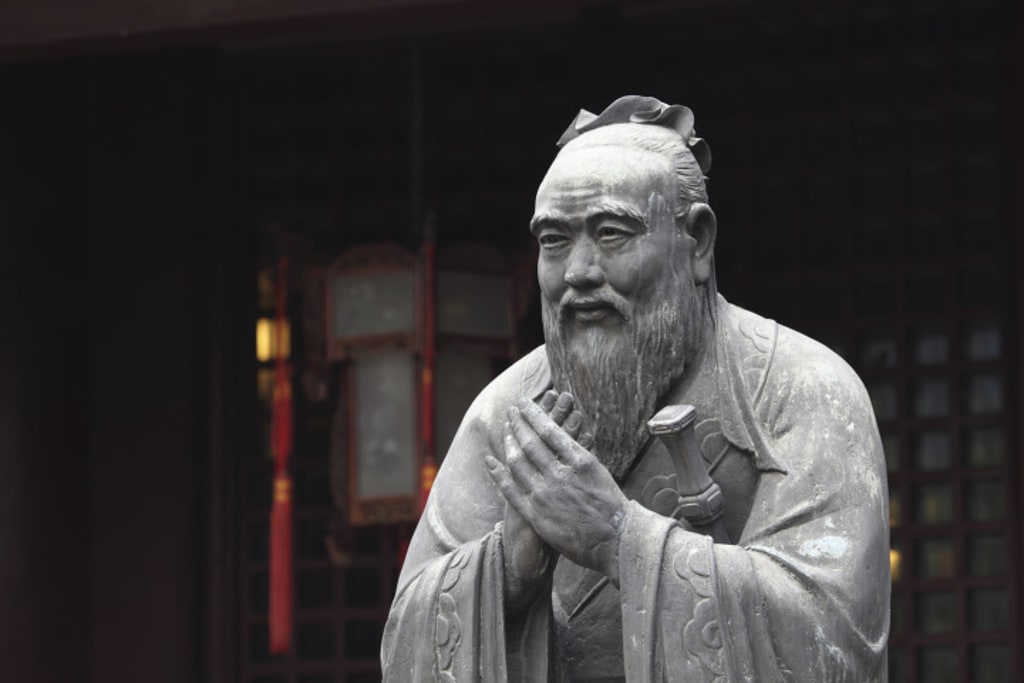
Confucius' Teaching: The Joy of Learning and Practicing
Why do we learn and then practice what we've learned? The ancient Chinese text, the "Analects" by Confucius, gives us an answer in its first chapter, "Xue Er." One famous saying is "Xue Er Shi Xi Zhi, Bu Yi Yue Hu?" which means "Is it not a pleasure, having learned something, to try it out at due intervals?" This quote emphasizes the joy that comes from learning and practicing.
The Joy of Learning, According to Confucius
Confucius believed that just reading books and gaining knowledge is not enough. The important part is to repeat and practice what we have learned. Through this process, we can understand deeply and make the knowledge truly our own. For example, learning to cook a new dish is one thing, but making it several times and getting better at it each time brings great joy and satisfaction. This repeated practice transforms raw knowledge into skill and confidence, making the learning experience truly enjoyable.
Lifelong Learning in Modern Society
Today, lifelong learning is more important than ever. In a rapidly changing world, we must constantly learn new things and adapt. Confucius' idea of "Xue Er Shi Xi Zhi" still holds true in modern times. Learning new skills, updating our knowledge, and improving ourselves makes our lives richer and more fulfilling. Whether it's learning a new language, mastering a new technology, or acquiring new professional skills, the ongoing pursuit of knowledge helps us stay relevant and engaged in an ever-evolving world.
Learning in Schools
For students and teachers, "Xue Er Shi Xi Zhi" offers valuable lessons. Students should not only study for exams but also apply what they learn and practice it repeatedly to deepen their understanding. This approach helps students develop critical thinking skills and a deeper appreciation for the subjects they study. Teachers should help students find joy in learning and encourage them to develop a passion for gaining knowledge. This way, learning becomes an enjoyable experience rather than a boring task. When students see the practical applications of what they learn and experience the satisfaction of mastering new skills, their motivation to learn increases.
Confucius' Wisdom, Still Relevant Today
Confucius' teaching is not just ancient wisdom; it remains relevant today. "Is it not a pleasure, having learned something, to try it out at due intervals?" shows us why and how we should learn. This approach is key not only to personal growth but also to the development of society. Continuous learning and practice lead to innovation and progress, driving societal advancement. Confucius' wisdom continues to offer us valuable insights and makes our lives more meaningful. His teachings remind us that the process of learning is a lifelong journey, filled with opportunities for joy and fulfillment.
The Enduring Impact of Confucius' Teaching
In the end, Confucius' idea of the joy of learning and practicing goes beyond mere knowledge acquisition. It brings vitality to our lives and drives our growth. This concept encourages us to be curious, to explore, and to embrace the challenges that come with learning something new. By keeping this teaching in mind and continuously learning and practicing, our lives become richer and more enjoyable. We find satisfaction not just in the outcome, but in the process itself. This continual growth helps us adapt to new circumstances, solve problems creatively, and build resilience.
The joy derived from learning and applying knowledge not only enhances our personal lives but also contributes to a more educated and enlightened society. As individuals grow and develop, they bring new ideas and perspectives to their communities. This collective growth fosters innovation and improvement in various fields, from technology to the arts, and from education to healthcare. Furthermore, a society that values learning and practice is one that nurtures critical thinking, empathy, and collaboration. These qualities are essential for addressing the complex challenges of our time, such as climate change, social inequality, and global health issues.
In essence, Confucius' teachings remind us that education is not just about personal achievement, but about contributing to the greater good. When we embrace the joy of learning and practicing, we inspire others to do the same, creating a ripple effect that can transform entire communities. We build a culture that celebrates curiosity, values continuous improvement, and recognizes the profound impact of knowledge on our lives and the world around us.
By integrating Confucius' wisdom into our daily lives, we create a foundation for lifelong learning and personal fulfillment. We become more adaptable, innovative, and compassionate individuals, better equipped to face the future. And as we grow, so too does the world we inhabit, becoming a more informed, connected, and enlightened place for all. This enduring legacy of Confucius' teaching is a testament to the timeless power of learning and the infinite possibilities it brings.
About the Creator
Purpose Driven Event Lighting Design That Unites Style, Comfort, and Safety
Event lighting design plays a decisive role in how people experience an event. It shapes the mood, guides movement, and supports safety at every step. When lighting is planned with purpose, it does more than look attractive. It creates a space where guests feel relaxed, confident, and protected.
By Brian Casellaa day ago in Education
The Day Learning Spoke Back
The classroom had learned to be silent long before the students did. Its walls were pale, almost apologetic, as if they knew they were holding more than chalk dust and old posters. They held unfinished thoughts. Forgotten questions. The kind of curiosity that once burned brightly and then learned, slowly, to dim itself.
By Jhon smith6 days ago in Education


Comments (1)
Great, I liked your work.