
Comprehensive Guide to MEP Engineering
Driving Building Performance through Mechanical, Electrical, and Plumbing Integration


What is MEP Engineering?
MEP Engineering stands for Mechanical, Electrical, and Plumbing Engineering. It encompasses the critical technical disciplines that make buildings safe, functional, and energy-efficient. MEP engineers are responsible for designing and managing the systems that provide air conditioning, lighting, power, water supply, and sanitation—essential components that allow people to live and work comfortably in modern structures.
Historical Evolution of MEP in Construction
Initially, MEP systems were rudimentary, with heating provided by fireplaces and plumbing limited to gravity-fed systems. However, as building codes evolved and cities grew more complex, MEP engineering became a distinct and essential discipline. Innovations like central HVAC systems, LED lighting, and water-saving fixtures have since transformed MEP from background infrastructure to a cornerstone of smart, sustainable buildings.
Key Disciplines: Mechanical, Electrical, Plumbing Explained
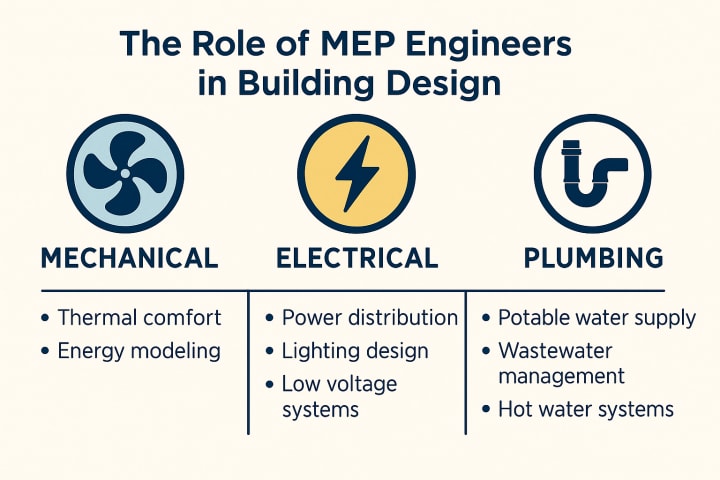
Mechanical Engineering: Focuses on HVAC systems, ensuring thermal comfort, indoor air quality, and energy efficiency.
Electrical Engineering: Covers power supply, lighting, and low-voltage systems like fire alarms and security.
Plumbing Engineering: Manages potable water delivery, drainage, and stormwater systems with sustainability in mind.
Importance of MEP Engineering in Building Design
Lifecycle Role from Design to Operations
MEP engineering plays a role across a building’s entire lifecycle—from concept and design through construction and post-occupancy maintenance. Early MEP involvement allows for accurate system sizing, energy modeling, and seamless integration with architectural and structural plans.
MEP in Smart and Sustainable Buildings
In modern construction, buildings are no longer passive enclosures—they’re dynamic, responsive environments. MEP systems form the backbone of smart building technologies, enabling real-time energy monitoring, predictive maintenance, and enhanced occupant comfort.
Mechanical Engineering in MEP
HVAC Design and Indoor Air Quality
A major responsibility of MEP mechanical engineers is creating HVAC systems that provide thermal comfort and clean air. This includes:
- Proper ventilation to control humidity and pollutants.
- Zoning to ensure optimal temperature distribution.
- Heat recovery systems for energy efficiency.
Energy Efficiency and Load Analysis
Engineers conduct energy modeling to predict heating and cooling loads. This ensures that systems are neither undersized (leading to discomfort) nor oversized (causing energy waste). Tools like ASHRAE standards and IECC codes are used for compliance and optimization.
Mechanical Codes and Compliance Standards
MEP engineers must align with national and international codes including:
- ASHRAE 90.1 for energy performance
- IECC for energy conservation
- Local mechanical and building codes
Electrical Engineering in MEP
Power Distribution Systems
Electrical engineers design systems that safely distribute power across a building. Key elements include:
- Main panels and subpanels
- Emergency power systems (generators, UPS)
- Circuit protection and fault isolation
Lighting Design and Control Strategies
Effective lighting design goes beyond aesthetics. MEP engineers plan for:
- Daylighting strategies to reduce energy use
- Motion sensors and dimmers for energy conservation
- Code compliance with IES standards
Low Voltage and Smart Building Systems
Modern buildings rely on low-voltage systems for safety and control, including:
- Fire alarm systems
- Security cameras and access control
- Structured cabling for IT and BMS integration
Plumbing Engineering in MEP
Water Supply and Drainage Design
MEP plumbing engineers ensure reliable, code-compliant systems for:
- Cold and hot water distribution
- Drainage, venting, and waste removal
- Backflow prevention devices
Stormwater and Wastewater Management
Proper drainage design is vital to avoid flooding and contamination. Engineers plan for:
- Stormwater retention and filtration systems
- Greywater and blackwater segregation
- Sustainable site drainage plans
Water Efficiency and LEED Integration
Low-flow fixtures, water reuse systems, and leak detection technologies help MEP systems support LEED certifications and green building practices.
The Role of BIM in MEP Coordination
Clash Detection and Conflict Resolution
Building Information Modeling (BIM) helps identify spatial conflicts between MEP systems and architectural or structural elements. This avoids costly rework.
3D Visualization and Documentation
Using platforms like Revit and Navisworks, MEP engineers can:
- Visualize duct and pipe routing in 3D
- Generate coordinated shop drawings
- Facilitate prefabrication and modular construction
Benefits of Hiring a Professional MEP Engineering Firm
Energy Optimization and Cost Savings
Professional MEP design ensures systems are right-sized and energy-efficient, reducing long-term operational costs.
Code Compliance and Risk Reduction
MEP firms stay updated with the latest IBC, NFPA, and local building codes, minimizing legal and safety risks.
Value Engineering for Smarter Builds
Value engineering identifies cost-saving alternatives without compromising quality, leading to smarter, more efficient structures.
Technology Trends in MEP Engineering
IoT and Building Automation
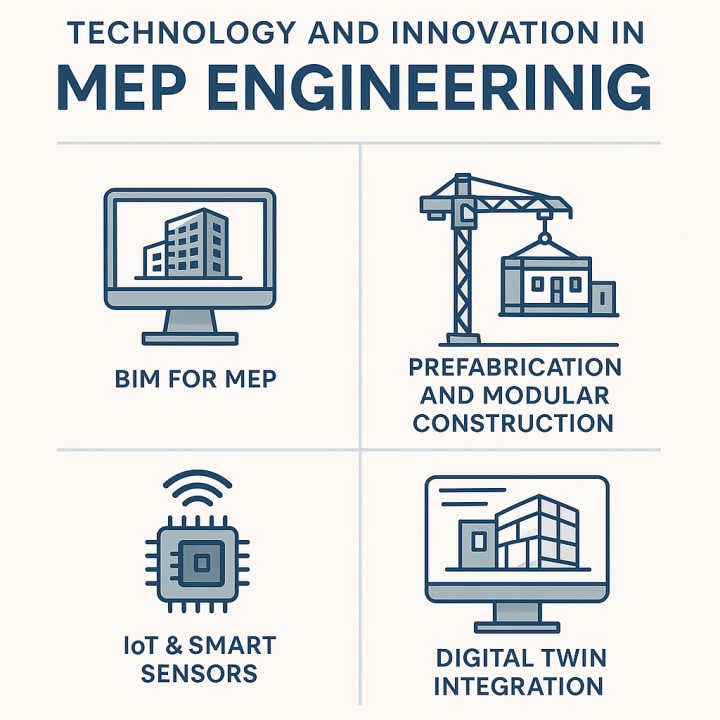
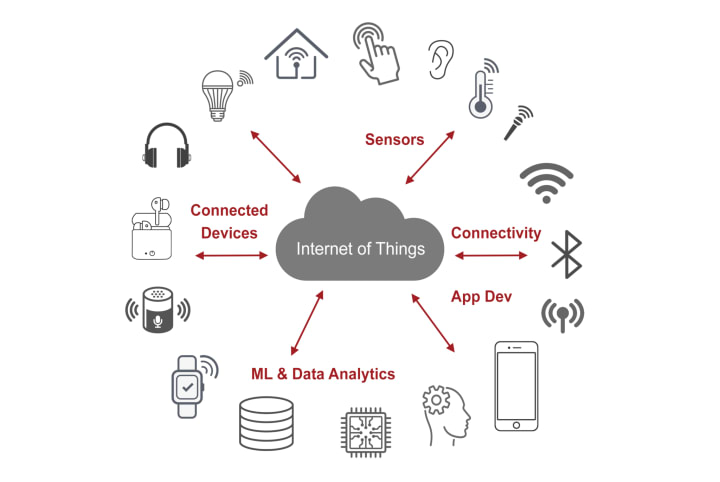
IoT-connected devices allow remote system control and predictive maintenance through smart thermostats, sensors, and real-time dashboards.
Prefabrication and Modular MEP
Off-site construction of MEP assemblies reduces waste, accelerates timelines, and improves safety.
Digital Twin Technology for Performance Monitoring
Digital twins replicate building systems digitally, allowing engineers to track performance, optimize energy use, and plan upgrades.
How MEP Engineering Supports Building Sustainability
Passive and Active Energy Strategies
From solar thermal heating to natural ventilation, MEP engineers design systems that reduce reliance on fossil fuels.
Water Conservation and Green Certifications
MEP supports WELL, LEED, and Energy Star standards by incorporating:
- Low-flow plumbing
- Rainwater harvesting
- High-efficiency HVAC
Applications of MEP Engineering Across Industries
Healthcare, Education, and Commercial Projects
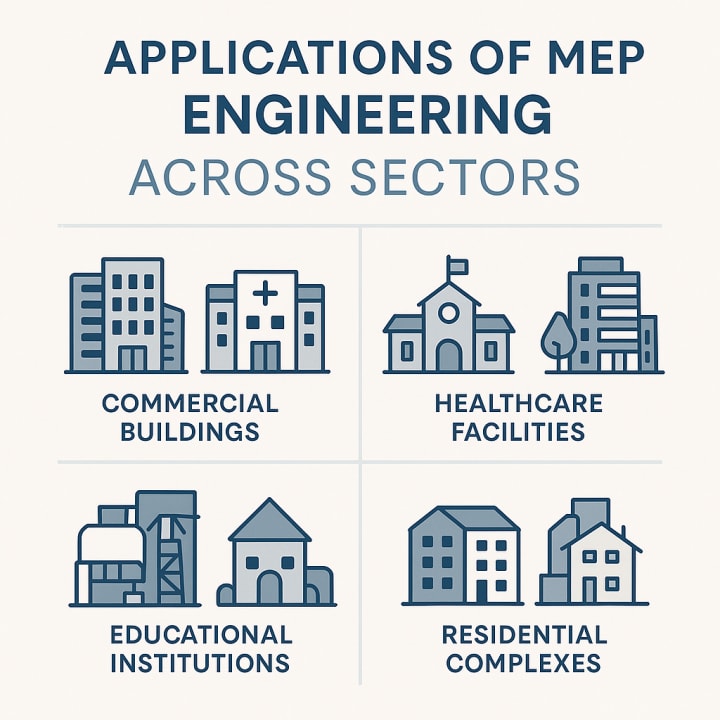
Each sector has unique needs:
- Hospitals need negative pressure rooms and medical gas systems.
- Schools require robust ventilation and fire safety.
- Commercial buildings benefit from open-plan flexible lighting and BMS.
Residential and Industrial MEP Solutions
From apartment plumbing stacks to industrial ventilation in factories, MEP design is tailored for safety, durability, and compliance.
Selecting the Right MEP Engineering Partner
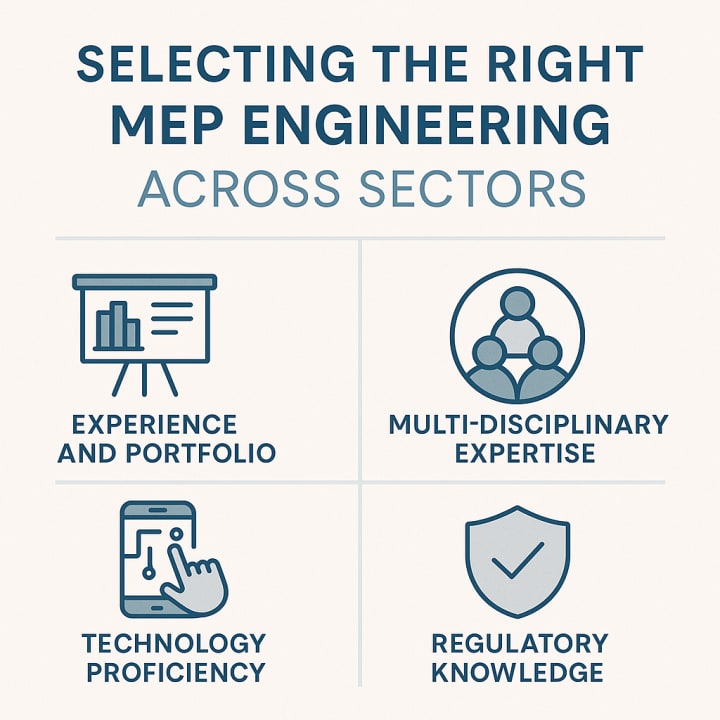
Checklist for Evaluating MEP Firms
- Proven track record
- BIM and software proficiency
- In-house multidisciplinary teams
Questions to Ask During Selection
- How do you ensure code compliance?
- What sustainability benchmarks do you follow?
- How do you handle project coordination and revisions?
FAQs about MEP Engineering Services
- What does an MEP engineer do?
An MEP engineer designs and manages mechanical, electrical, and plumbing systems that ensure building functionality, safety, and comfort.
- How does MEP differ from architectural design?
Architecture focuses on aesthetics and space planning; MEP ensures the systems within the building work effectively.
- Is BIM necessary for MEP coordination?
Yes, BIM helps detect clashes, improve collaboration, and speed up construction through 3D modeling.
- How do MEP services contribute to energy efficiency?
By designing efficient HVAC, lighting, and water systems, MEP services significantly reduce energy and utility usage.
- Are MEP services required for small projects?
Yes, even small projects benefit from MEP input for safety, efficiency, and code compliance.
- What certifications should a good MEP firm have?
Certifications may include LEED AP, PE (Professional Engineer), and familiarity with ASHRAE, NEC, and NFPA standards.
Conclusion: The Future of MEP Engineering
MEP Engineering is more than infrastructure—it is a strategic enabler of building performance, occupant wellness, and sustainability. As buildings grow smarter and greener, the demand for expert MEP services will only increase.
Investing in the right MEP partner ensures buildings are not only functional and safe, but also future-ready and environmentally responsible.
About the Creator
Shraddha Rathore
As an SEO specialist dedicated to creating informative content for audiences. I primarily focus on topics related to AEC, BIM, 3D LiDAR, software development, health, and gaming, ensuring valuable knowledge-sharing and industry insights.
Keep reading
More stories from Shraddha Rathore and writers in Education and other communities.
How LiDAR Technology is Enhancing Earthquake Damage Assessment
In the critical 72 hours after an earthquake, timely and accurate damage assessment can save lives. Traditional methods often cause delays, but LiDAR technology is helping responders see the unseen, enabling faster, safer decisions when every moment matters.
By Shraddha Rathore 11 months ago in Education
7 AI Tools That Can Replace Hours of Work in 2026 (And Help You Make Money Online)
Artificial intelligence is no longer just a futuristic idea—it’s quickly becoming one of the most powerful tools for productivity and online income. In 2026, AI tools are transforming how people work, create content, start businesses, and automate daily tasks.
By Majus Jasulaitis4 days ago in Education
Distracted Thoughts
I go for a swim every Sunday morning. I’m not sure why I started there. Probably because that’s where I started thinking about writing this. But that being the case I could quite easily have started when I was looking at the hot honey Jaffa Cakes in Tesco that I hadn’t gone in to buy but had caught my eye en route to the eggs. I slipped towards it then. I suppose I could start from the drive to the massive antique shop or a couple of times when I was in there too, the idea drifted in and out like a desperate jellyfish trying hard not to get stuck on the shore. It has some sense of shape but little direction and every chance of being pecked to bits by angry seagulls. Now I’ll go back to the swimming pool, that is a useful place to start.
By Simon Curtis3 days ago in Education


Comments (1)
Thanks for sharing valuable content on MEP Engineering