
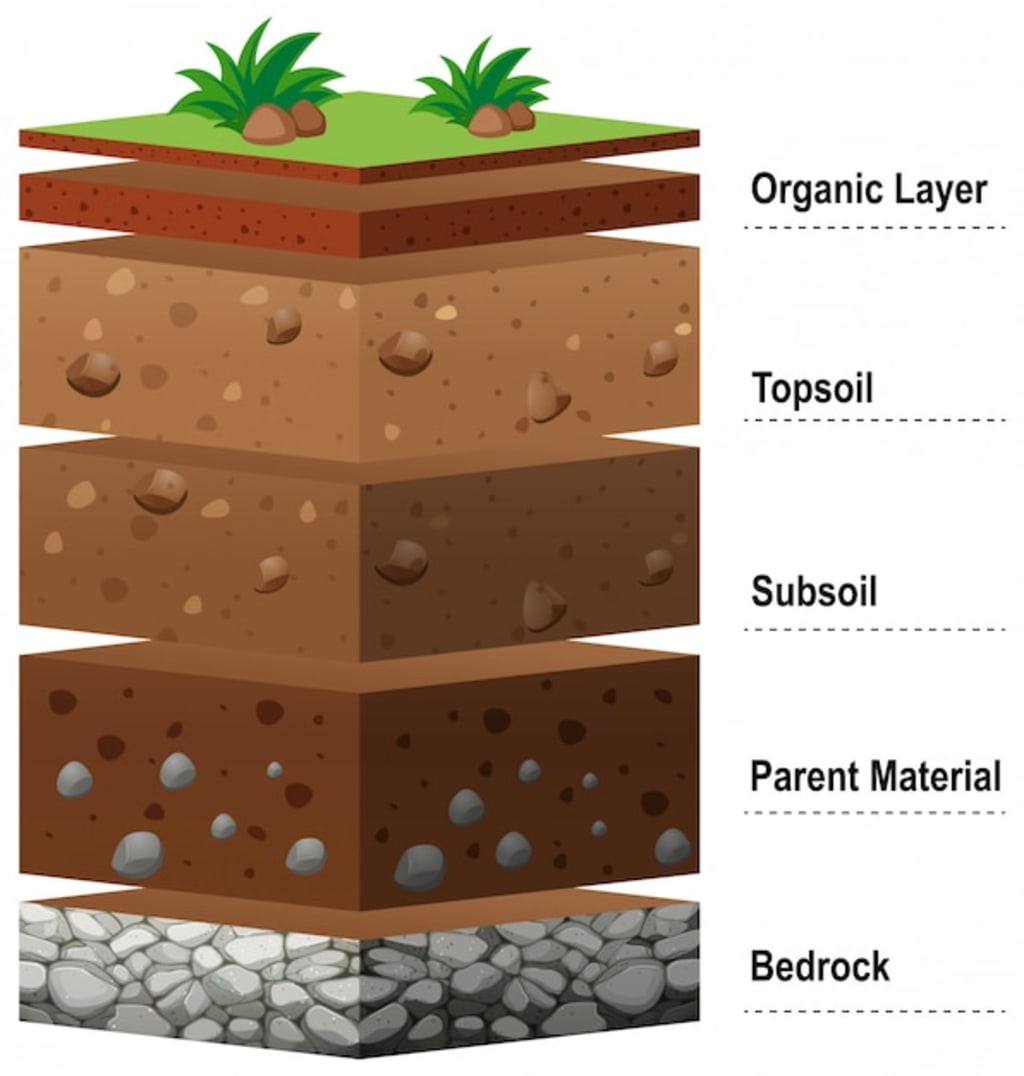
The lowest part of a building or civil engineering structure is called the foundation. This should be constructed very carefully. By this means the whole weight of the construction is distributed to the ground and the nature of the construction. There are many types of foundations that are used depending on the weight and nature of the soil and also according to the climatic conditions and environment. This chapter deals with these types of foundations.
INTRODUCTION
This is the lowest part of a building, and it is called the bottom of the main and all other parts of the building. The part below the damp proof ridge or the part below the ground level is taken as foundations. Foundations distribute the weight of the building to the ground. Provision for other parts of the building to be weakened It can be easily remedied, but if the foundations are weak, there are less facilities to remediate it.
The purpose of applying a foundation.
The distribution of the weight of all parts above the foundation of the building to the ground provided by the foundation can be called the work done by the foundation.
Distribution of the weight of all parts of the building on its greater specific force in the ground.
Distribute the weight of the building evenly on the ground.
Obtaining an exact horizontal level or several horizontal levels for construction.
The stability of the building because the foundation of the building starts from a certain depth in the earth.
SITE EXPLORATION
Check the condition of the work and its soil as follows.
Then find the safe bearing strength value.
Determining a safe and profitable type of foundation.
Determining how deep the foundations should be laid.
Determination of underground water level and hence solutions to problems arising in foundation and foundation construction.
If there are weaknesses in the sub-soil layers, remedial measures are taken at the time of construction. The weight of the building is mainly divided into three parts.
1.LIVE LOAD: The weight of the people living in the building, the weight of the belongings, the weight of the stored materials and the weight of the installed machines etc.
2.DEAD LOAD: total weight of all the materials that make up the building.
3.WIND LOAD: The weight of the building increases due to the thrust exerted by the wind on the building. This weight also affects the foundation. The burden caused by this is taken under this. Apart from this, forces are created on the foundation of the building by factors such as precipitation due to snow deposition.
METHODS OF SITE EXPLORATION
1.Inspection 2. Test pit
3.Probing 4. Boring
1.INSPECTION
Before creating a building or any other civil engineering construction, the inspection of the work site proposed to be constructed is done.Also, more facts can be gathered by examining the plans of the buildings previously constructed near the proposed work site and the tests prepared for it and their most extensive explorations.Ground water level at that time can be found by checking near the work site etc. Inquiries from the neighbors can also provide information on flood levels, soil compaction, nature of ground water level changes, etc.
The following may be included in vision test reports: Whether the proposed working ground is hard-sided, loose-sided, muddy-water or filled-sided. The subsequent behavior depends on changes in the groundwater level, whether the rainwater runs off or remains on the work floor, and there are fewer chemicals that can damage the foundation of the soil. whether contained.
2.TEST PITS
Pits prepared deep enough for a man to descend to examine the profiles and soils of subsoil layers are called test pits.If it has non-collapsing sides, the sides of the pit can be cut vertically and if it is collapsing soil, the sides should be kept inclined. This method is used in cases where shallow foundations with a depth of less than three meters are to be drawn.
3.PROBING
In this method, soil layers are tested in the ground by lowering an iron rod, the diameter of the iron rod should be 25 to 40 mm and the point should be sharp. These sticks can be sunk into the ground by dropping them vertically into the ground.
4.BORING
This is very similar to the above method and the earth is drilled by a special device to get the soil from each level in the earth. Earth drilling is done in a variety of ways with a variety of equipment.
About the Creator
Keep reading
More stories from Sampath Jayasekara and writers in Education and other communities.
Evidence-Based Medicine or Quackery?
Are we practising evidence-based medicine or quackery when dealing with mental illness? On 23 January 2026, the Australian Doctor published the following article online: “A study in quackery—one journal’s entanglement with homeopathy.”
By Mal Mohanlal7 days ago in Education




Comments
There are no comments for this story
Be the first to respond and start the conversation.