
Chest Pain ICD-10 Code R07.9 – Your Complete Guide
Discover everything healthcare professionals need to know about ICD-10 code R07.9

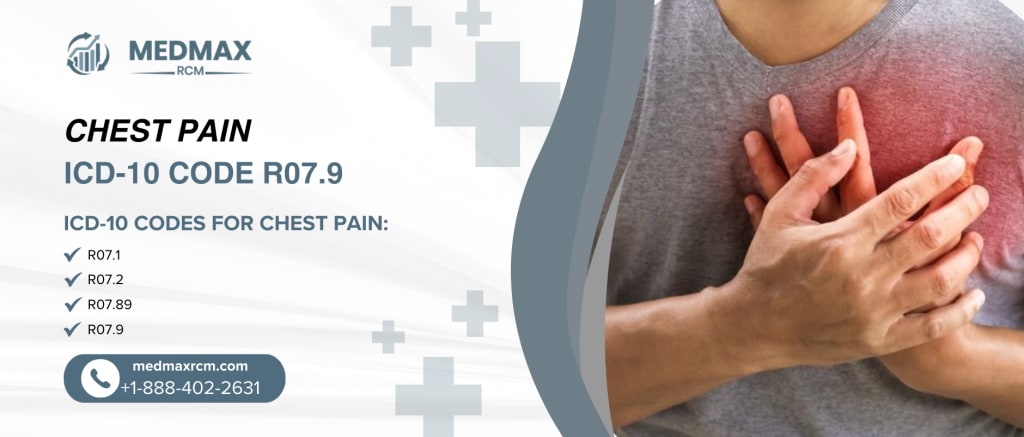
ICD-10 stands for the International Classification of Diseases, 10th Revision. Created by the World Health Organization (WHO), it is the global standard for recording health conditions. Doctors and insurance companies use these specific codes to ensure everyone understands exactly what a patient is experiencing.
Using ICD-10 codes makes medical records more precise than the older ICD-9 system. For healthcare providers, using the right code is essential for accurate billing and making sure insurance claims are processed without delay.
What Exactly Is Chest Pain?
Chest pain is a broad symptom that can feel like anything from a dull ache to a sharp, crushing sensation. It can start suddenly or develop slowly over time. Because the chest houses vital organs like the heart and lungs, any pain in this area is taken very seriously. The pain might stay in the chest or spread to the jaw, neck, back, or arms.
Common Causes of Chest Pain
To treat a patient correctly, doctors must find the root cause. Here are the most common reasons for chest discomfort:
- Heart Issues: Conditions like a heart attack (myocardial infarction) or angina often cause a feeling of crushing pressure.
- Lung Issues: Pneumonia, blood clots (pulmonary embolism), or a collapsed lung can cause sharp pain, usually paired with shortness of breath.
- Digestive Issues: Heartburn (GERD) or acid reflux can cause a burning sensation that mimics heart pain.
- Muscle and Bone Issues: Strained chest muscles or inflamed rib cartilage (costochondritis) can cause soreness.
- Mental Health: Severe anxiety or panic attacks often cause a tight, painful feeling in the chest.
How Doctors Find the Cause
Because chest pain can be life-threatening, doctors use several tests to rule out dangerous conditions:
- ECG (Electrocardiogram): To check the heart's electrical activity.
- Chest X-ray: To look for lung infections or broken ribs.
- Blood Tests: To check for "markers" that indicate heart damage.
- CT Scan: To get a detailed image of the blood vessels and lungs.
Treatment Options
Treatment depends entirely on the cause. Heart issues might require blood thinners or emergency surgery. Lung infections are treated with antibiotics or oxygen. For digestive issues, doctors usually suggest diet changes or antacids, while muscle pain is treated with rest and physical therapy.
The ICD-10 Code: R07.9
The most common code used for chest pain is R07.9. This code represents "Chest pain, unspecified."
When to use it: Doctors use R07.9 when a patient has chest pain, but the exact cause isn't known yet (for example, while waiting for test results).
Billing: R07.9 is a "billable" code. This means it can be used on insurance forms so the doctor can be paid for the visit.
Other Specific Chest Pain Codes
If the doctor does know more details about the pain, they use more specific icd 10 code for chest pain:
- R07.1 : Chest pain on breathing
When it hurts specifically to inhale or exhale.
- R07.2 : Precordial pain
Pain located directly over the heart.
- R07.89 : Other chest pain
For unique types of pain that don't fit other categories.
- R07.9 : Unspecified chest pain
When the cause is still a mystery or being studied.
Key Takeaways for Providers
Accurate coding is about more than just paperwork; it’s about patient safety and clear communication. Using R07.9 provides a temporary diagnosis that keeps the medical process moving. As more information is discovered, providers should update the records with more specific codes to ensure the best care and fastest insurance payments. You may check my previous blog on Leukocytosis ICD-10 for more information about ICD codes.
About the Creator
khabe laim
I'm Khabe Laim, a blog writer covering diverse niches like medical billing, health & tech—crafting SEO-friendly, engaging, and informative content.
Keep reading
More stories from khabe laim and writers in Education and other communities.
Revenue cycle management | Leukocytosis ICD 10
Revenue cycle management (RCM) is the financial process healthcare organizations use to track patient accounts from registration and service delivery to final payment. Its purpose is to maximize reimbursement, streamline administrative tasks, improve efficiency, ensure regulatory compliance, and enhance the patient experience. Key steps include patient scheduling and registration, insurance verification, charge capture, Medical Coding, claims submission, payment processing, and collections.
By khabe laim2 months ago in Education
How Chemical Engineers Can Localize the SDGs for Real-World Impact
The Sustainable Development Goals (SDGs) set by the United Nations offer a universal framework for addressing some of the world’s most pressing challenges, ranging from poverty and hunger to climate action and sustainable cities. While these goals provide a global roadmap, achieving them requires localized solutions that are tailored to the unique needs of different communities, regions, and industries. This is where chemical engineers play a pivotal role. By applying their expertise in chemical processes and technologies, chemical engineers can localize the SDGs and ensure that these goals are brought to life in tangible, real-world applications. This article explores how chemical engineers can bridge the gap between global sustainability goals and local implementation through innovation, collaboration, and sustainable design.
By Kyle Vandermolen5 days ago in Education
The Ritual of Winter Challenge Winners
Welcome to the Winners Announcement for The Ritual of Winter challenge. This prompt focused on winter rituals and the meaning that settles into them over time. The top pieces stay grounded in ordinary acts and repeated routines, letting winter shape the work through pace, attention, and restraint.
By Vocal Curation Team4 days ago in Resources




Comments
There are no comments for this story
Be the first to respond and start the conversation.