
Power from the Deep: Japan’s First Megawatt-Scale Tidal Turbine Makes Waves
Harnessing the Ocean’s Power, Japan Sets a New Milestone in Renewable Energy with the AR1100 Underwater Turbine

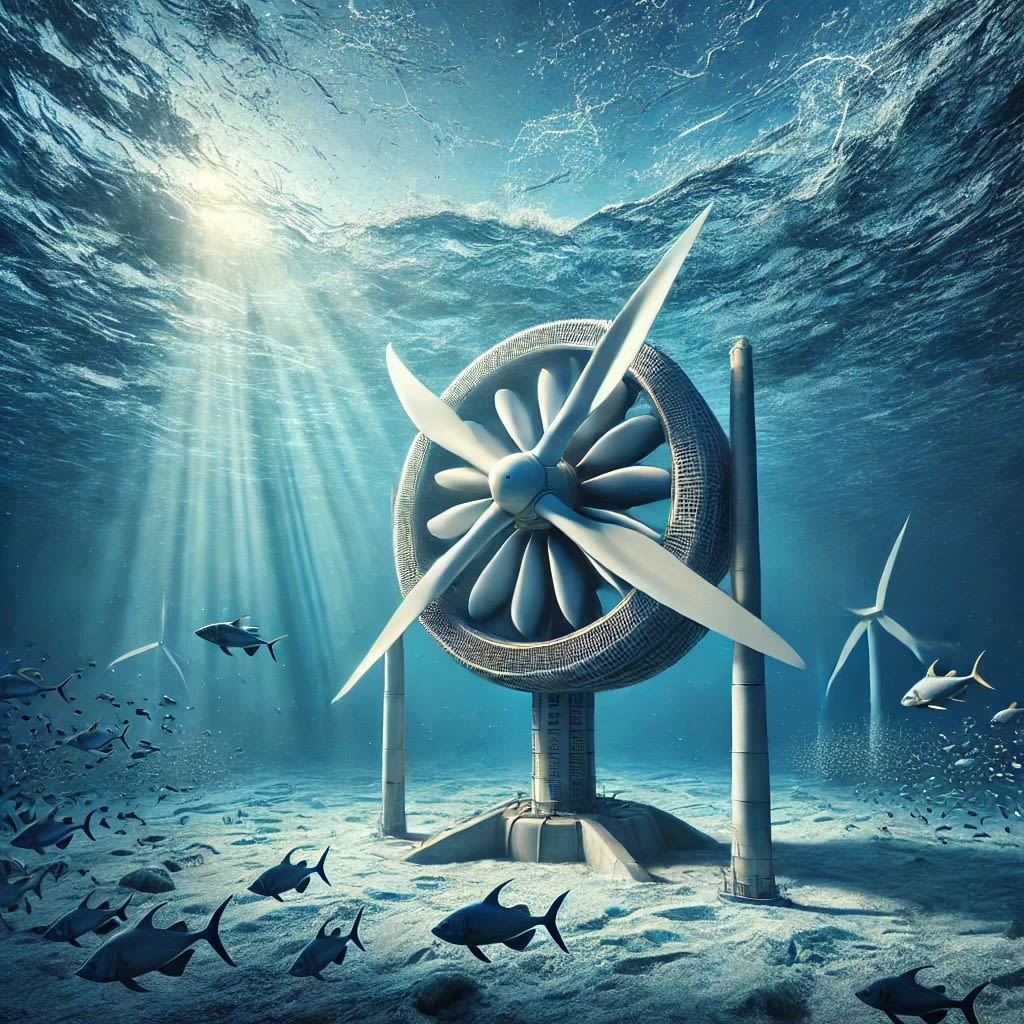
I’ve always been fascinated by the sheer power of the ocean. There’s something humbling about standing at the edge of the sea, watching the waves crash endlessly against the shore. For centuries, we’ve admired the ocean’s strength, but only recently have we begun to seriously tap into it as a source of clean, renewable energy. That’s why Japan’s latest achievement—deploying its first megawatt-scale tidal turbine, the AR1100, in the Naru Strait—feels like such a monumental leap forward.
This isn’t just another renewable energy project. It’s a glimpse into the future, where the ocean itself could power our homes, cities, and industries.
The AR1100: A Marvel of Marine Engineering
The AR1100 is not just any underwater turbine. It represents years of research, innovation, and engineering finesse. Designed to withstand the intense currents of the Naru Strait, the AR1100 is capable of generating over a megawatt of power—a significant milestone for tidal energy projects.
What sets the AR1100 apart is its robust design and efficiency. The turbine is equipped with massive blades that capture the kinetic energy of tidal flows, converting it into electricity through advanced generators. Its design allows it to function optimally even in the challenging underwater environment, resisting corrosion and the immense pressure of the ocean depths.
The placement in the Naru Strait was strategic. Known for its strong tidal currents, the strait offers an ideal environment for generating consistent energy. Unlike solar and wind power, tidal energy is highly predictable, following the natural rhythms of the moon and earth.
Why Tidal Energy Matters
In the global push toward renewable energy, tidal power often flies under the radar, overshadowed by the more common solar and wind solutions. But tidal energy holds immense potential.
Predictability: Unlike solar or wind energy, which can be intermittent, tidal energy follows a predictable pattern based on lunar cycles. This reliability makes it an attractive addition to the renewable energy mix.
Energy Density: Water is around 800 times denser than air, meaning tidal turbines can generate more energy at lower speeds compared to wind turbines.
Minimal Visual Impact: One major advantage of underwater turbines is their low visual impact. Unlike wind farms, which can dominate landscapes, tidal turbines remain hidden beneath the surface, preserving natural vistas.
Japan’s AR1100 marks a crucial step in tapping into this often-overlooked energy source.
Japan’s Push Toward Renewable Energy
Japan has long been a leader in technological innovation, but its path to renewable energy has been shaped by unique challenges. The 2011 Fukushima disaster prompted the country to rethink its energy strategy, leading to a stronger emphasis on renewables. With limited land for large-scale solar or wind farms, Japan has increasingly looked to its oceans for solutions.
The AR1100 project reflects this strategic shift. By harnessing the power of the sea, Japan not only diversifies its energy portfolio but also takes advantage of its vast coastal waters.
The Environmental Impact
One of the most common concerns with large-scale energy projects is their environmental impact. The good news is that tidal energy is generally considered one of the more eco-friendly renewable sources.
Marine Life: Extensive environmental studies were conducted before the AR1100 was deployed. The turbine’s blades rotate slowly enough to minimize the risk to marine life, and its placement avoids key habitats.
Carbon Footprint: Once operational, tidal turbines produce zero emissions, helping reduce reliance on fossil fuels.
Noise Pollution: Underwater turbines generate far less noise pollution compared to above-water wind farms, reducing their impact on both marine life and nearby human populations.
Overcoming the Challenges
Deploying an underwater turbine is no easy feat. The ocean is a harsh environment, and engineering structures that can endure constant water pressure, corrosion, and strong currents is a significant challenge.
For the AR1100, engineers developed advanced materials resistant to saltwater corrosion and designed the blades to maximize energy capture while minimizing wear. Regular maintenance is another hurdle, requiring specialized equipment and skilled divers to service the turbines safely.
Additionally, integrating tidal energy into existing power grids poses challenges. The fluctuating nature of tidal flows requires sophisticated energy storage and grid management systems to ensure consistent electricity supply.
What This Means for the Future
The success of the AR1100 could pave the way for more tidal energy projects, not just in Japan but globally. Coastal nations with strong tidal currents—such as the UK, Canada, and South Korea—are already exploring similar technologies.
Japan’s milestone serves as a proof of concept that megawatt-scale tidal turbines are not just viable but effective. As technology improves and costs decrease, we may see underwater turbines becoming a staple in the renewable energy landscape.
A Glimpse Into a Sustainable Tomorrow
Standing at the edge of the ocean, watching the waves roll in, it’s easy to feel both awed and humbled. For too long, we’ve seen the ocean as a boundary—something that separates us, something to be crossed. But projects like Japan’s AR1100 remind us that the ocean is also a source of life, energy, and, potentially, salvation.
By harnessing the power of the tides, we’re not just generating electricity; we’re building a future where renewable energy can meet the world’s growing demands without sacrificing the planet. It’s a delicate balance, but one worth striving for.
Japan’s first megawatt-scale underwater turbine is more than an engineering feat—it’s a beacon of hope for a cleaner, more sustainable future.
Conclusion
The deployment of the AR1100 tidal turbine in the Naru Strait marks a significant step forward in the quest for sustainable energy. By turning the relentless motion of the ocean into clean electricity, Japan is demonstrating the incredible potential of tidal power.
As we continue to explore innovative ways to meet the world’s energy needs, projects like this remind us of the vast, untapped resources that lie beneath the surface—waiting for us to harness them responsibly. The tides have always been there, constant and powerful. Now, for the first time on this scale in Japan, they’re working for us.
The ocean has always shaped Japan’s history, culture, and economy. Now, it’s helping shape its future.
About the Creator
Aurora Lark
I write at the crossroads of science fields that constantly challenge our perceptions and expand our horizons. I decode the intricate narratives of our modern world, transforming technical details into clear, thought-provoking stories.
Keep reading
More stories from Aurora Lark and writers in Education and other communities.
Breaking News: Google's New Tracking Tool: The End of Digital Privacy?
In an era where data is often touted as the new oil, privacy has become a rare commodity. The latest news from Google has amplified these concerns, sparking debates worldwide. The tech giant recently unveiled a new tool designed to permanently track all connected devices, raising alarms about the future of digital privacy.
By Aurora Larkabout a year ago in Education
Bridging Technical Expertise and Business Strategy in Manufacturing
Manufacturing has always been driven by technical knowledge. Engineers, technicians, and production specialists design processes, maintain equipment, and ensure products meet strict quality standards. At the same time, successful manufacturing companies must also focus on business strategy. Market demand, cost management, supply chain coordination, and competitive positioning all influence long-term success. Bridging technical expertise and business strategy in manufacturing allows organizations to combine operational excellence with strategic growth.
By Ian Schenkel Haliburton7 days ago in Education
Leveraging Prediction Markets to Enhance Strategic Planning
In today’s competitive business environment, making informed strategic decisions is crucial for long-term success. Prediction markets have emerged as a valuable tool for improving strategic planning by aggregating insights from diverse participants. These markets enable organizations to forecast outcomes through collective intelligence, providing a more accurate understanding of potential scenarios. By integrating prediction market data into planning processes, companies can anticipate risks, identify opportunities, and make better-informed decisions that support sustainable growth.
By Anthony Qi6 days ago in Education
The Forsyth House Fire
Since 1851, Forsyth House has stood on the corner of Union Street and Gordon Street in the heart of Glasgow. Its iconic, or was... because on Sunday 8th of March, 2026, a fire broke out in a small, seemingly un-named shop in the building and tore all that history down. As I write, the rubble is still unsettled and the street is still blocked off. Central Station is quiet on the upper level, and around 30 small businesses have quite literally gone up in smoke.
By S. A. Crawford3 days ago in The Swamp


Comments
There are no comments for this story
Be the first to respond and start the conversation.