
Central Bank Digital Currencies (CBDCs): The Future of Payments
Benefits, Risks, and Implications

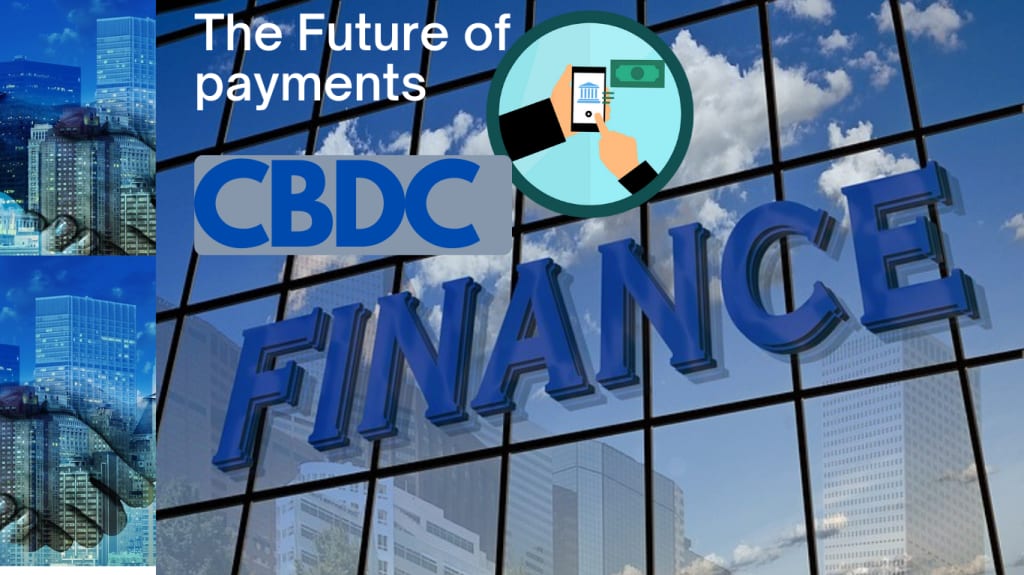
Numerous new trends and technologies are likely to have an impact on how payments are used in the future. Here are some potential examples:
Mobile payments: With the popularity of smartphones and other portable electronics, mobile payments are growing. Paying with credit cards or bank accounts straight from mobile devices is now possible for consumers.
Bitcoin and Ethereum are two examples of cryptocurrencies that are becoming more and more popular as payment methods. Although they are still relatively new and not widely recognized, some experts believe they could eventually replace traditional payment methods.
Biometrics: Biometric payment authentication techniques like fingerprint scanning and facial recognition could become more widely used. This might lessen fraud and increase the security of payments.
Paying with a contactless card or a mobile wallet like Apple Pay or Google Wallet are examples of contactless payments that are already used in many parts of the world. As more retailers use the technology, their popularity is anticipated to increase.
Blockchain technology has the potential to revolutionize payments by enabling safe, immediate transactions without the need for middlemen like banks. Blockchain technology is the decentralized ledger technology that powers cryptocurrencies like Bitcoin.
More convenience, security, and speed will certainly characterize payments in the future. We may anticipate seeing a continual transformation in the way we send and receive money as new technology and breakthroughs appear.
What is CBDC?
A central bank issues and backs a digital form of fiat currency known as CBDC, or "Central Bank Digital Currency." CBDCs are created to function similarly to physical money, but with the advantages of being digital, such as improved speed, efficiency, and security.
CBDCs are still in the early phases of development, but central banks all over the world are paying close attention to them and showing interest in them. A CBDC may be established for a variety of reasons; however, some advantages could be:
Efficiency has increased since transactions may now be completed instantly, around-the-clock, and without the use of middlemen.
Enhanced financial inclusion: Since CBDCs may be accessed by anybody with a smartphone, underbanked or unbanked populations now have greater access to financial services.
More security: CBDCs can offer more privacy and security protections, lowering the risk of fraud and money laundering.
Control: CBDCs give central banks more power over the money supply and can help them manage monetary policy more effectively.
CBDs have the power to change the way we view and utilize money. However, there are also other potential hazards and concerns that must be taken into consideration, such as managing financial stability, preserving public confidence in the currency, and safeguarding privacy and cybersecurity.
Utilizing CBDC
The way the central bank designs and implements CBDC (Central Bank Digital Currency) will determine how it is used. However, in general, CBDs will probably be utilized in a manner similar to that of traditional money, with the advantages of being digital.
Here are a few potential applications for CBDCs:

Payments: Just like actual money or other electronic payment systems, CBDCs can be used to make payments. Direct sending and receiving of CBD may be possible for users through their mobile devices or other digital wallets.
Online shopping: CBDCs are a handy and secure payment option for e-commerce transactions and can be used for online purchasing.
Peer-to-peer transactions: CBDCs can be used for peer-to-peer transactions, making it possible for people to send and receive money without the use of middlemen. International transactions: CBDCs can be used for international transactions, offering a quicker, more affordable, and more secure way to transfer money across borders.
Government services: CBDCs are a convenient and effective way for citizens to pay for taxes, fines, and other government services.
The precise CBDC use cases and execution will depend on the central bank's policies and rules. It is also crucial to keep in mind that the public may need education and training before CBDs are completely adopted and used, which could take some time.
What dangers come with using CBDC?
Using CBDC (Central Bank Digital Currency) carries a number of dangers, including:
- Privacy risks: Although CBDCs can be built to give consumers more privacy, there is a chance that their personal data could be gathered and utilized for surveillance.
- Cybersecurity risks: Because CBDCs are digital, they are susceptible to online attacks. The security and resilience of the CBDC systems used by central banks will need to be ensured.
- Operational risks: Because CBDCs are still in the early stages of development, there is a chance that they could run into problems with their operations, like system errors or technological difficulties.
- Risks to financial stability: If not adequately managed, CBDCs could cause financial instability by upending the established banking system.
- Risks associated with adoption: If users do not trust the technology or do not know how to utilize it, CBDCs may not be broadly adopted.
- Risks to monetary policy: Since CBDCs may alter how money moves in the economy, the efficacy of monetary policy may be impacted.
- Legal risks: The usage of CBDCs may give rise to disputes over their status as legal money and the framework for regulating their use.
Bitcoin versus CBDC
Although both cryptocurrencies and CBDC (Central Bank Digital Currency) are digital forms of money, there are a number of significant distinctions between the two.
Decentralized networks issue cryptocurrencies, whereas central banks issue and support CBDCs.
Cryptocurrencies' position as legal tender: Whether or not a particular merchant or business will accept a cryptocurrency as payment is up to them. On the other hand, CBDs are legal tender and can be used to pay taxes and bills.
- Volatility: Prices of cryptocurrencies frequently change in reaction to market demand, making them notorious for their high volatility. Contrarily, CBDCs are intended to be stable and are frequently indexed to the value of the local currency.
- Control: Central banks have the power to decide how many CBDCs are produced and distributed, which gives them the ability to enact monetary policy and regulate the money supply. On the other hand, cryptocurrencies are decentralized and not governed by a central bank.
- Privacy: Compared to CBDCs, cryptocurrencies may provide better privacy and anonymity; yet, this may also make them more appealing to criminal activities. A certain level of privacy may be provided by CBDCs while still allowing for regulatory scrutiny.
- Adoption: In recent years, cryptocurrency use has grown significantly, especially among investors and tech aficionados. CBDC development and adoption are still in their early phases, with only a few central banks having started trial projects.
Cryptocurrencies and CBDCs are both types of digital currencies, but they differ in terms of their traits and potential applications. While CBDCs are intended to serve as a stable and secure type of digital currency that can be used for everyday transactions, cryptocurrencies are frequently used for speculative speculation.
Benefits, Risks, and Implications
There are a number of ways that the introduction of CBDC (Central Bank Digital Currency) could affect people's lives, including:
- Greater practicality: For regular purchases like paying bills or buying groceries, CBDCs can offer a quicker and more practical payment solution. Mobile phones and other digital devices can be used by users to make payments, doing away with the requirement for actual currency or credit cards.
- Financial inclusion: By giving those who are currently unbanked or underbanked access to banking services, CBDCs have the potential to advance financial inclusion. Anyone with a mobile phone or internet connection can use CBDs to establish digital wallets that are accessible only through those devices.
- Reduced transaction costs: CBDCs can make transactions more affordable, especially for cross-border payments. The exorbitant fees associated with conventional payment methods, including wire transfers or money transfer services, can be avoided by users.
- Greater security: Due to its protection by cutting-edge encryption and authentication technology, CBDCs can provide a higher level of security than traditional currency. This can lessen the chance of theft, forgery, and fraud.
- Improved monetary policy: By giving central banks more control over the money supply, CBDCs can make monetary policy more effective. Inflation can be controlled, and the economy can be stabilized.
- Privacy issues: Because central banks may gather information on users' transactions, there are worries that CBDCs could constitute a threat to privacy. CBDCs, however, can be created to offer various levels of anonymity and privacy protection.
- Greater security: Due to its protection by cutting-edge encryption and authentication technology, CBDCs can provide a higher level of security than traditional currency. This can lessen the chance of theft, forgery, and fraud.
- Improved monetary policy: By giving central banks more control over the money supply, CBDCs can make monetary policy more effective. Inflation can be controlled, and the economy can be stabilized.
- Privacy issues: Because central banks may gather information on users' transactions, there are worries that CBDCs could constitute a threat to privacy. CBDCs, however, can be created to offer various levels of anonymity and privacy protection.
Don't miss out on the chance to be part of this exciting new era in finance.
Take control of your financial future.
How many nations utilize CBDC?
Only a small number of nations have CBDC (Central Bank Digital Currency) introduction intentions as of April 2023 when pilot programs or introduction dates had been revealed. These nations consist of:
- China: The People's Bank of China (PBOC), the country's central bank, has been testing the digital yuan since 2020 and has already carried out several trial projects in important cities.
The Sand Dollar, a digital rendition of the Bahamian dollar, was introduced by the Central Bank of the Bahamas in October 2020. Residents of some Bahamas islands are currently using the Sand Dollar. Currency Union of the Eastern Caribbean (ECCU):
DCash, a CBDC for the Eastern Caribbean Currency Union, was introduced by the Eastern Caribbean Central Bank (ECCB) in March 2021. Currently, four of the member nations are using the currency.
- Ukraine: The National Bank of Ukraine announced plans to start a pilot program in January 2021 after testing its e-hryvnia since 2018.
- Sweden: Since 2020, the central bank of Sweden, the Riksbank, has been testing its e-krona, and in 2023 it intends to start a trial program.
- Saudi Arabia: The Saudi Arabian Monetary Authority (SAMA) declared in February 2022 that it will work with the United Arab Emirates to begin a pilot program for their CBDC, dubbed "Aber."
It's significant to highlight that while many other nations are researching the viability of CBDCs, very few have actually started any pilot projects or unveiled firm implementation schedules.
Investment
You cannot invest directly in CBDC (Central Bank Digital Currency) as you would in stocks, bonds, or other cryptocurrencies as of right now because it is not a transferable asset. Digital currencies known as CBDCs are different from traditional investments in that they are issued and backed by central banks.
However, the introduction of CBDCs might have an effect on the financial industry and lead to indirect investment opportunities.

For instance, the use of CBDCs might result in the creation of new financial services and products that could offer investment opportunities. Companies that create the infrastructure and technology to support CBDCs may also become desirable investment targets.
Don't miss out on the chance to be part of this exciting new era in finance.
Take control of your financial future.
It's crucial to keep in mind that investing is always risky; therefore, you should conduct extensive research and consult an expert before making any decisions about your investments.
What about those individuals who lack internet access?
People who don't have access to a cell phone or the internet may be affected by the legalization of CBD. Central banks may need to think about measures to make sure that everyone can access and utilize CBDCs, even though they are largely digital currencies that may be used for online transactions.
Offering tangible cards or gadgets that can be used to access CBDCs, similar to debit or credit cards, could be one potential answer. To enable those who don't have access to a cell phone or the internet to use CBDCs for transactions, these physical cards or devices could be given to them.
Establishing actual sites where people may go to access and use CBDs, such as bank offices or kiosks, is another potential option. For individuals without access to the internet or mobile devices, this would offer an alternate choice.
It is crucial for central banks to implement strategies that support financial inclusion for all people and make sure that the adoption of CBDCs does not erect obstacles for those who lack access to the internet or digital devices.
Changes between cash and CBDC
CBDCs' (Central Bank Digital Currencies) adoption would probably be a gradual process that involved educating the populace and creating the infrastructure required to support digital currencies.
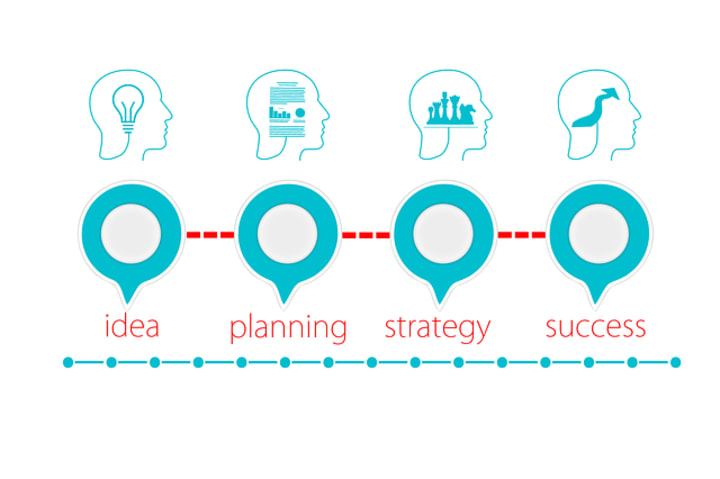
There may be multiple steps in the transition process, including:
Public education and understanding of CBDCs and the advantages of using digital currency for transactions would be required from central banks and governments. This would entail running campaigns, holding informational events, and undertaking other measures to increase public understanding of the advantages and dangers of CBDCs.
Infrastructure development: The public would need to have access to the digital wallets and payment systems that would be required to support CBDCs. To ensure that the required infrastructure is in place, cooperation between central banks, financial institutions, and technological firms would be required.
Pilot programs: Central banks may start them to evaluate the efficiency of CBDCs and find any problems that need to be fixed before a wider implementation. To make sure the technology is efficient and secure, this would entail evaluating the infrastructure and cooperating with financial institutions and other stakeholders.
Coexistence with cash: During the changeover phase, cash and digital currencies will probably coexist, giving users the choice to conduct transactions using either type of currency. This would make it easier to ensure a smooth transition and give people some time to get used to the new system.
Governments, central banks, financial institutions, and other stakeholders would need to work together to implement CBDCs and make sure that the public is informed on the advantages and disadvantages of utilizing digital currencies.

Bitcoin and CBDC
Comparing Bitcoin and CBDCs (Central Bank Digital Currencies) is not always accurate because they have different functions and properties.
Bitcoin is a decentralized digital currency that runs without the help of governments or central banks. It has a high degree of price volatility because it is not backed by any tangible assets or guarantees from the government. Speculative investments or the use of bitcoin as a form of payment are its main uses.
CBDCs, on the other hand, are virtual currencies that central banks issue and support. They are intended to function as a virtual equivalent to real money, offering a secure method of payment that is supported by the government's central bank. CBDCs can be used for a larger variety of transactions than Bitcoin and are often subject to stronger rules.
The decision between Bitcoin and CBD will be based on the individual's needs and interests. People who appreciate decentralization and privacy might find Bitcoin appealing, whereas people who value security and stability might prefer CBDCs.
It's important to keep in mind that the use of CBDCs may affect the demand for Bitcoin and other cryptocurrencies. Some people may decide to use CBDs instead of Bitcoin for transactions since they offer a safe and regulated method of digital payment. However, Bitcoin and other cryptocurrencies might still be used in some situations as speculative investments or as a method of paying for products and services.
The advent of CBDCs (Central Bank Digital Currencies) may be a step toward a world where there is no physical money, yet this is not a given.
The introduction of CBDCs, which are intended to be the digital equivalent of physical currency, could hasten the move toward electronic payments. For a variety of reasons, including privacy concerns or a lack of access to digital infrastructure, some people may still prefer to utilize cash for transactions in many nations.
The use of digital payments, technological advancements, and government regulations will all play a role in the evolution of a cashless society. Although the use of CBDCs may hasten the transition to a cashless society, it is unlikely that cash will be completely replaced anytime soon.
It's important to note that the change to digital payments may have substantial effects on financial inclusion, necessitating the need for governments and central banks to guarantee that everyone has access to digital infrastructure and financial services. Regardless of their level of access to digital infrastructure, the objective should be to promote financial inclusion and make sure that everyone can engage in the digital economy. Conclusions
To sum up, CBDCs (Central Bank Digital Currencies) are a brand new type of digital money that central banks issue and support. The development of CBDCs, which are intended to offer a secure and regulated method of digital payment, could hasten the move toward electronic transactions.
While CBDCs have the potential to provide important advantages like improved security, effectiveness, and financial inclusion, they also carry certain concerns, including the requirement for adequate infrastructure and education as well as the possibility of increased surveillance.
It's important to note that the advent of CBDCs does not imply that we are going toward a society that is entirely devoid of cash, although it may be a step in that direction. Governments and central banks would need to make sure that everyone has access to digital infrastructure and financial services because the transition toward digital payments might have a substantial impact on financial inclusion.
Don't miss out on the chance to be part of this exciting new era in finance.
Take control of your financial future.

Governments, central banks, financial institutions, and other stakeholders would all need to work together to ensure that the required infrastructure is in place and that the general public is informed of the advantages and disadvantages of using digital currencies before CBDCs can be adopted.
About the Creator
Awakened Mind
A curious mind, an open heart, and a willingness to learn can change the world. A mind open to new ideas, a heart open to new experiences, and a spirit open to new challenges can make a world of difference.
Keep reading
More stories from Awakened Mind and writers in Education and other communities.
Unlocking the Enchanting Allure of Coffee
The magical elixir has woven its aromatic spell around the globe, captivating the hearts and minds of billions in a world driven by hustle and bustle. Coffee, a humble bean transformed into a sensational beverage, has charmed its way into our lives with an irresistible allure. Join me on a journey to unravel the captivating origins of coffee, explore the reasons behind its fervent adoration, and shed light on the addictive nature that keeps us spellbound.
By Awakened Mind3 years ago in Education
Python vs Rust Performance: Speed, Memory Usage, and Scalability Explained
When developers compare programming languages, performance is often one of the most debated factors. Two languages that frequently come up in these discussions are Python and Rust. While both are powerful in their own ways, they approach performance, memory management, and scalability very differently. This makes the Python vs Rust comparison especially relevant for teams choosing the right technology for their next project.
By Lennox Gray2 days ago in Education
Miss Persephone's Manual to a Seemingly Ordinary Life
Miss Persephone was found at the dining table, her blue eyes swollen, her tears arriving and retreating like the tides of the ocean. Earlier that day, her family had visited her in the retirement home where she had lived for eight years. It was her eightieth birthday.
By Imola Tóth3 days ago in Fiction




Comments
There are no comments for this story
Be the first to respond and start the conversation.